
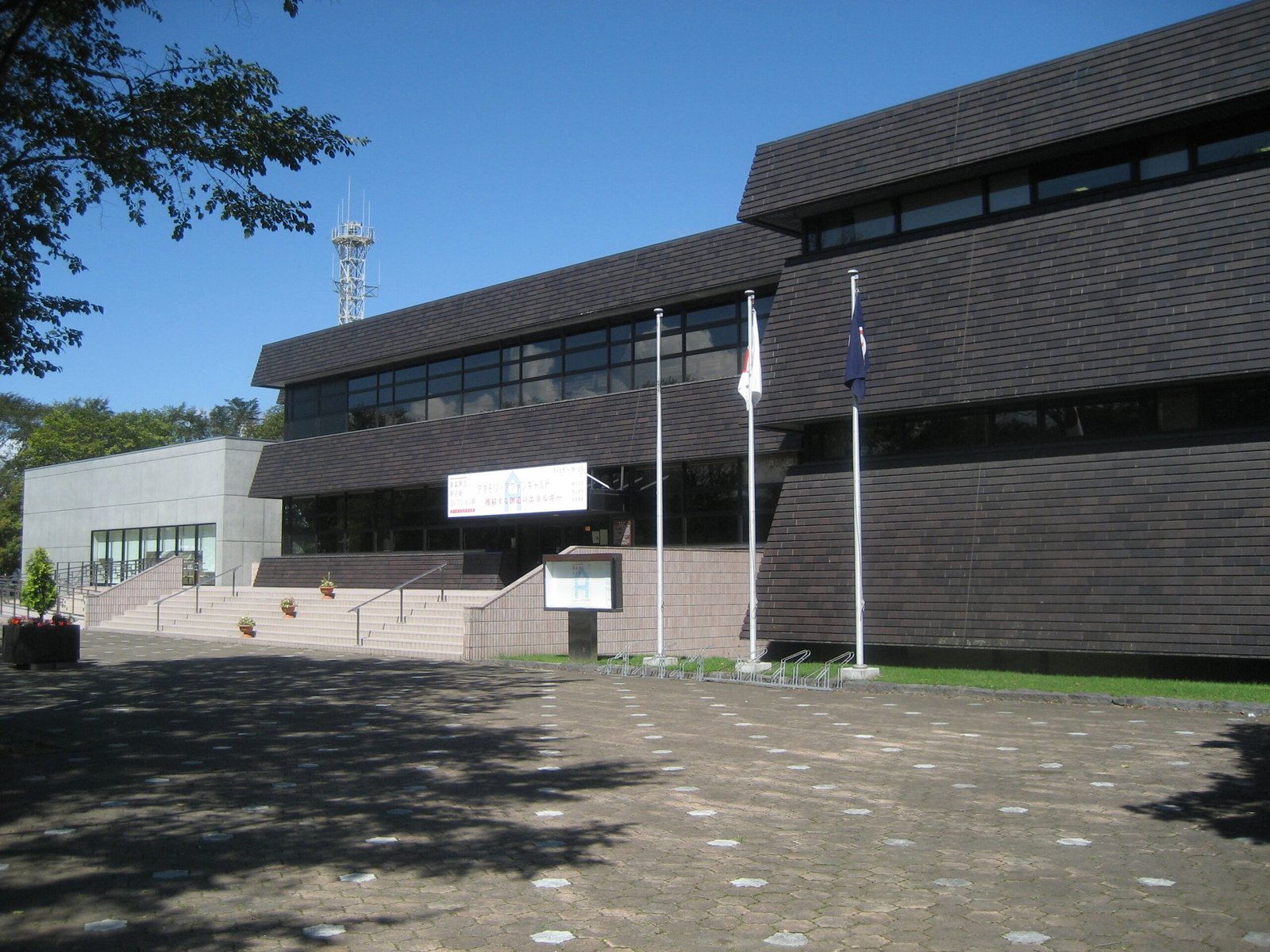
A regional museum documenting Hokkaidō’s natural and cultural heritage, from geological specimens to Ainu history and the era of Japanese colonial expansion.
At a glance
Tomakomai City Museum preserves the natural and cultural history of Hokkaidō’s southern coast through collections spanning geology, ethnography, and local heritage. The museum underwent significant renewal work before reopening in 2013.
History
The museum opened in 1985 in Tomakomai, on Hokkaidō’s southern shore. Following two decades of operation, it closed for comprehensive renewal work and reopened in 2013 with updated displays and conservation standards. The collection includes materials relating to the Ainu people and the period of the Hokkaidō Development Commission, reflecting the region’s complex cultural and colonial history.
What you see
The museum’s exhibitions focus on regional documentation rather than architectural distinction. Its galleries present geological and biological specimens collected by local resident Orii Hyōjirō alongside historical artifacts and ethnographic materials relating to indigenous Ainu culture and early modern Japanese development efforts in Hokkaidō.
Cultural significance
The museum serves as a regional archive of Hokkaidō’s natural environment and the intersecting histories of indigenous Ainu communities and Japanese settlement. Its collections document both the island’s ecological character and the cultural complexities of the Development Commission era.
Key facts
- Location: Tomakomai, Hokkaidō, Japan
- Opened: 1985
- Reopened: 2013 (after renewal)
- Coordinates: 42.637564, 141.612865
Practical information & getting there
The museum is located in Tomakomai on Hokkaidō’s southern coast. For current opening hours, admission details, and access information, consult the museum directly or local tourism resources.
Sources & resources
- Tomakomai City Museum (Wikipedia)
- Cultural Heritage Online
Find it on the map
See this place and what’s around it →📷 Become a Cultural Heritage Online photographer
Share your photos of places: they stay published under your name as the author. The more they're seen, the more you get noticed — and soon a contest will reward the most appreciated photos.
Log in or sign up free to add a photoIs this page about you?
This page is read by travellers and heritage enthusiasts who find it on Google. Tell us how you are connected to this place and we will take it from there.