
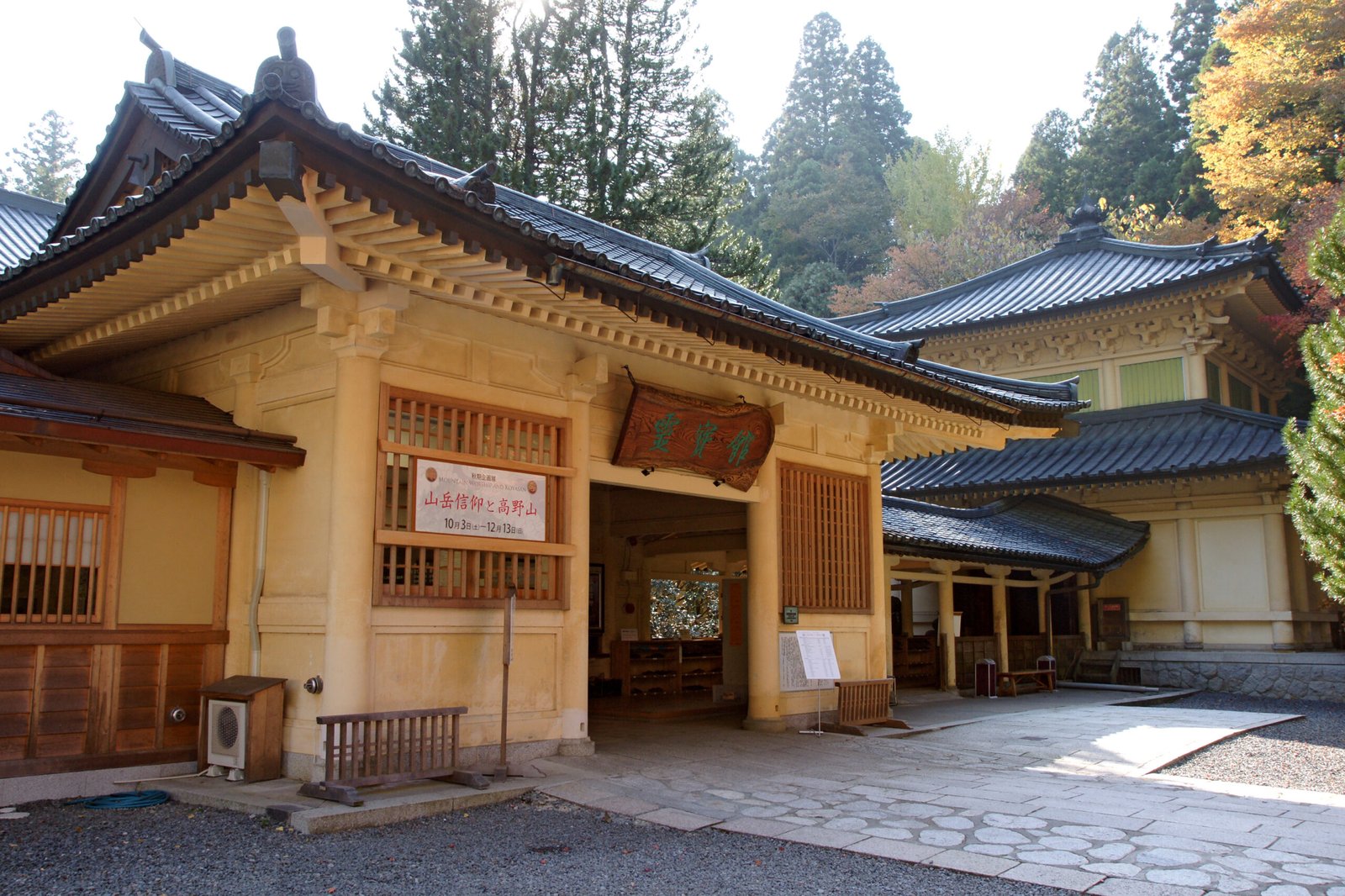
An art museum preserving Buddhist treasures from temples on the sacred mountain Kōya-san, housing works spanning the Heian and Kamakura periods.
At a glance
Kōyasan Reihōkan—the Museum of Sacred Treasures—safeguards one of Japan’s most significant Buddhist art collections. Located on Kōya-san in Wakayama Prefecture, the museum draws its holdings exclusively from the temples that occupy this mountain sanctuary, creating a unified repository of religious and artistic heritage.
History
The collection centers on works from the Heian and Kamakura periods, centuries of exceptional artistic achievement in Buddhist Japan. Among the assembled treasures are the personal writings of Kūkai, the founder of Kōya-san, and documents penned by Minamoto no Yoritomo, who established the Kamakura Shogunate. These texts anchor the museum’s significance as a historical archive as well as an art repository.
What you see
The museum displays paintings, calligraphy, sutras, sculpture and Buddhist ritual objects drawn from centuries of temple practice. A complete Buddhist canon (issaikyō) forms a centerpiece of the collection. Devotional mandalas and portraits of priests further illustrate the spiritual and intellectual life of the mountain’s monastic communities.
Cultural significance
The most valued objects have received designation as National Treasure or Important Cultural Property by the Japanese government. The museum thus represents both a shrine to Buddhism’s artistic legacy and an authoritative institution for the study and preservation of medieval Japanese sacred art.
Key facts
- Country: Japan
- Location: Kōya-san, Wakayama Prefecture
- Coordinates: 34.211278, 135.581472
- Collection periods: Heian and Kamakura
- Notable holdings: Complete Buddhist canon, writings of Kūkai and Minamoto no Yoritomo
Sources & resources
Find it on the map
See this place and what’s around it →📷 Become a Cultural Heritage Online photographer
Share your photos of places: they stay published under your name as the author. The more they're seen, the more you get noticed — and soon a contest will reward the most appreciated photos.
Log in or sign up free to add a photoIs this page about you?
This page is read by travellers and heritage enthusiasts who find it on Google. Tell us how you are connected to this place and we will take it from there.