
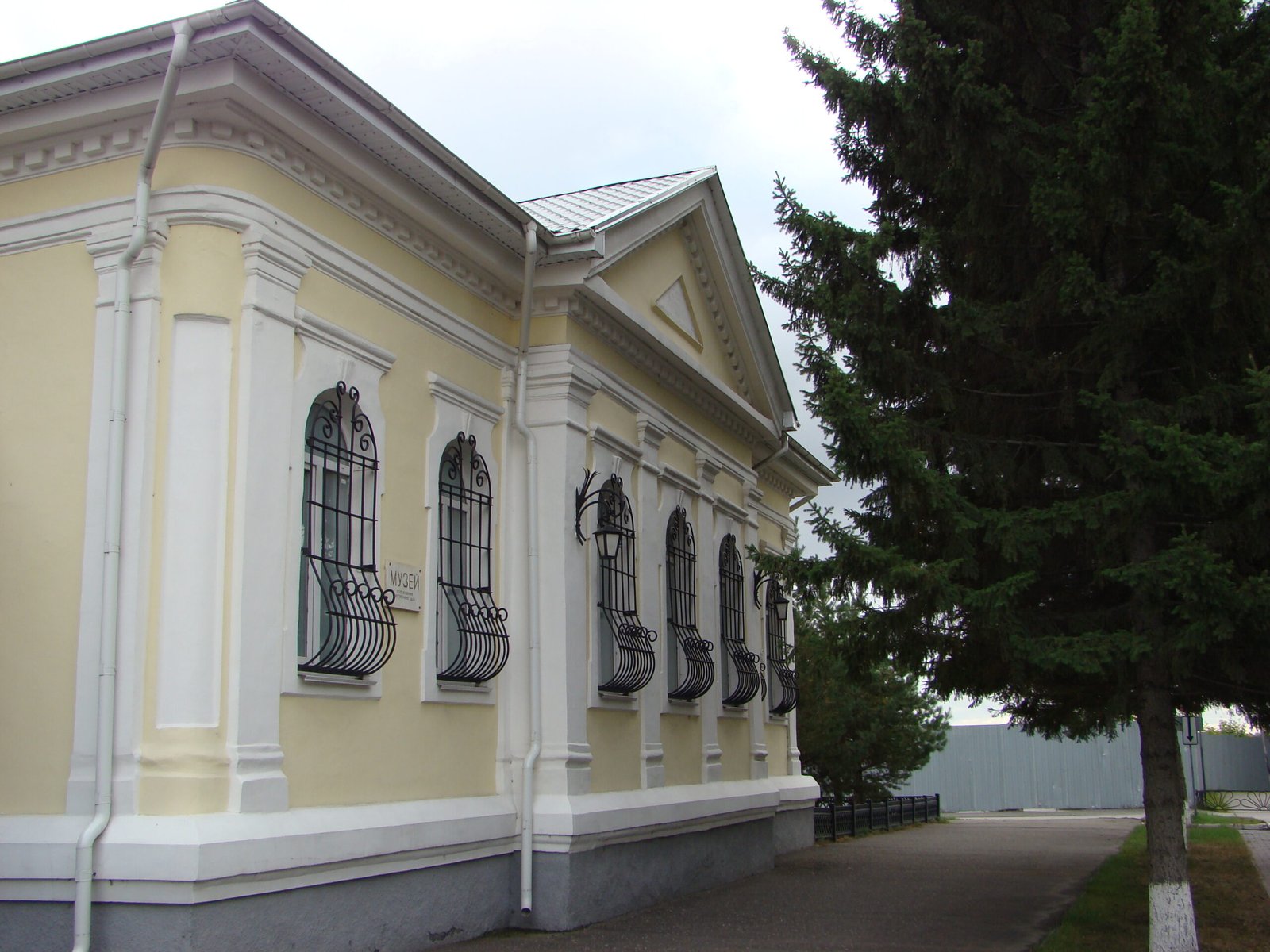
Built between 1790 and 1792 for the foreign Protestants serving the Siberian Corps, this Omsk church survives as a rare late-Baroque monument on the edge of the old fortress square.
At a glance
Standing near the Irtysh River on the eastern side of the fortress parade ground, the church was raised in 1790–1792 to serve foreign Protestant officials working within the Siberian Corps and the Omsk fortress administration. It is counted among Omsk’s best surviving examples of late Siberian Baroque architecture, and it holds heritage-listed status today.
History
The project was drawn up in the military office of the Siberian Corps under Lieutenant-General I. I. Springer. Its congregation drew Omsk’s administrative and military elite. Gustav Hristianovich Gasford, Governor-General of Western Siberia from 1851 to 1861 and a veteran of the War of 1812 and later campaigns in the Caucasus, Poland and Austria-Hungary, worshipped here. Under his administration Siberia absorbed new territory, welcomed some 80,000 settlers from European Russia, and gained 200 churches and many schools. Architects Frederick Fridrihovich Wagner and Edward I. Ezet, both active in shaping Omsk’s built fabric, were also parishioners.
What you see
The church is a rectangular Baroque hall with a broad semi-circular apse. Its main façade reads as a symmetrical composition. A central risalit rises through three arched windows separated by pilasters and finished with a gable; the side bays carry two arched windows apiece, with rounded corners and pilaster strips framing the whole. Smooth walls, an undulating cornice, and semicircular windows dressed with architraves give the surface a restrained richness. The entrance faces south. It once opened through a columned doorway; a later high porch survives, fenced by ornate trellis-work and sheltered under a canopy carried on hammered-metal consoles. Until the late 19th century a Baroque octagonal tower with a dome crowned the building. A Gothic tower replaced it in 1906–1908, an alteration meant to lend the church a more overtly German character in keeping with its Lutheran identity. That Gothic tower was itself dismantled in 1970. No original interior survives.
Cultural significance
Few 18th-century religious buildings remain in Omsk. This one records the presence of a foreign Protestant community embedded in Russian imperial administration on the Siberian frontier. Its changing towers, from Baroque dome to Gothic spire and back to bare walls, trace shifting ideas about how a German-speaking congregation wished to present itself within a Russian garrison town.
Key facts
- Location: Omsk, Russia, beside the Irtysh River
- Built: 1790–1792
- Style: late Siberian Baroque, with a Gothic Revival tower added 1906–1908 and removed in 1970
- Original design: military office of the Siberian Corps, under Lieutenant-General I. I. Springer
- Heritage status: listed monument
Practical information & getting there
The church stands on the eastern edge of the former fortress parade ground in central Omsk, close to the Irtysh riverbank. You can reach the site on foot from the historic fortress district. The interior has not been preserved, so a visit centers on the exterior and its ornamented south-facing porch.
Sources & resources
Find it on the map
See this place and what’s around it →📷 Become a Cultural Heritage Online photographer
Share your photos of places: they stay published under your name as the author. The more they're seen, the more you get noticed — and soon a contest will reward the most appreciated photos.
Log in or sign up free to add a photoIs this page about you?
This page is read by travellers and heritage enthusiasts who find it on Google. Tell us how you are connected to this place and we will take it from there.