
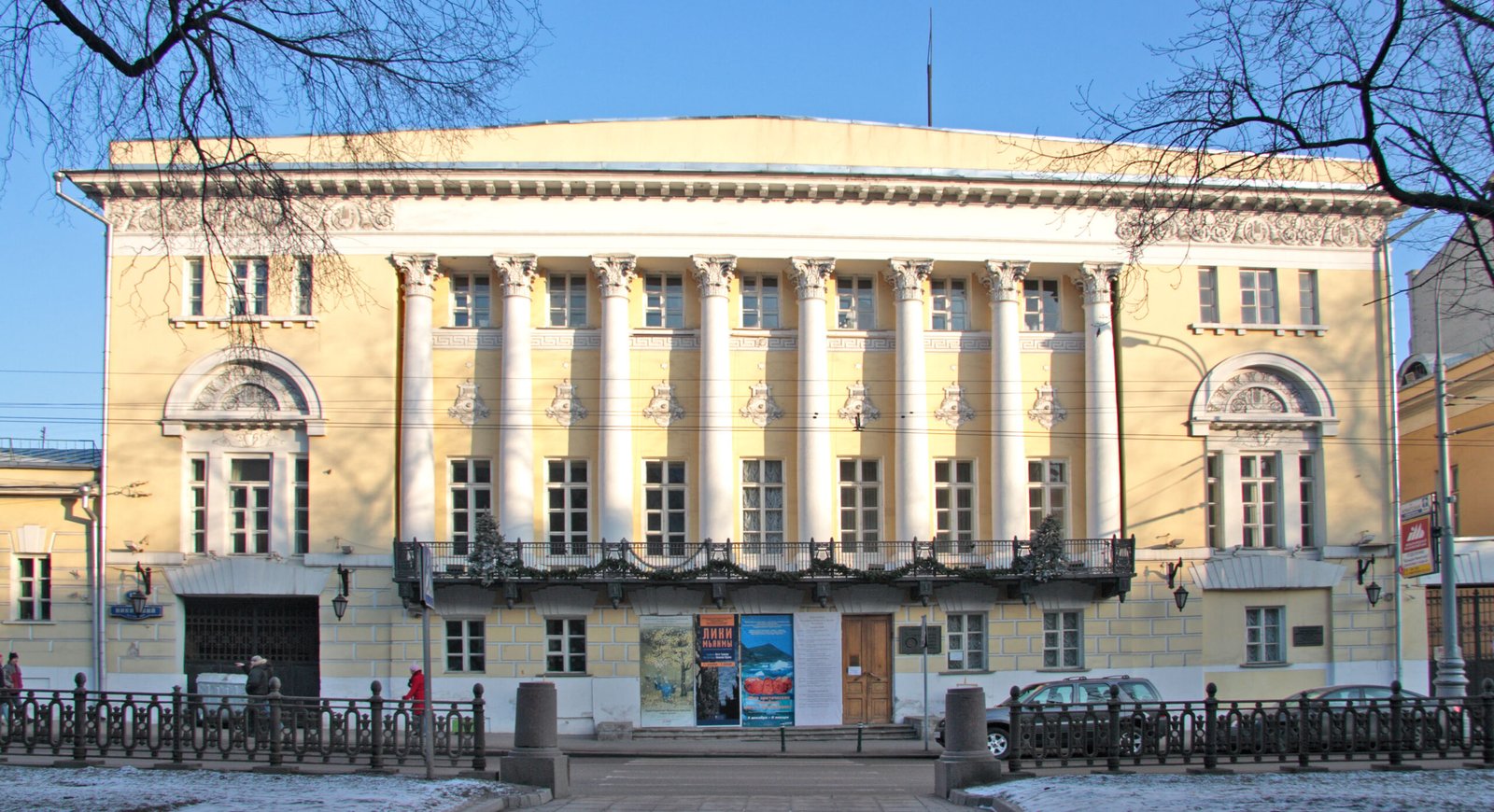
Behind the columned front of a former private residence, one of the world’s great repositories of Asian art traces a century of collecting, confiscation and diplomacy.
At a glance
Founded in 1918, the museum has occupied the Lunins’ House since 1970. Its galleries move through India, Persia, China, Japan, Buryatia, Transcaucasia and the Chukchi Peninsula. More than 160,000 objects sit in its holdings today.
History
Before the Revolution, Moscow had no institution devoted to Oriental studies. Historian Pavel Muratov, backed by art historian Igor Grabar, proposed one soon after the Soviet government declared its constituent republics. Within months they opened ‘Ars Asiatica’, first inside the State Historical Museum, then at the Tsvetkov Mansion. The collection grew fast, and unevenly. Nationalized private holdings arrived from noble families stripped of their property after 1917. Pyotr Shchukin’s museum of Chinese, Iranian and Indian prints and figurines, opened privately in 1910, was folded in whole. Collections from Pavel Kharitonenko, perfumer Henri Brocard, and orientalist Alexey Pozdneev followed. From 1924 the museum sent expeditions to the Far East to acquire new material. By 1930, Soviet directives required propaganda displays alongside the art. In 1929 General Tardov donated a major share of the Persian collection.
What you see
The setting is itself a historical object. Domenico Gilardi, the Swiss-Italian architect prominent in early 19th-century Moscow, built the house for the Lunin family as a private residence. Its rooms, designed for domestic life, now hold cabinets of Chinese porcelain and Persian miniatures. The contrast is deliberate and quiet. Corridors that once led to drawing rooms now open onto Buryat ritual objects and Chukchi carvings, a sequence that carries visitors from courtly Europe into the material cultures of Asia’s far edges.
Cultural significance
The museum remains a rare Russian institution built entirely around non-Western art. Its scope is unusual: few museums hold Persian, Indian, Chinese, Japanese and Siberian collections under one roof. Since 2017 it has also housed the Nicholas Roerich Museum, dedicated to the Russian painter and preserving over 800 Western paintings from his collection alongside decorative works his family brought back from India. That addition ties the museum’s Asian focus to Roerich’s own transcontinental career, and to the wider Russian fascination with the East that shaped the institution from its founding.
Key facts
- Founded: 1918
- Housed in the Lunins’ House since 1970
- Building attributed to architect Domenico Gilardi, early 19th century
- Collection: over 160,000 artefacts as of 2018
- Includes the Nicholas Roerich Museum, established 2017
- Location: Moscow, Russia
Practical information & getting there
The museum sits in central Moscow, accessible by metro and a short walk from the surrounding boulevards. Check the official website before visiting, since opening hours and temporary exhibitions change. The building’s residential-scale rooms mean galleries can feel close and unhurried rather than vast.
Sources & resources
Find it on the map
See this place and what’s around it →📷 Become a Cultural Heritage Online photographer
Share your photos of places: they stay published under your name as the author. The more they're seen, the more you get noticed — and soon a contest will reward the most appreciated photos.
Log in or sign up free to add a photoIs this page about you?
This page is read by travellers and heritage enthusiasts who find it on Google. Tell us how you are connected to this place and we will take it from there.