
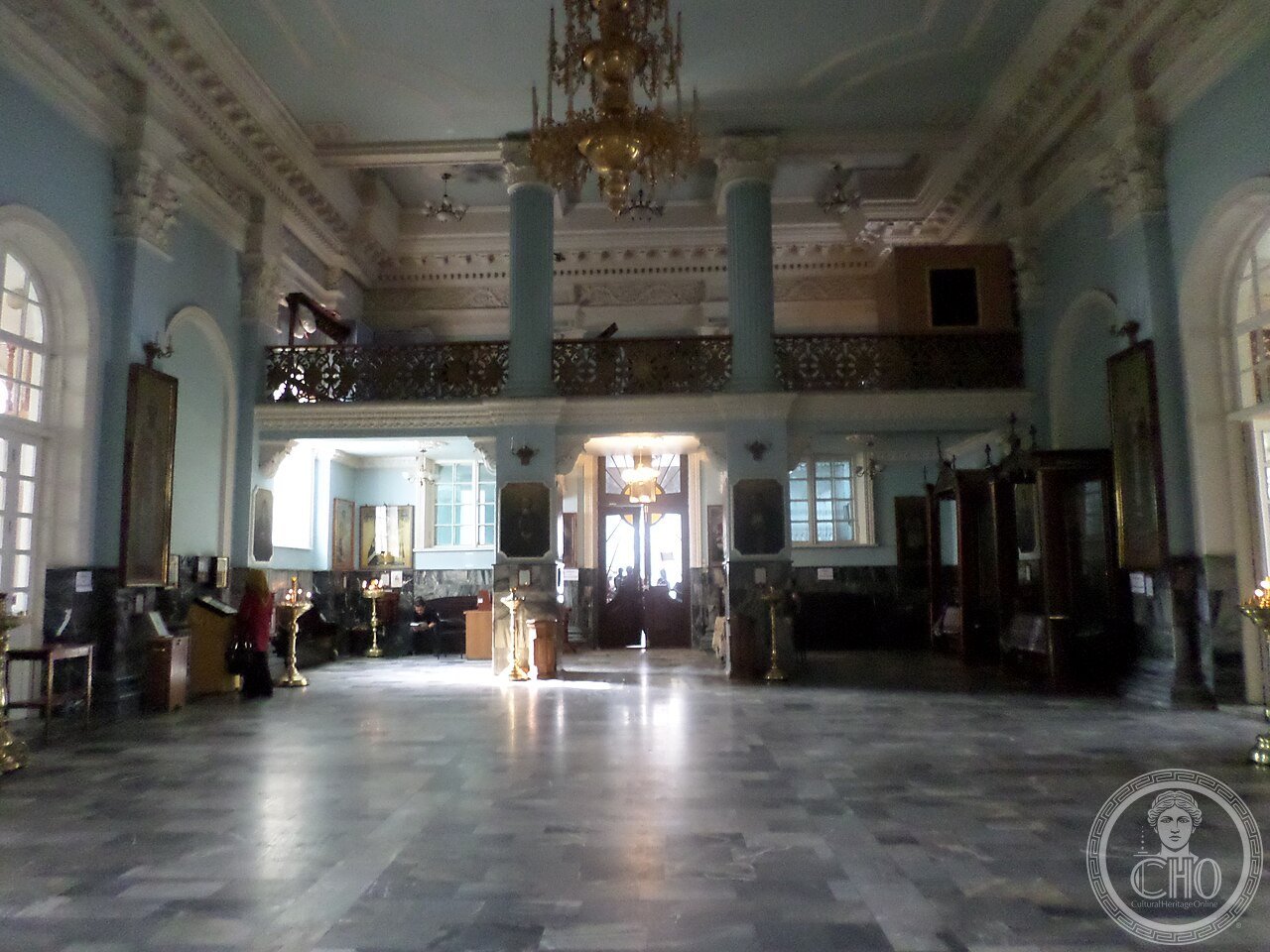
In Tashkent, in Uzbekistan, the first church on the site was a small wooden building dedicated to Saint Panteleimon, put up in 1871 beside a hospital cemetery. That is where the street’s old name, «Hospital Street», came from. As the community grew, work on a larger building began in 1877, paid for by public subscription and by major gifts from the Governor-General and from the merchant Dmitry Zokho, and the church was consecrated in January 1879. This was the height of Russian imperial expansion into Central Asia, the so-called Russian Turkestan, annexed from the sixties of the nineteenth century, when the building of Orthodox churches went hand in hand with Russian military and administrative settlement in the region. In 1922 the parish was handed to the Renovationist «Living Church» movement, backed by the Bolsheviks. The church was closed to worship in 1933 and turned into a military depot. It was restored and reopened for worship in December 1945, when it was rededicated to the Dormition of the Mother of God and became the seat of the Bishop of Tashkent, which is the origin of its present name and status. The style is Russian Orthodox, with the characteristic onion domes. The cathedral was enlarged in the nineties of the twentieth century and the bell tower was rebuilt in 2010. It is today the seat of the Diocese of Tashkent and Uzbekistan, part of the Central Asian Metropolitan District of the Russian Orthodox Church, led since 2011 by Metropolitan Vincent (Vikenty) of Tashkent and Uzbekistan, and it serves the country’s Russian-speaking Orthodox minority. Patriarch Alexy II of Moscow celebrated the liturgy there on 10 November 1996. The cathedral remains the main active Orthodox Christian site in a majority-Muslim country.
About Holy Dormition Cathedral
In Tashkent, Uzbekistan, the first church on the site was a small wooden building dedicated to St. Panteleimon, built in 1871 by a hospital cemetery, giving the street its old name, “Hospital Street”; as the congregation grew, construction of a larger building began in 1877, funded by public subscription and major donations from the Governor-General and merchant Dmitry Zokho, with consecration in January 1879 — squarely within the period of Russian imperial expansion into Central Asia, so-called Russian Turkestan, annexed from the 1860s onward, when Orthodox church construction accompanied Russian military and administrative settlement in the region. In 1922 the parish was handed to the Bolshevik-backed “Living Church” Renovationist movement; the church was closed for worship in 1933 and converted into a military supply depot, before being restored and reopened for worship in December 1945, when it was rededicated to the Dormition of the Mother of God and became the seat of the Bishop of Tashkent, giving rise to its current name and status. In Russian Orthodox ecclesiastical architectural style, with characteristic onion domes, the cathedral was enlarged in the 1990s and its bell tower rebuilt in 2010. It is today the seat of the Diocese of Tashkent and Uzbekistan, part of the Central Asian Metropolitan District of the Russian Orthodox Church, led since 2011 by Metropolitan Vincent (Vikenty) of Tashkent and Uzbekistan, and serves the country’s Russian-speaking Orthodox minority; Patriarch Alexy II of Moscow celebrated the liturgy there on 10 November 1996. The cathedral remains today the principal active Orthodox Christian site in a majority-Muslim country.
Key facts
- 1871: a small wooden chapel first stands on the site, by a hospital cemetery.
- 1877-1879: the larger cathedral built and consecrated, amid Russian imperial expansion into Central Asia.
- 1933: closed under Soviet rule, converted into a military supply depot.
- 1945: reopened and rededicated to the Dormition, becoming the episcopal seat.
- 2010: the bell tower rebuilt.
- Today, the seat of the Diocese of Tashkent and Uzbekistan.
History
Built during Russia’s imperial expansion into Central Asia, closed and repurposed as a military depot under Soviet rule, and only reopened and rededicated in 1945, Holy Dormition Cathedral’s history compresses more than a century of shifting political control over religious life into a single building. Its continued role as the seat of Uzbekistan’s Orthodox diocese, serving a Russian-speaking minority in an overwhelmingly Muslim country, gives it a significance that extends well beyond its own congregation.
What you see
Onion domes in Russian Orthodox ecclesiastical style rise above a cathedral enlarged in the 1990s and given a rebuilt bell tower in 2010, its overall form still legible from the original 1877-79 construction despite decades of Soviet-era disuse. The building today stands as one of the most visible markers of Orthodox Christian presence in Tashkent’s cityscape.
Practical information
- Opening hours: generally open daily outside services; check current hours before visiting.
- Address: Avliyo Ota Street 91, Mirabad district, Tashkent, Uzbekistan.
Getting there
The cathedral stands in Tashkent’s Mirabad district, easily reached by car or public transport within the city. GPS: 41°17′27″N, 69°16′44″E.
Nearby
- Mirabad district — the central Tashkent neighborhood surrounding the cathedral.
Sources
- Wikipedia — “Cathedral of the Assumption of the Virgin, Tashkent” (en.wikipedia.org).
- Russian Wikipedia — “Успенский собор (Ташкент)”
- Sobory.ru — Russian church-architecture reference site.
Find it on the map
See this place and what’s around it →📷 Become a Cultural Heritage Online photographer
Share your photos of places: they stay published under your name as the author. The more they're seen, the more you get noticed — and soon a contest will reward the most appreciated photos.
Log in or sign up free to add a photo