
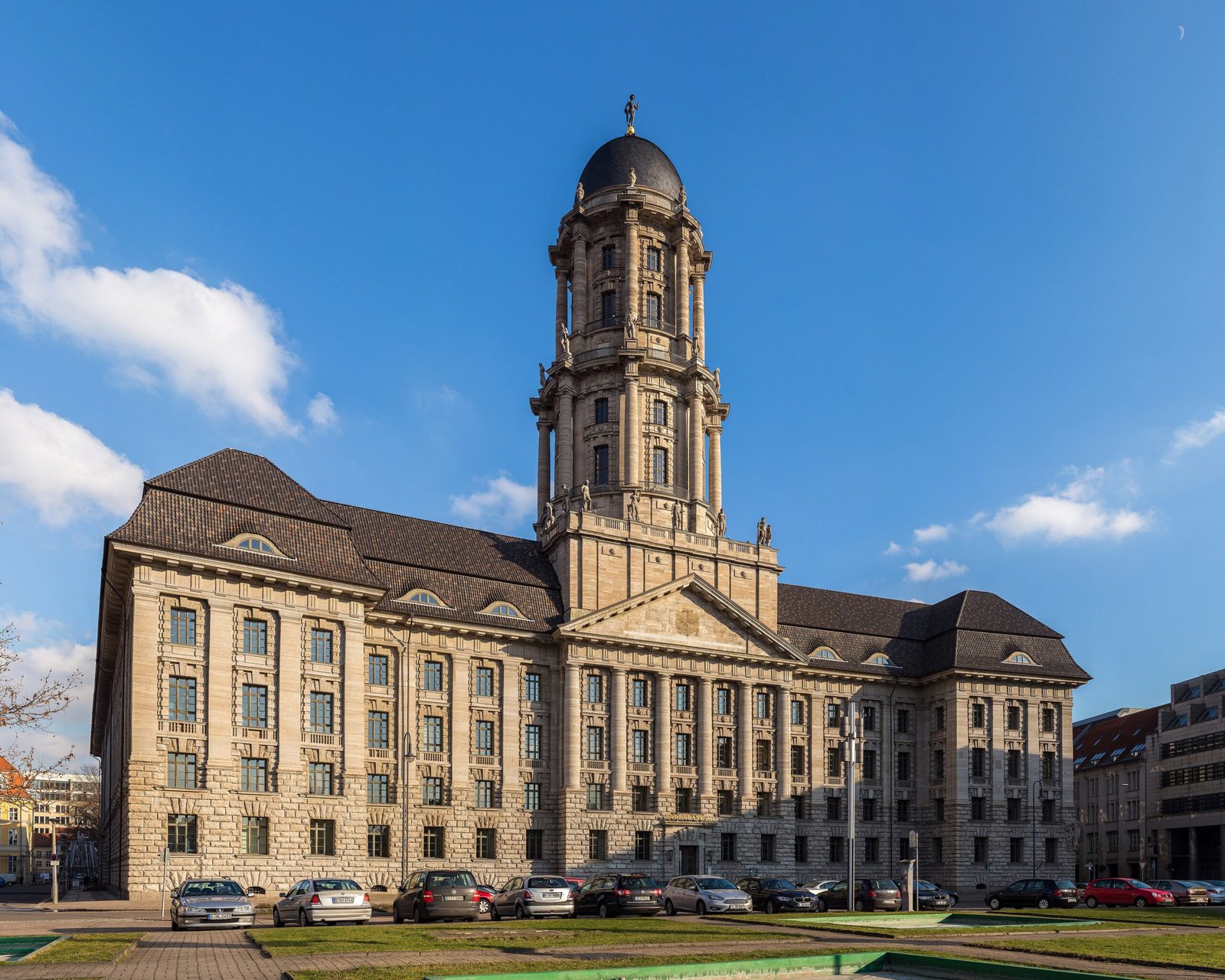
A monumental administrative palace designed by Ludwig Hoffmann, Berlin’s chief of construction, the Altes Stadthaus once governed a city and survived war, division, and ruin to become a symbol of civic resilience.
At a glance
Built 1902–11 at a cost of 7 million marks, this five-courtyarded edifice anchors the Molkenmarkt, Berlin’s historic heart. Originally conceived as supplementary to the Rotes Rathaus, it served the GDR’s Council of Ministers after World War II and now houses the Senate of Berlin.
History
Hoffmann’s design answered growing administrative needs in a rapidly modernizing capital. The construction took nearly a decade, concluding on the eve of the Great War. After 1945, the building acquired new purpose under communist rule, becoming the administrative nerve center of East Berlin—until confusion with an identically named neighbor prompted its rechristening as the “Old” rather than “New” City House.
World War II dealt devastating blows. Allied bombing and the Battle of Berlin destroyed the roof, shattered sculptural ornaments, and inflicted extensive water damage. Postwar reconstruction proved piecemeal: the Fortuna statue vanished by 1962, likely melted for scrap; by the 1970s, decades of rain damage necessitated removal of nearly all external sculpture. Only comprehensive restoration in the 1990s, culminating in roof reconstruction (1998–99), restored the building to coherence.
What you see
The building’s grandeur lies in sculptural abundance and spatial complexity. Five interior courtyards regulate light and circulation. The tower displays 29 allegorical representations—civic virtues and Greek deities in stone—originally set against Berlin’s skyline. Georg Wrba’s bronze bear, Berlin’s heraldic emblem, presides in the central Bärensaal (Bear Hall). The reconstructed mansard roof and recast sculptural elements (180 pieces replaced) restore Hoffmann’s ornamental vision, though some originals remain lost to history.
Cultural significance
Altes Stadthaus embodies Wilhelmine ambition, Cold War division, and German reunification. Its transformation from supplement to Rotes Rathaus into an East German power center, then its resurrection as a unified Berlin institution, traces the city’s fractured twentieth century. The building’s survival—and painstaking restoration—testifies to institutional memory and architectural persistence.
Key facts
- Country: Germany
- City: Berlin (Bezirk Mitte)
- Architect: Ludwig Hoffmann
- Built: 1902–1911
- Construction cost: 7 million marks (US$1,750,000)
- Coordinates: 52.5164, 13.4108
Practical information & getting there
The Altes Stadthaus faces the Molkenmarkt in central Berlin’s historic district (Mitte), bounded by Jüdenstraße, Klosterstraße, Parochialstraße, and Stralauer Straße. Currently occupied by the Senate of Berlin, access may be restricted. Check ahead for public tours or events.
Sources & resources
Find it on the map
See this place and what’s around it →📷 Become a Cultural Heritage Online photographer
Share your photos of places: they stay published under your name as the author. The more they're seen, the more you get noticed — and soon a contest will reward the most appreciated photos.
Log in or sign up free to add a photoIs this page about you?
This page is read by travellers and heritage enthusiasts who find it on Google. Tell us how you are connected to this place and we will take it from there.