
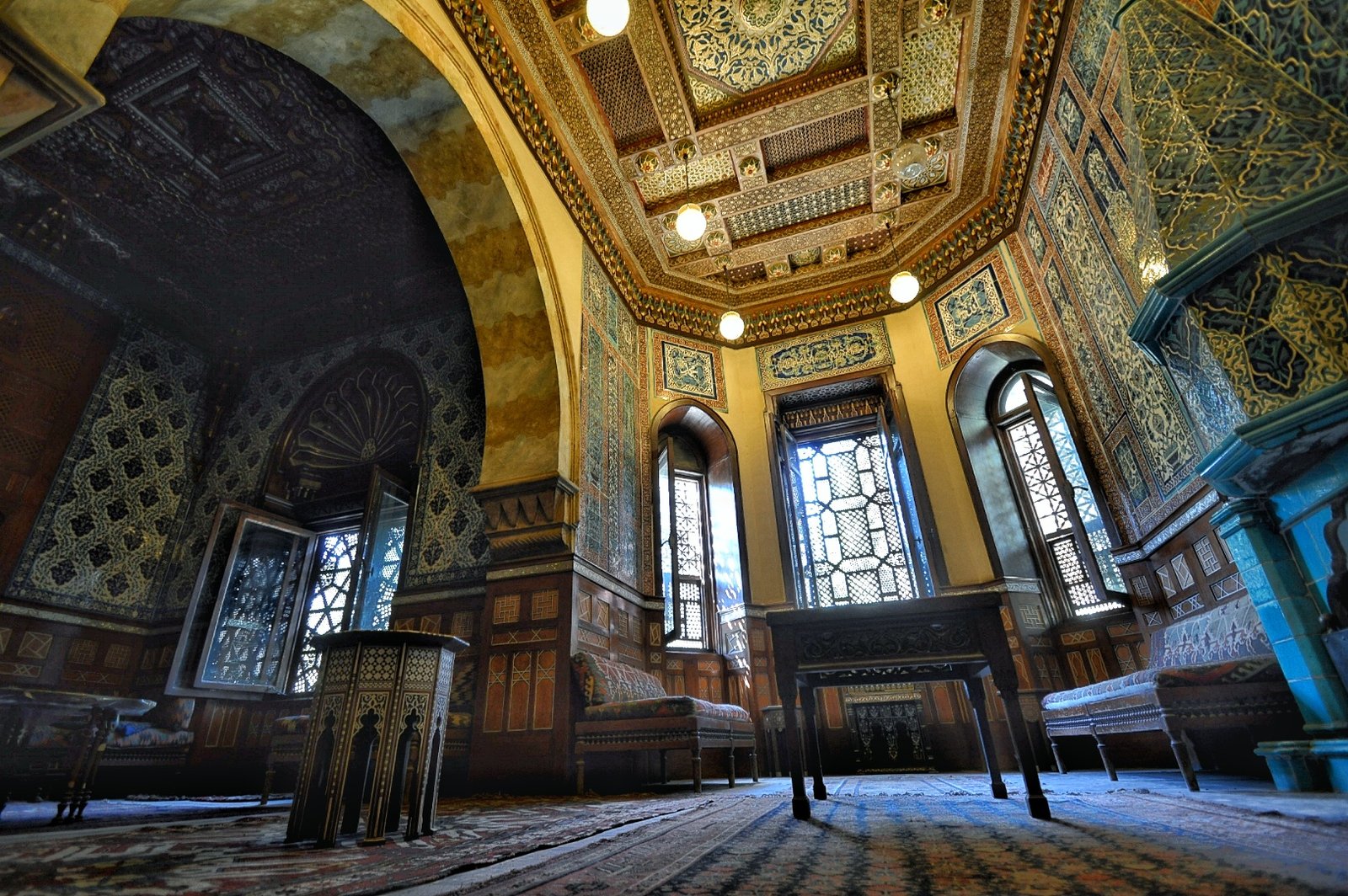
A sprawling royal estate on Rhoda Island, this former Alawiyya dynasty palace preserves the refined aesthetic and lifestyle of an Egyptian crown prince through five distinctly styled buildings and extensive gardens.
At a glance
Manial Palace stands as a monument to late 19th-century royal taste, blending Islamic, Ottoman, Persian, and European design traditions. The compound comprises five separate structures—a Residence Palace, Reception Palace, Throne Palace, mosque, private museum, hunting museum, and clock tower—all surrounded by Persian and English landscape gardens along the Nile.
History
Prince Mohamed Ali, second son of Tewfik Pasha and brother of Khedive Abbas II, commissioned the palace after personally selecting its location on Rhoda Island. He served as crown prince three times and acted as one of three regents following King Fuad I’s death until King Farouk reached his majority. Prince Mohamed Ali oversaw the design and decoration himself, with master builder Mohamed Afifi executing the construction. Before his death, the prince stipulated that the palace be converted into a museum—a wish honoured by Egypt’s Antiquities Council.
What you see
The architecture absorbs influences from Fatimid, Mamluk, Ottoman, Andalusian, Persian, and Levantine traditions, creating a distinctive aesthetic. Medieval castle-like fortified walls enclose the compound, while interior spaces showcase fine Islamic art and decoration. The surrounding gardens—featuring rare trees and plants—provide an intimate setting typical of royal estate design. Each of the five buildings maintains its own character within the unified whole.
Cultural significance
Manial Palace offers rare insight into Egyptian royal life during the transition from Ottoman to modern governance. The interior arrangement, furnishings, and garden design reflect the tastes and priorities of an educated elite engaged with both Eastern and Western aesthetics. As a museum, it documents the lived experience of late Alawiyya dynasty royalty.
Key facts
- Location: Rhoda Island, El-Manial district, Cairo, Egypt
- Coordinates: 30.0274°N, 31.2298°E
- Architect: Master builder Mohamed Afifi
- Patron: Prince Mohamed Ali
- Status: Preserved as a historic house museum by Egypt’s Antiquities Council
Practical information & getting there
The museum is accessible from central Cairo via Rhoda Island in the El-Manial district. You can reach the site by taxi, metro, or private transport. Hours, admission fees, and current access conditions should be confirmed with the Antiquities Council or your hotel concierge before visiting.
Sources & resources
- Manial Palace and Museum – Wikipedia
- Cultural Heritage Online
Find it on the map
See this place and what’s around it →📷 Become a Cultural Heritage Online photographer
Share your photos of places: they stay published under your name as the author. The more they're seen, the more you get noticed — and soon a contest will reward the most appreciated photos.
Log in or sign up free to add a photoIs this page about you?
This page is read by travellers and heritage enthusiasts who find it on Google. Tell us how you are connected to this place and we will take it from there.