
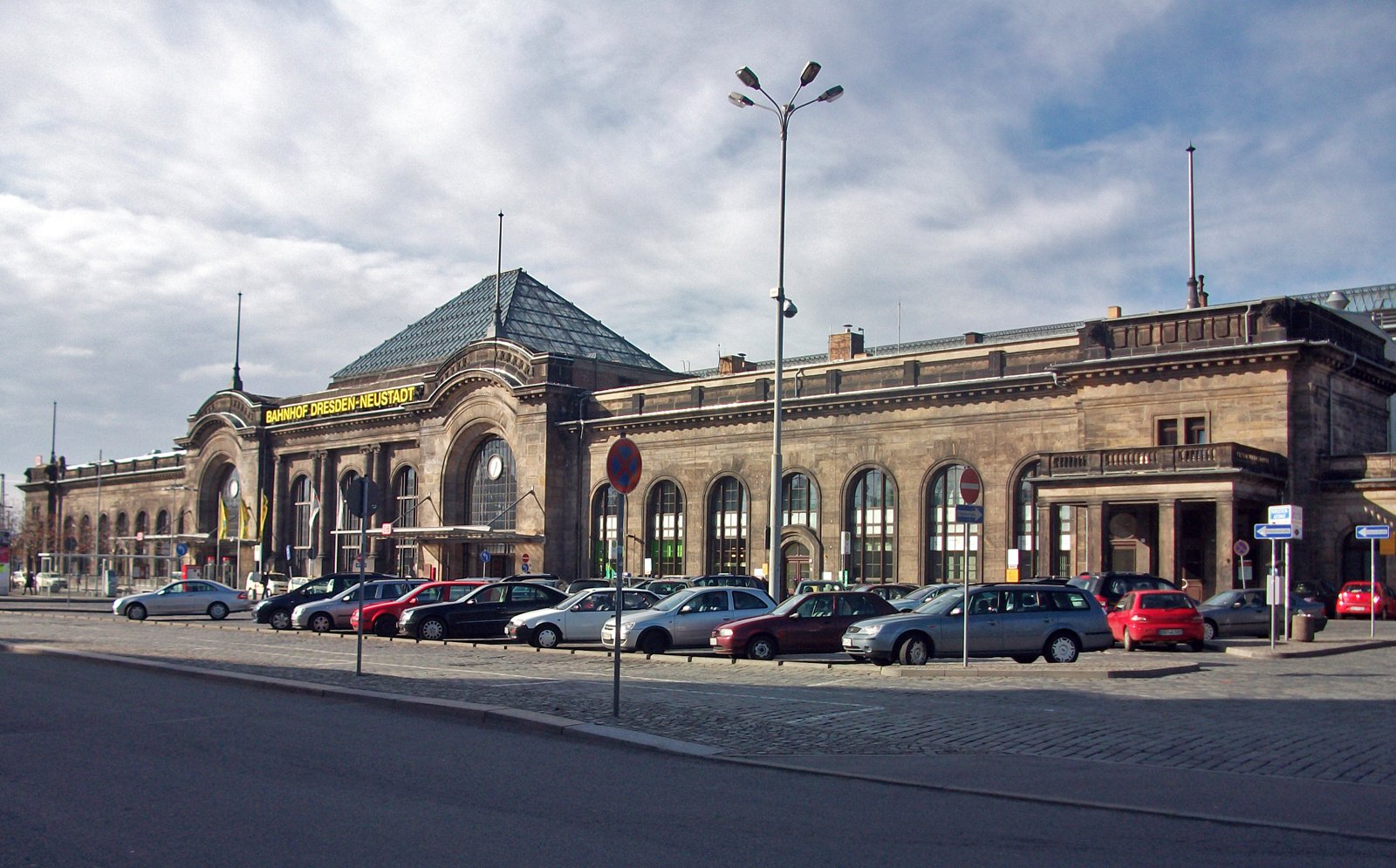
The second-largest railway station in Dresden, this Edwardian gateway replaced two earlier lines and anchors the city’s northern transport network with monumental Beaux-Arts design.
At a glance
Dresden-Neustadt station stands as a major junction for long-distance rail traffic on the north bank of the Elbe River. Built in 1901, it superseded two predecessor stations and connects three major railway lines serving Leipzig, Berlin, and Upper Lusatia.
History
The station replaced two earlier facilities: the Leipziger Bahnhof (Leipzig line station), opened in 1839 in the Leipziger Vorstadt district, and the Schlesischen Bahnhof (Silesian line station), established in 1847. The new station consolidated rail operations on Dresden’s northern side.
Completed in 1901, it was designed to reflect the station’s importance as a long-distance hub—a role that demanded architectural distinction.
What you see
The station building occupies the Innere Neustadt (inner new city) district in a monumental style characteristic of the Edwardian era. Its design emphasizes the grandeur expected of major German railway terminals at the turn of the 20th century.
Cultural significance
Dresden-Neustadt represents a pivotal moment in German railway history when regional lines consolidated into modern transport networks. It remains a working symbol of Dresden’s connectivity across central Europe, linking Bohemia, Saxony, and Prussia through its three main routes.
Key facts
- Country: Germany
- City: Dresden
- Built: 1901
- Replaced: Leipziger Bahnhof (1839) and Schlesischen Bahnhof (1847)
- Location: Innere Neustadt district
- Coordinates: 51.0656°N, 13.7408°E
- Function: Second-largest station in Dresden; long-distance rail junction
- Connected lines: Děčín–Dresden, Leipzig–Dresden, Görlitz–Dresden railways
Practical information & getting there
The station is accessible via Dresden’s railway junction network and connects directly to Dresden Hauptbahnhof. It serves regional and international trains bound for Leipzig, Berlin, and points eastward into Bohemia and Upper Lusatia.
Sources & resources
Find it on the map
See this place and what’s around it →📷 Become a Cultural Heritage Online photographer
Share your photos of places: they stay published under your name as the author. The more they're seen, the more you get noticed — and soon a contest will reward the most appreciated photos.
Log in or sign up free to add a photoIs this page about you?
This page is read by travellers and heritage enthusiasts who find it on Google. Tell us how you are connected to this place and we will take it from there.