
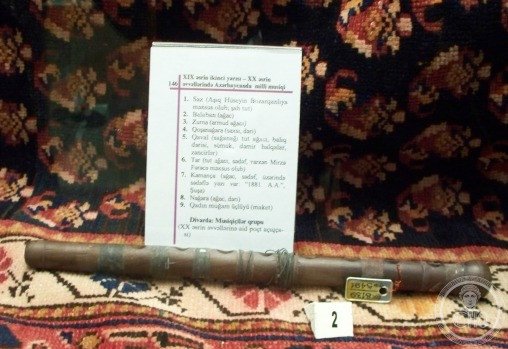
A double-reed pipe of extraordinary expressiveness, the balaban has sounded across the Caucasus and Anatolia for centuries, shaped by the breath and skill of master musicians who coax dull, penetrating tones from wood and cane.
At a glance
The balaban is a cylindrical double-reed woodwind instrument about 28–30 centimetres long, played across Azerbaijan, Turkey, and Iran’s historic Azerbaijan region. Crafted from mulberry, walnut, or other hardwoods, it produces a characteristically muted, light sound best heard in intimate indoor settings. The instrument demands circular breathing—a technique in which performers store air in their cheeks while inhaling through the lungs—allowing unbroken melodic lines.
Origins & history
The balaban belongs to a family of Near Eastern double-reed pipes that are nearly identical across borders. The Azeri balaban, the Turkish mey, and the Armenian duduk share construction and technique, distinguished mainly by history and geography. In the Republic of Azerbaijan and western regions, it is sometimes called balaman, mey, or whistle, reflecting its movement across communities and centuries.
The practice
A balaban consists of a wooden body (govda) and a large double reed fashioned from a single tube of cane, flattened and pressed at one end. The cylindrical bore measures roughly 1.5 centimetres in diameter, with eight finger holes and one thumb hole. A clamp on the reed allows players to alter tone—thinning or thickening the sound by moving the clamp upward or downward, enabling quick adaptation when playing with instrumental ensembles.
The performer’s breath—managed through circular breathing—sustains long phrases without pause. The resulting sound is dull and light, suited to closed rooms and intimate gatherings rather than outdoor festivals. Another variant of the balaban is integral to ashiq music, the traditional epic-singing tradition of Azerbaijan.
Cultural significance
For Azerbaijani and Turkish musicians, the balaban embodies both technical mastery and deep cultural memory. Its sound is inseparable from regional identity, appearing in ceremonial music, storytelling, and ensemble performance across the Caucasus. Master craftsmen and performers preserve not only the instrument itself but the embodied knowledge of how to voice it—knowledge passed through apprenticeship and family tradition.
Key facts
- Instrument length: 28–30 centimetres; bore diameter: 20–22 millimetres
- Materials: mulberry, walnut, or other hardwoods; double reed from flattened cane
- Playing technique: circular breathing; eight finger holes and one thumb hole
- Geographic range: Republic of Azerbaijan, Turkey, Iran (West Azerbaijan region)
- UNESCO ICH reference: 01704
- Notable performer: Alihan Samedov
Where to experience it
Baku and the broader Azerbaijani regions remain the heartland of balaban practice. Master musicians and craftspeople continue the tradition in concert halls, cultural centres, and private settings. The specific festivals, venues, and regular performance schedules are best confirmed through local cultural institutions in Azerbaijan.
Sources & resources
Find it on the map
See this place and what’s around it →📷 Become a Cultural Heritage Online photographer
Share your photos of places: they stay published under your name as the author. The more they're seen, the more you get noticed — and soon a contest will reward the most appreciated photos.
Log in or sign up free to add a photo