
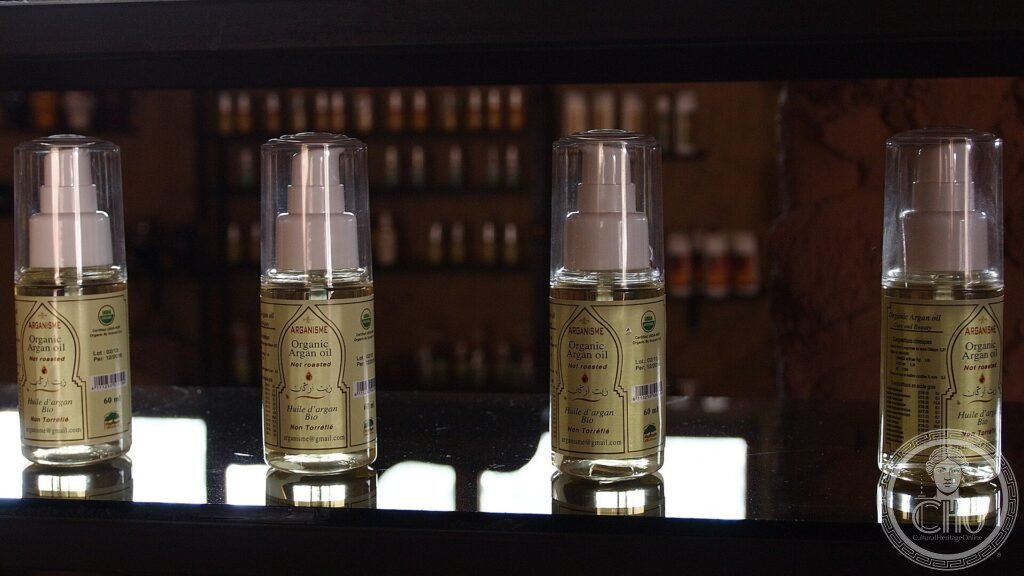
For generations, Moroccan communities have harvested, pressed, and prepared argan oil from the kernels of the argan tree—a practice woven into daily life, cuisine, and beauty rituals across southwestern Morocco.
At a glance
Argan oil emerges from the labour-intensive processing of nuts from the argan tree (Argania spinosa L.), found only in Morocco and southwestern Algeria. The oil serves dual roles: as a staple of Moroccan cuisine, drizzled over couscous, pasta, or used for bread dipping at breakfast, and as a time-honoured cosmetic preparation. The practice embodies deep ecological and cultural knowledge passed through families and communities.
Origins & history
The argan tree is indigenous to Morocco and southwestern Algeria, anchoring millennia of human relationship with the arid landscape. Communities in the Essaouira region and beyond have cultivated intimate understanding of when to harvest, how to crack and process kernels, and which applications—culinary or cosmetic—suit different seasons and needs. This knowledge remains inseparable from the tree itself and the land it inhabits.
The practice
Argan oil production begins with harvesting the fruit of the argan tree, then extracting and cracking the hard kernels to reach the precious seeds within. These are roasted and ground, then pressed or kneaded to release oil—a process traditionally performed by hand, often by women working collectively.
In the kitchen, argan oil is poured warm over bread as a breakfast companion or finished over couscous and pasta dishes, imparting nutty warmth. Beyond the table, the oil nourishes skin and hair, absorbed into daily grooming and beauty regimens. Each application carries layers of sensory knowledge: which temperature, which texture, which moment in the day.
Cultural significance
Argan oil practices encode environmental stewardship, culinary identity, and intergenerational transmission. The work reinforces community bonds—especially among women who traditionally lead processing—while sustaining livelihoods tied to a fragile ecosystem. The practice demonstrates how indigenous knowledge systems integrate nutrition, beauty, ecology, and economy into a unified way of living.
Key facts
- Countries: Morocco, southwestern Algeria
- Anchor community: Essaouira, Morocco (31.516°N, 9.77°W)
- Source tree: Argania spinosa L., indigenous to the region
- UNESCO Intangible Cultural Heritage: 2024 (Reference 00955)
Where to experience it
The Essaouira region and wider southwestern Morocco remain the heartland of argan practices. You can witness oil production in family workshops and cooperative spaces, taste it freshly prepared in home meals and local restaurants, and learn about harvesting rhythms by visiting during the argan fruit season. Community-led tourism initiatives offer opportunities to observe processing and meet the practitioners themselves.
Sources & resources
Find it on the map
See this place and what’s around it →📷 Become a Cultural Heritage Online photographer
Share your photos of places: they stay published under your name as the author. The more they're seen, the more you get noticed — and soon a contest will reward the most appreciated photos.
Log in or sign up free to add a photo