
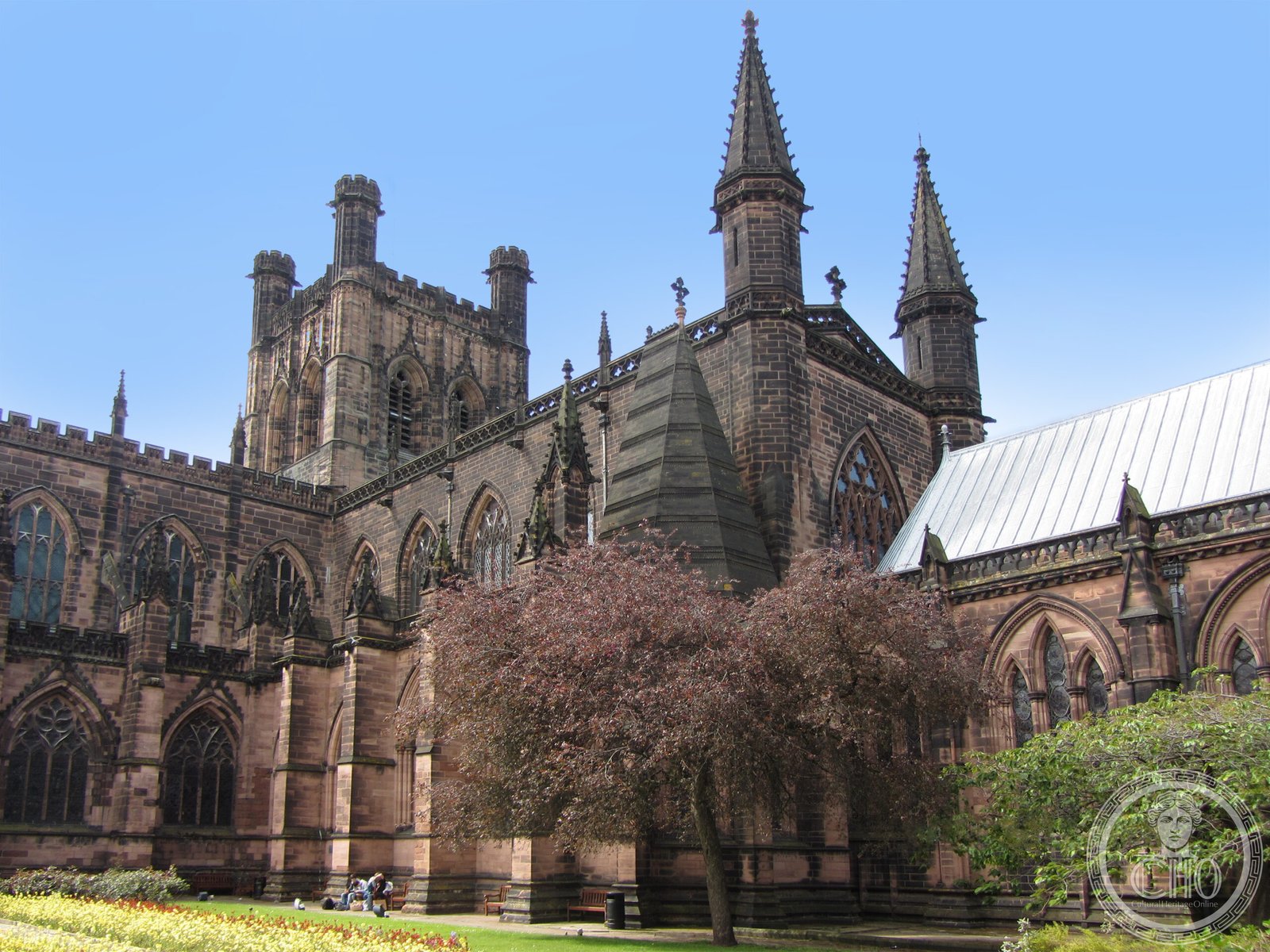
A magnificent synthesis of English medieval architecture, Chester Cathedral evolved over six centuries from a Benedictine monastery into the seat of a modern diocese, preserving every major architectural style from Norman to Perpendicular within its walls.
At a glance
Chester Cathedral serves as both the mother church of the Diocese of Chester and a principal cultural landmark in northwest England. Originally dedicated to Saint Werburgh as a monastic abbey church, it became a cathedral in 1541. The Grade I listed building anchors a heritage complex that includes former monastic structures, equally protected and historically significant.
History
The site may have hosted Christian worship since Roman times, though documented construction spans the 10th to early 16th centuries. Founded as a Benedictine monastery dedicated to Saint Werburgh, the church underwent successive modifications reflecting changing architectural tastes and liturgical needs across the medieval period.
The Reformation transformed its purpose: in 1541, it became the cathedral of the newly established Diocese of Chester. Nineteenth-century restoration campaigns—conducted amid some debate—renewed the structure comprehensively. A free-standing bell tower was added during the 20th century.
What you see
The cathedral’s fabric displays the complete trajectory of English medieval design. Norman, Gothic, and Perpendicular styles coexist within a single coherent structure, each phase of construction legible in stone and masonry. The former monastic buildings to the north—cloisters, chapter house, and ancillary ranges—survive as Grade I listed monuments, contributing to one of England’s most intact monastic precincts.
Cultural significance
Chester Cathedral exemplifies how English cathedrals absorb and reflect centuries of architectural evolution without losing architectural integrity. It demonstrates the physical continuity between medieval monasticism and post-Reformation Anglican practice. Today it functions as both a working cathedral and a cultural venue, hosting concerts and exhibitions alongside daily worship.
Key facts
- Location: Chester, Cheshire, England, United Kingdom
- Coordinates: 53.1919°N, 2.8906°W
- Construction period: 10th–early 16th century
- Dedication: Christ and the Blessed Virgin Mary (originally Saint Werburgh)
- Designation: Grade I listed building
- Cathedral status: Seat of the Bishop of Chester since 1541
Practical information & getting there
The cathedral is located in Chester city centre and serves as a major tourist attraction. Beyond regular worship services, it hosts concerts, exhibitions, and cultural events. The adjoining monastic buildings are also open to visitors as part of the heritage site.
Sources & resources
Find it on the map
See this place and what’s around it →📷 Become a Cultural Heritage Online photographer
Share your photos of places: they stay published under your name as the author. The more they're seen, the more you get noticed — and soon a contest will reward the most appreciated photos.
Log in or sign up free to add a photoIs this page about you?
This page is read by travellers and heritage enthusiasts who find it on Google. Tell us how you are connected to this place and we will take it from there.