
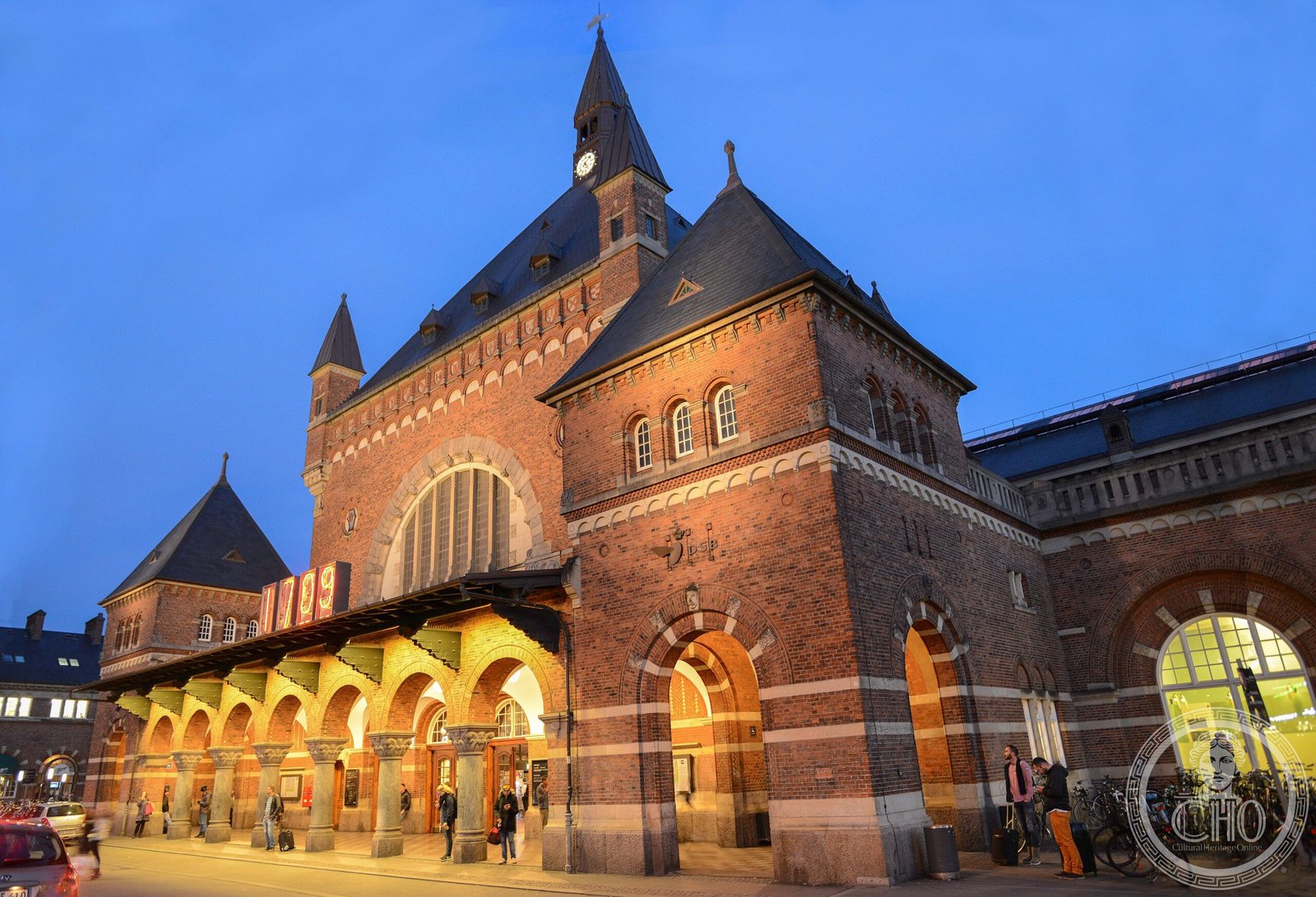
Denmark’s largest railway station and the beating heart of Nordic rail travel, connecting Copenhagen to Sweden, Germany, and cities across the country.
At a glance
Copenhagen Central Station handles more than 100,000 travellers daily, making it the second busiest in Denmark. Located between the districts of Indre By and Vesterbro, the station sits opposite Tivoli Gardens and serves as the operational hub for the DSB railway network.
History
The first railway station in Copenhagen opened in 1847. The current structure was completed in 1911, designed by architect Heinrich Wenck. This building replaced earlier facilities and established the station’s role as a major continental gateway.
What you see
Wenck’s building accommodates seven platforms and thirteen tracks. The station concourse houses numerous small shops, restaurants, cafés, and fast food outlets, creating a bustling urban hub. Multiple entrances from Bernstorffsgade, Banegårdspladsen, and Reventlowsgade provide access from different districts.
Cultural significance
The station represents early 20th-century Danish modernism and remains fundamental to Copenhagen’s transport infrastructure. It epitomizes the city’s role as a Scandinavian transport and cultural crossroads, connecting regional commuters with international travellers on a daily basis.
Key facts
- Country: Denmark
- Location: Central Copenhagen (55.673°N, 12.564°E)
- Completed: 1911
- Architect: Heinrich Wenck
- Platforms: 7
- Tracks: 13
- Daily passengers: 100,000+
Practical information & getting there
The station is served by DSB trains to Sweden and Germany, InterCity and express services across Denmark, regional Øresund trains to southern Sweden, the Copenhagen S-train commuter network, and metro lines M3 (City Circle Line) and M4. Multiple station entrances serve different districts and provide convenient access to the platforms.
Sources & resources
Find it on the map
See this place and what’s around it →📷 Become a Cultural Heritage Online photographer
Share your photos of places: they stay published under your name as the author. The more they're seen, the more you get noticed — and soon a contest will reward the most appreciated photos.
Log in or sign up free to add a photoIs this page about you?
This page is read by travellers and heritage enthusiasts who find it on Google. Tell us how you are connected to this place and we will take it from there.