

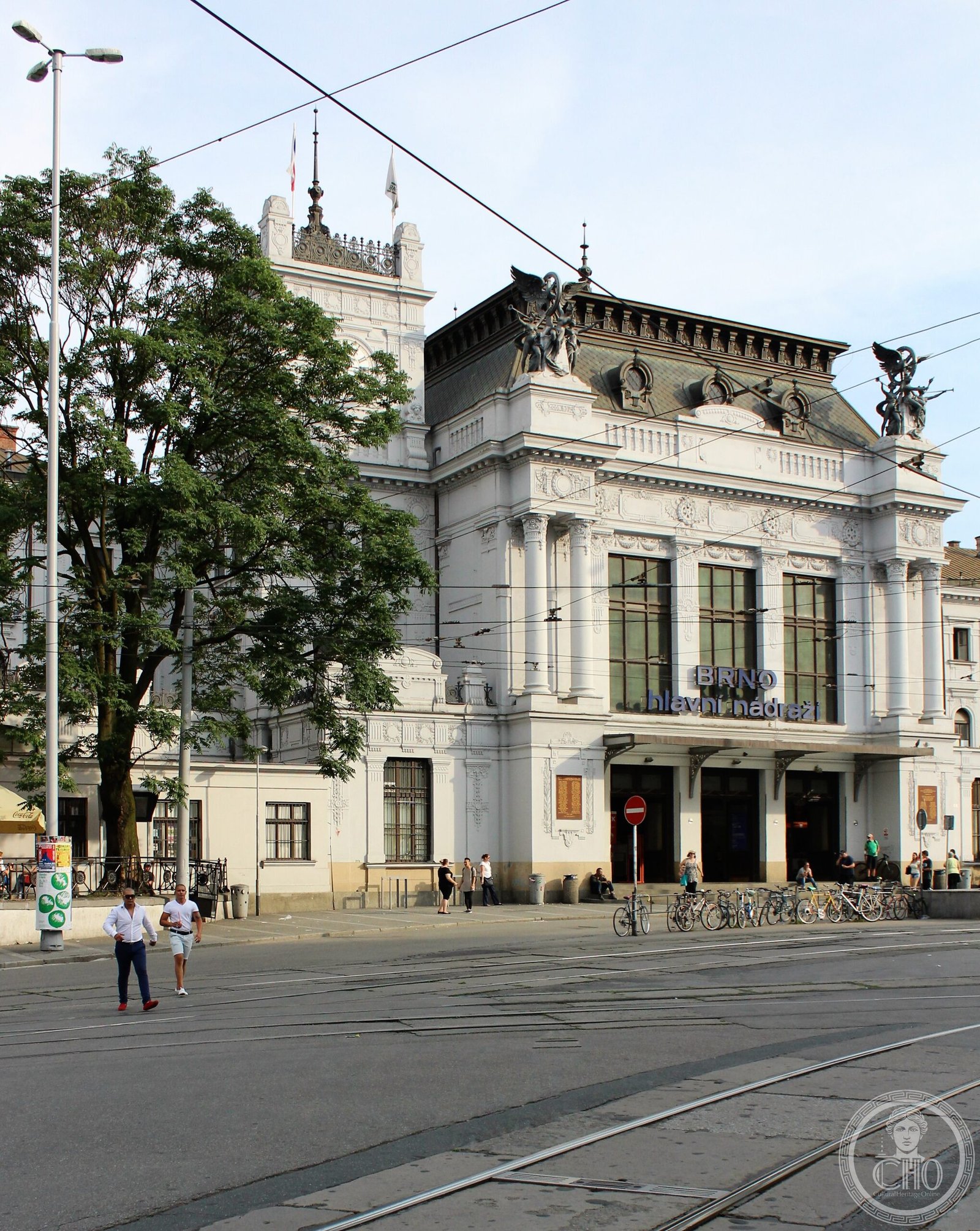
The principal railway station of Brno, the Czech Republic’s second-largest city, and one of the nation’s oldest surviving railway terminals.
At a glance
Brno hlavní nádraží (Brno main railway station) anchors the city centre, occupying land where medieval fortifications once stood. The station has served travellers for nearly two centuries, establishing itself as a key transport hub in Central Europe.
History
The station opened in 1839, making it among the earliest railway terminals in what is now the Czech Republic. Built on the footprint of the city’s former walls, it represents Brno’s transition from a walled medieval settlement to a modern industrial and commercial centre.
What you see
The station’s design reflects 19th-century railway architecture, adapted to its prominent location within the city centre. Its placement on historically significant ground—where defensive walls once protected the medieval city—adds layers of urban meaning to the structure.
Cultural significance
As one of the Czech Republic’s oldest railway stations still in operation, Brno hlavní nádraží embodies the industrial modernization that transformed Central European cities in the 19th century. The station remains a vital artery for regional and international rail connections.
Key facts
- Country: Czech Republic
- City: Brno
- Opened: 1839
- Status: Principal railway station of Brno
- Location: City centre, on former city walls site
- Coordinates: 49.1909°N, 16.6127°E
Practical information & getting there
The station is located in Brno’s city centre and serves as the primary arrival point for rail travellers. Local and international trains connect the city to major destinations across the Czech Republic and Europe. You can reach the station by foot from most central districts.
Sources & resources
- Brno hlavní nádraží – Wikipedia
- Cultural Heritage Online
Find it on the map
See this place and what’s around it →📷 Become a Cultural Heritage Online photographer
Share your photos of places: they stay published under your name as the author. The more they're seen, the more you get noticed — and soon a contest will reward the most appreciated photos.
Log in or sign up free to add a photoIs this page about you?
This page is read by travellers and heritage enthusiasts who find it on Google. Tell us how you are connected to this place and we will take it from there.