
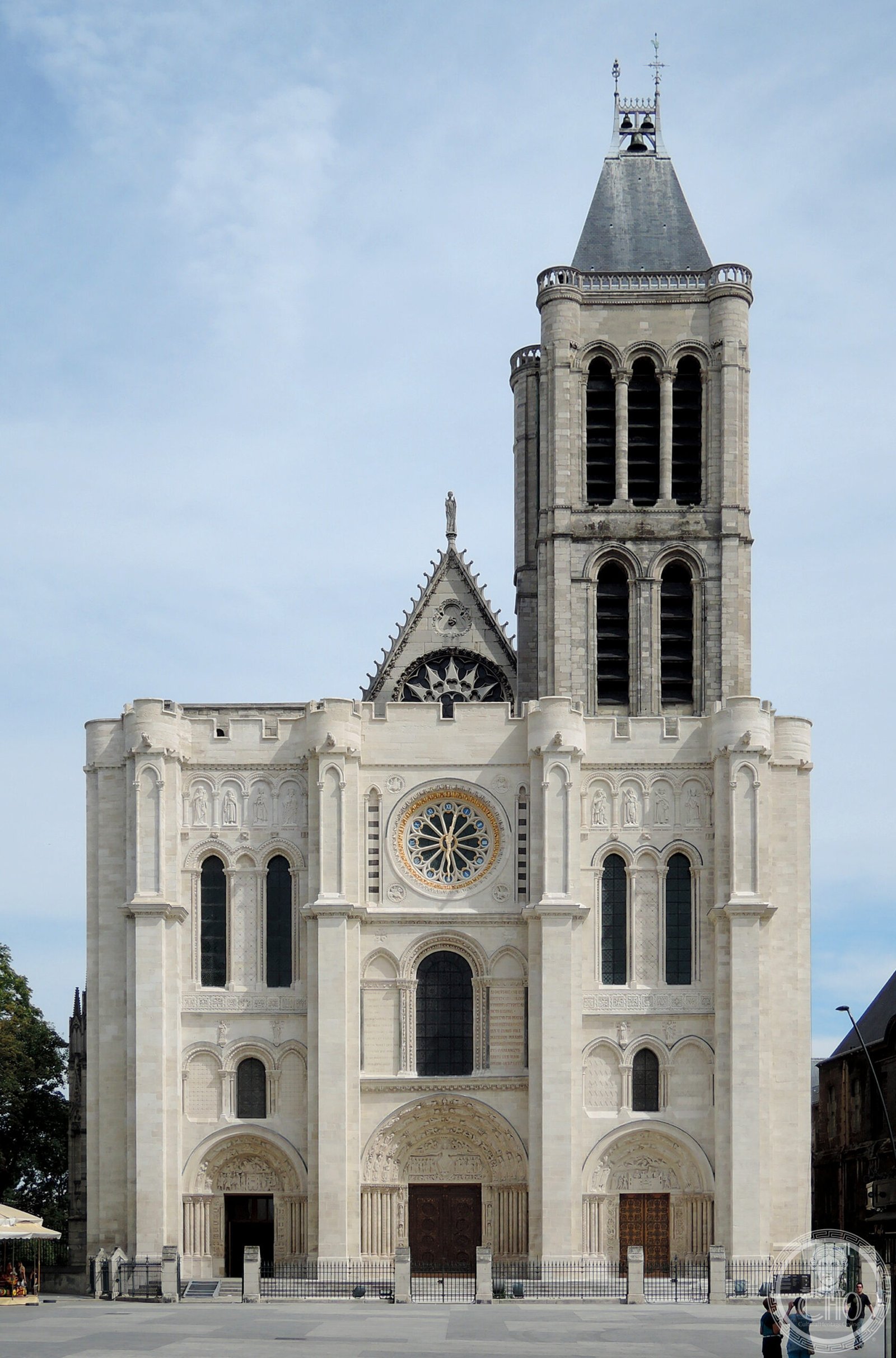
A former royal abbey and necropolis whose choir, completed in 1144, pioneered all the essential elements of Gothic architecture. Now a cathedral, it stands as the burial place of French kings and a monument to the birth of a new architectural language.
At a glance
The Basilica of Saint-Denis originated as a medieval abbey church in the northern suburbs of Paris and was elevated to cathedral status in 1966. Its 12th-century choir represents a watershed moment in architectural history—the first complete expression of Gothic design. For centuries it served as the principal necropolis of the French monarchy and the repository of royal regalia.
History
The site’s earliest phase dates to late Roman times, when it functioned as a Gallo-Roman cemetery. Around 475, Saint Genevieve purchased land and built a chapel dedicated to Denis of Paris, a patron saint of France. In 636, on the orders of King Dagobert I, the relics of Denis were reinterred here, transforming the site into a pilgrimage destination.
The abbey flourished as a royal institution. Nearly every French king from the 10th century through Louis XVIII chose Saint-Denis as their final resting place. The church housed the royal regalia—the coronation sword and sceptre—between ceremonies. Henry IV came here in a moment of profound political consequence to renounce Protestantism and formally convert to Catholicism. Queens of France were crowned within these walls.
The relics of Denis were removed during the Revolutionary period (1795) but returned to the abbey in 1819. The abbey became a cathedral following the establishment of the Diocese of Saint-Denis in 1966.
What you see
Abbot Suger’s 12th-century choir, finished in 1144, introduced the defining characteristics of Gothic architecture in an integrated whole—pointed arches, ribbed vaults, and large stained-glass windows that flood the interior with light. A century later, master-builder Pierre de Montreuil rebuilt the nave and transepts in the Rayonnant Gothic style, refining the vocabulary Suger had initiated.
The cathedral’s 86-metre spire, dismantled in the 19th century, is under reconstruction. Building work began in 2022, with completion targeted for 2029 at a cost of 37 million euros. Visitors will be able to observe restoration work during tours.
Cultural significance
Saint-Denis marks the birth of Gothic architecture. Its innovations—structural, decorative, and luminous—established a design language that would define European sacred architecture for centuries. The building’s historical weight is equally profound: it anchored the ideology and continuity of the French monarchy through its role as dynastic necropolis and seat of coronation ritual.
Key facts
- Country: France
- City: Saint-Denis (northern Paris suburb)
- Coordinates: 48.93555556, 2.35972222
- Choir completed: 1144
- Current status: Cathedral (seat of the Bishop of Saint-Denis since 1966)
- Spire height: 86 metres (282 feet)
Practical information & getting there
Saint-Denis is accessible from central Paris via public transport. The cathedral welcomes visitors and, during the ongoing spire reconstruction (2022–2029), allows tours that include observation of the building work. For current hours and admission details, check the cathedral’s official website or contact the Diocese of Saint-Denis.
Sources & resources
Find it on the map
See this place and what’s around it →📷 Become a Cultural Heritage Online photographer
Share your photos of places: they stay published under your name as the author. The more they're seen, the more you get noticed — and soon a contest will reward the most appreciated photos.
Log in or sign up free to add a photoDo you manage this place?
This page is read by travellers and heritage enthusiasts who find it on Google. Keep it accurate — and make it work for you. Free for non-profit heritage institutions.