
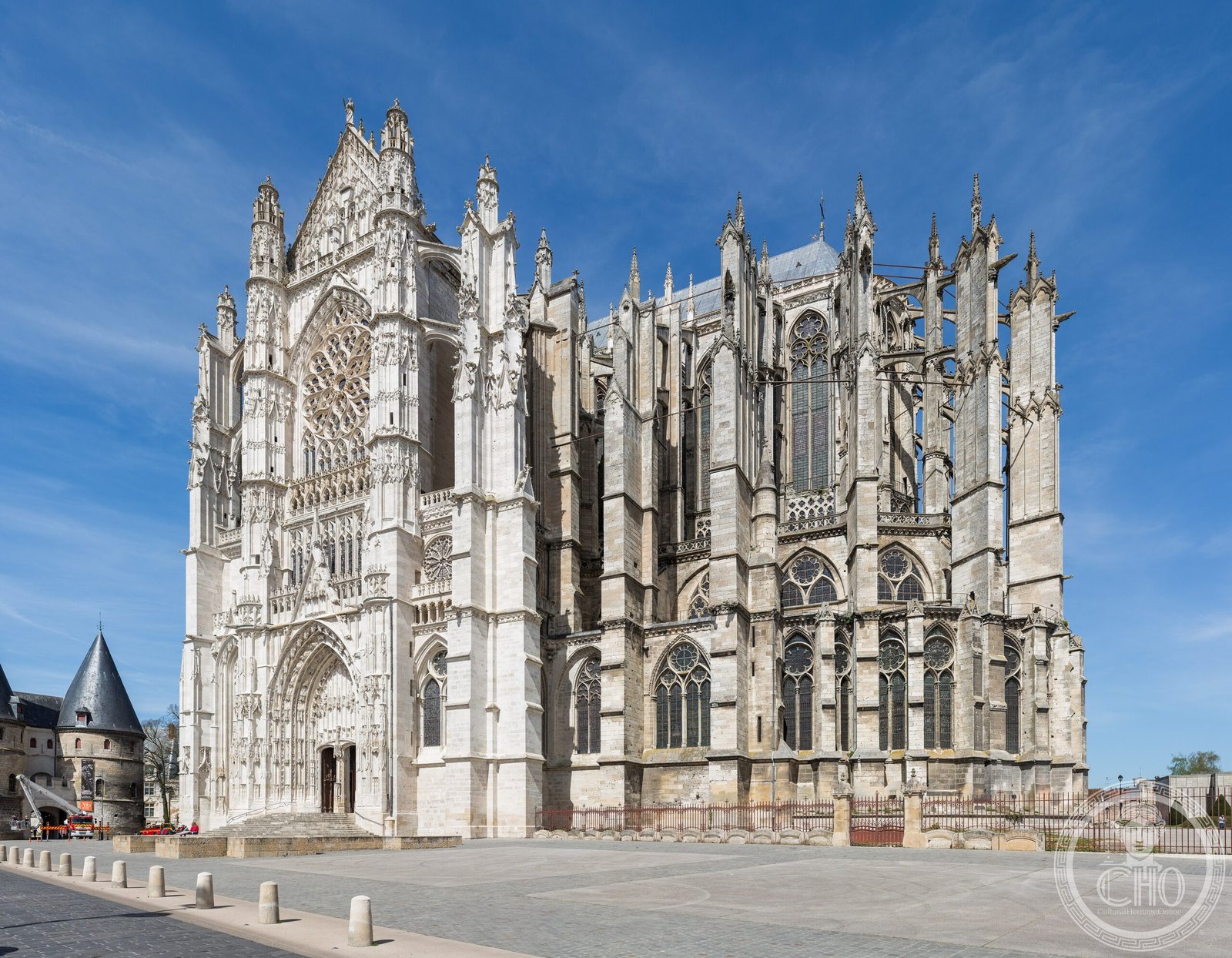
A Gothic cathedral of radical ambition and tragic collapse, Beauvais stands as testimony to medieval builders who dreamed of surpassing their rivals. Its choir rises higher than any other Gothic cathedral on Earth.
At a glance
Beauvais Cathedral remains one of Christendom’s most audacious incomplete projects. The 13th-century choir, soaring 48.5 metres under vault, represents the zenith of Gothic verticality. Structural failures in the 13th and 16th centuries prevented the nave from ever being built, leaving the cathedral fragmentary yet magnificent.
History
Construction began in the 13th century with designs conceived to outmatch the great cathedrals of Amiens and Notre-Dame de Paris. The choir was completed with its ambulatory and seven polygonal apsidal chapels. A 16th-century transept was added to the composition.
Disaster struck twice. A major collapse during the 13th century interrupted work; another catastrophic failure in the 16th century halted further progress. Between 1569 and 1573, Beauvais briefly held the distinction of hosting the world’s highest human structure—its tower reaching 153 metres—before subsequent damage rendered that claim obsolete.
The cathedral has served as the episcopal seat of the Bishop of Beauvais, Noyon and Senlis since its inception and was designated a national monument in 1840.
What you see
The visible cathedral comprises two distinct phases of Gothic development. The 13th-century choir dominates, with its soaring vault and radiating apsidal chapels forming a harmonious ambulatory. The later 16th-century transept represents a different era’s aesthetic.
Most striking is the sheer vertical aspiration of the choir—a statement in stone of medieval competition and pride. The original nave site now holds the Basse Œuvre (Lower Work), remnants of the 10th-century Romanesque cathedral that preceded this Gothic ambition.
Cultural significance
Beauvais Cathedral embodies the Gothic period’s drive toward technical and artistic supremacy. Its unfinished state paradoxically strengthens its cultural power: the building speaks as much through absence as presence, revealing the limits of medieval engineering and the hubris of its designers.
The structure represents a crucial chapter in architectural history—where ambition exceeded capability, where mathematics met faith, and where failure became its own monument.
Key facts
- Country: France
- City: Beauvais, Oise
- Coordinates: 49.4326, 2.0814
- Highest Gothic choir in the world: 48.5 metres (159 ft) under vault
- Former tower height: 153 metres (502 ft), the world’s highest structure 1569–1573
- Designated national monument: 1840
- Seat of the Bishop of Beauvais, Noyon and Senlis
Practical information & getting there
Beauvais Cathedral is located in the town centre of Beauvais, in the Oise department north of Paris. The cathedral remains an active place of worship and is open to visitors. Consult local tourism resources for current opening hours and any restrictions.
Sources & resources
Find it on the map
See this place and what’s around it →📷 Become a Cultural Heritage Online photographer
Share your photos of places: they stay published under your name as the author. The more they're seen, the more you get noticed — and soon a contest will reward the most appreciated photos.
Log in or sign up free to add a photoIs this page about you?
This page is read by travellers and heritage enthusiasts who find it on Google. Tell us how you are connected to this place and we will take it from there.