
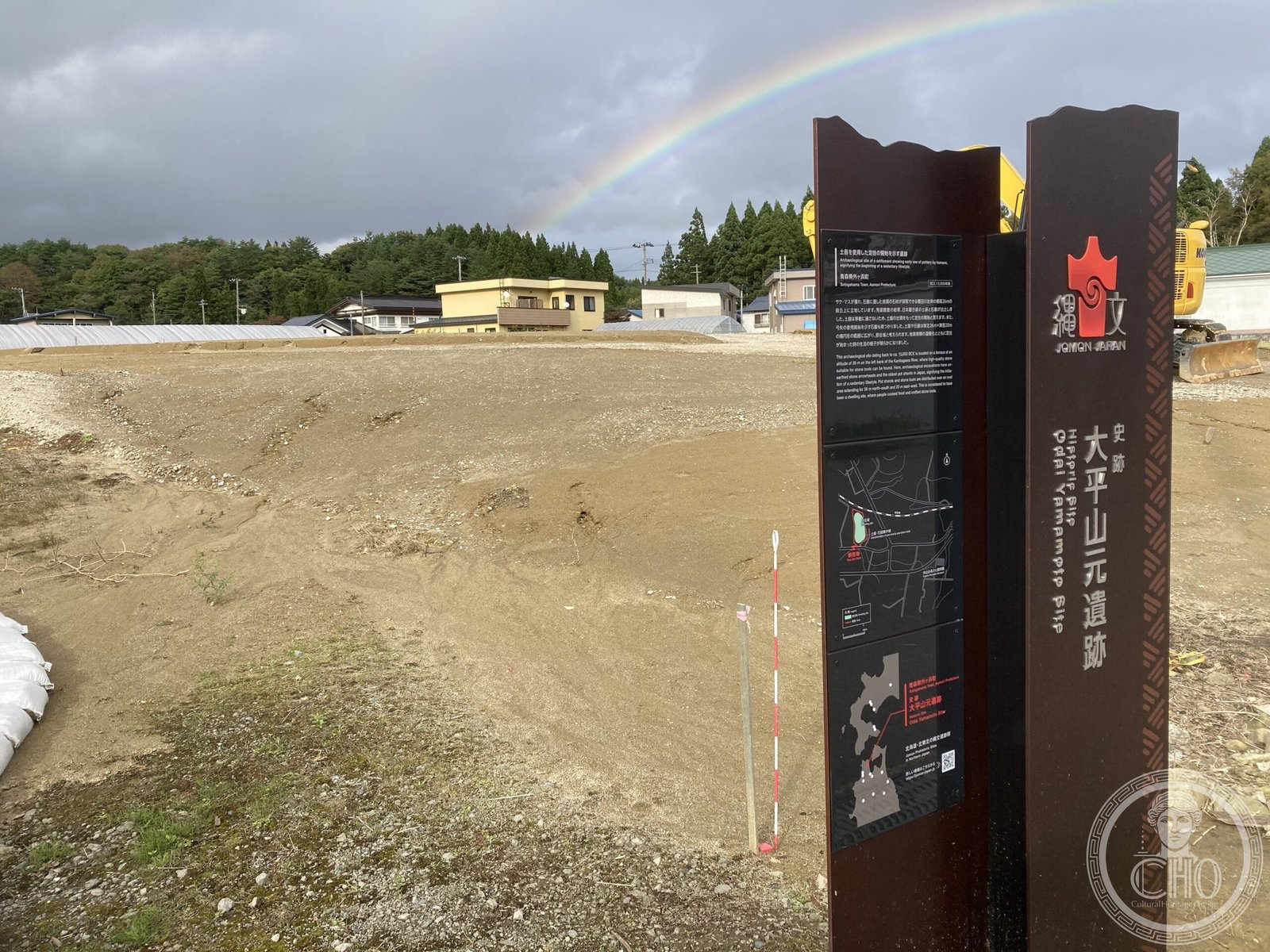
An archaeological site in northern Japan that has yielded among the world’s earliest known pottery, dated to around 14,500 BCE, marking the transition from the Japanese Paleolithic to the Incipient Jōmon period.
At a glance
The Ōdai Yamamoto I Site preserves evidence of some of humanity’s earliest ceramic traditions. Excavations uncovered forty-six earthenware fragments that fundamentally reshape our understanding of pottery’s origins in East Asia and globally.
History
Systematic excavations in 1998 uncovered the pottery fragments at this Jōmon archaeological site. The ceramics have been radiocarbon dated to approximately 14,500 BCE, placing them among the earliest known pottery in the world. This discovery marks the cultural boundary between the Japanese Paleolithic and the Incipient Jōmon period. Similar pottery of comparable age has been documented at Gasya and Khummi sites on the lower Amur River, suggesting broader regional pottery development during this era.
What you see
The site itself consists of the excavation area where earthenware fragments were recovered. The forty-six pottery pieces provide tangible evidence of early ceramic technology, though the modest scale of finds reflects the fragmentary nature of deep-time archaeological sites.
Cultural significance
The Ōdai Yamamoto I Site holds exceptional importance for understanding pottery’s independent invention. The ceramics predate the warming event at the end of the Pleistocene, challenging conventional assumptions about when and where pottery technology emerged. Japan’s status as a center of early ceramic innovation reshapes narratives of Neolithic development in East Asia and globally.
Key facts
- Country: Japan
- Location: Sotogahama town, Aomori Prefecture, Tōhoku region
- Coordinates: 41.07°N, 140.56°E
- Period: Incipient Jōmon (circa 14,500 BCE)
- Discovery: 1998 excavations
- Artifacts: Forty-six earthenware fragments
Practical information & getting there
The site is located in Aomori Prefecture in Japan’s Tōhoku region. Visitors interested in Jōmon archaeology should contact local museums or cultural heritage authorities in Aomori for information about access, exhibitions, and related archaeological collections.
Sources & resources
Find it on the map
See this place and what’s around it →📷 Become a Cultural Heritage Online photographer
Share your photos of places: they stay published under your name as the author. The more they're seen, the more you get noticed — and soon a contest will reward the most appreciated photos.
Log in or sign up free to add a photoIs this page about you?
This page is read by travellers and heritage enthusiasts who find it on Google. Tell us how you are connected to this place and we will take it from there.