
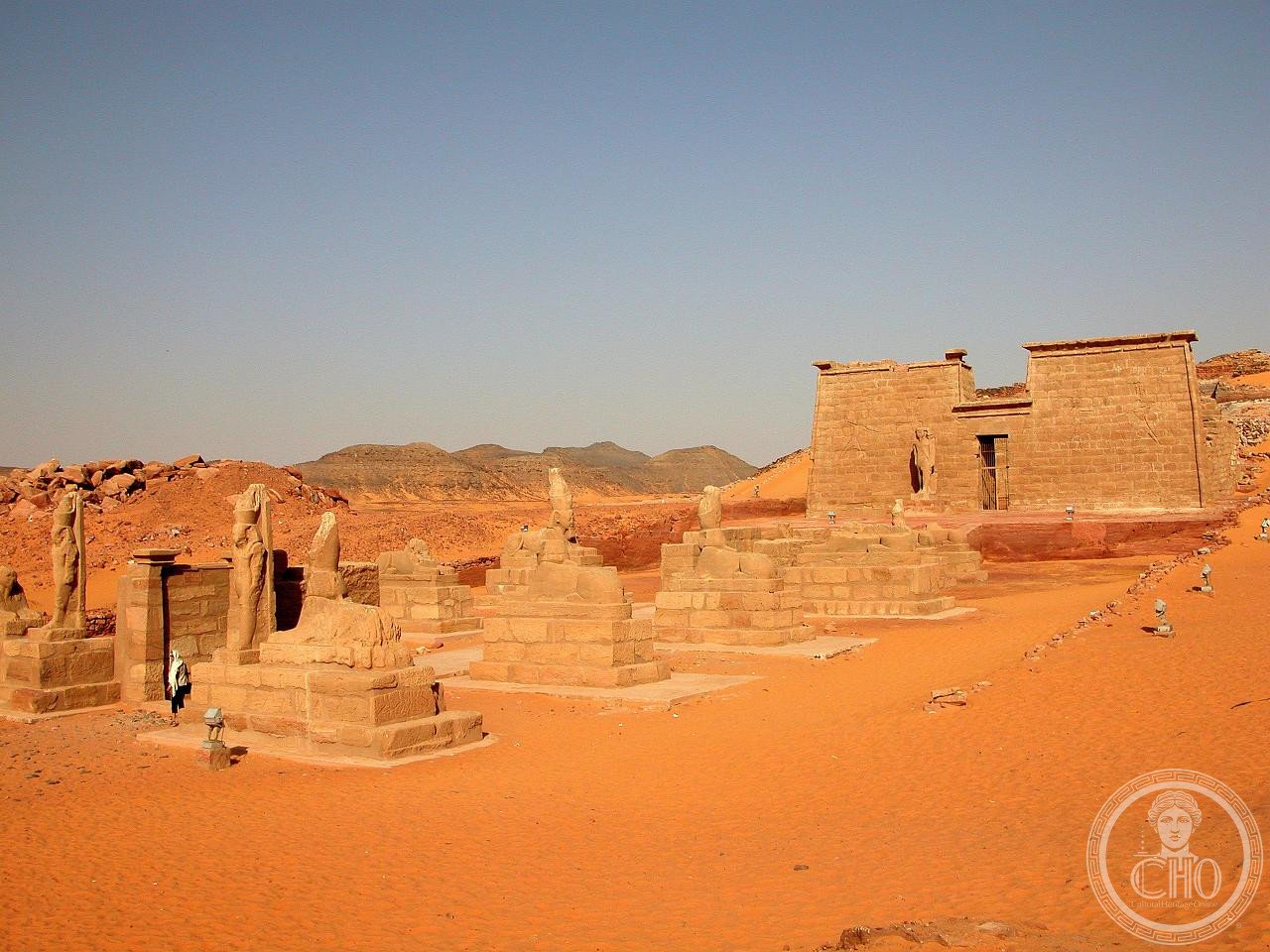
A pair of New Kingdom temples in Lower Nubia, crowned by a speos temple built by Ramesses II. The site’s sphinx-lined forecourts inspired its name: Valley of the Lions.
At a glance
Two ancient Egyptian temples stand at Wadi es-Sebua, including a rock-cut speos temple commissioned by Pharaoh Ramesses II during the 19th Dynasty. The monuments are approached by a ceremonial avenue lined with sphinx statues, an arrangement that lent the valley its evocative Arabic name.
History
Ramesses II ordered construction of the speos temple during Egypt’s New Kingdom. For nearly four millennia the temples stood in their original location in Lower Nubia, until the mid-20th century threatened them with inundation. Between the 1960s, the temples were disassembled and relocated as part of the International Campaign to Save the Monuments of Nubia—a coordinated effort that also preserved Abu Simbel, Philae, Amada, and other archaeological treasures. The relocated temples were inscribed on the UNESCO World Heritage List in 1979.
What you see
The temples feature a distinctive approach lined with sphinx statuary leading to the forecourts. One temple is carved directly into the living rock—a speos—while its companion structure completes the sacred precinct. The sphinx-lined processional way remains a defining feature of the site’s layout.
Cultural significance
Wadi es-Sebua represents the architectural ambition of Ramesses II and the enduring religious landscape of Nubia under Egyptian rule. The site’s modern relocation showcases 20th-century archaeological commitment to cultural preservation, making it equally significant as a monument to heritage conservation itself.
Key facts
- Country: Egypt
- Region: Lower Nubia
- Coordinates: 22.7932° N, 32.5453° E
- Builder: Pharaoh Ramesses II (19th Dynasty)
- Relocated: 1960s (International Campaign to Save the Monuments of Nubia)
- UNESCO World Heritage status: 1979
Practical information & getting there
The temples are accessed via the Aswan–Abu Simbel road in southern Egypt. They are part of the broader UNESCO World Heritage site encompassing relocated Nubian monuments. Visit during cooler months for comfort exploring the open-air site.
Sources & resources
Find it on the map
See this place and what’s around it →📷 Become a Cultural Heritage Online photographer
Share your photos of places: they stay published under your name as the author. The more they're seen, the more you get noticed — and soon a contest will reward the most appreciated photos.
Log in or sign up free to add a photoIs this page about you?
This page is read by travellers and heritage enthusiasts who find it on Google. Tell us how you are connected to this place and we will take it from there.