
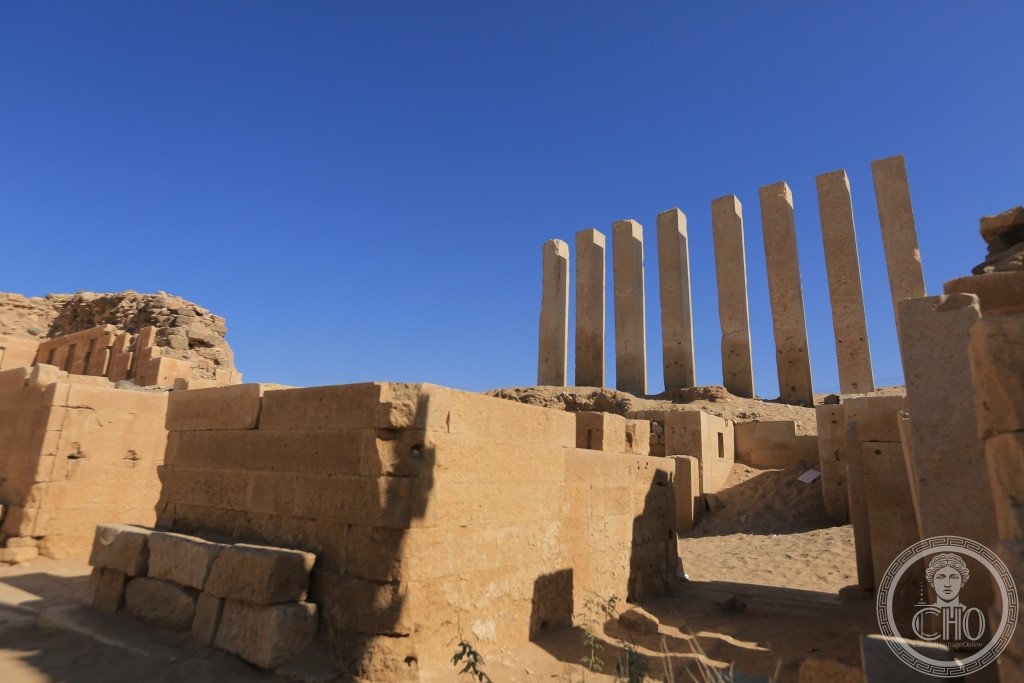
The principal sanctuary of the Sabaean kingdom, this sprawling temple complex dedicated to the god Almaqah remains the largest known religious site in pre-Islamic South Arabia—and a repository of nearly a thousand inscriptions that illuminate Yemen’s ancient political landscape.
At a glance
Located 7 kilometres southeast of ancient Marib, the Temple of Awwam (locally known as Mahram Bilqis, “Sanctuary of Bilqis”) stands as the grandest temple of the Sabaean civilization. Its remoteness from the city center was deliberate, serving both spiritual privacy and the practical needs of pilgrims traveling from distant regions. The site functioned continuously from the 1st millennium BC until the 4th century AD.
History
Built as the paramount sanctuary of Almaqah, the national god frequently invoked as “Lord of ʾAwwām,” the temple played a central role in Sabaean religious and civic life. Pilgrims undertook a ritualistic journey beginning at the Harunum Temple, then proceeded along a processional road to the Awwam Temple itself. This structured approach to worship shaped centuries of Arabian religious practice.
The temple’s long operational span—roughly two millennia—testifies to the stability and continuity of Sabaean civilization. Archaeological layers reveal its persistent importance through successive periods.
What you see
The Temple of Awwam represents the most extensive temple complex known from pre-Islamic South Arabia. Its scale and layout accommodated large numbers of arriving pilgrims while maintaining spaces for ritual conduct. The processional axis linking Harunum and Awwam temples demonstrates sophisticated ceremonial planning.
Cultural significance
Nearly a thousand inscriptions recovered from the Temple constitute the single most important collection of pre-Islamic Arabian texts in existence. These inscriptions form the essential documentary foundation for reconstructing the political history of Yemen during its first three centuries CE. The site ranks among the most significant archaeological monuments of the Arabian Peninsula, offering irreplaceable evidence of Sabaean governance, religion, and society.
In 2023, UNESCO recognized the temple as part of the ancient Kingdom of Saba’s World Heritage designation.
Key facts
- Location: 7 km southeast of Marib, Yemen
- Coordinates: 15.4042°N, 45.3557°E
- Operational period: 1st millennium BC–4th century AD
- Dedicated to: Almaqah, the Sabaean national god
- UNESCO World Heritage status: Inscribed 2023 (Kingdom of Saba)
- Inscriptions found: Nearly 1,000 pre-Islamic Arabian texts
Practical information & getting there
The Temple of Awwam lies near Marib in central Yemen. Due to ongoing regional instability, access and visiting conditions should be confirmed with local authorities and cultural organizations before planning a visit. The site remains an active focus of archaeological study and conservation efforts.
Sources & resources
Find it on the map
See this place and what’s around it →📷 Become a Cultural Heritage Online photographer
Share your photos of places: they stay published under your name as the author. The more they're seen, the more you get noticed — and soon a contest will reward the most appreciated photos.
Log in or sign up free to add a photoIs this page about you?
This page is read by travellers and heritage enthusiasts who find it on Google. Tell us how you are connected to this place and we will take it from there.