

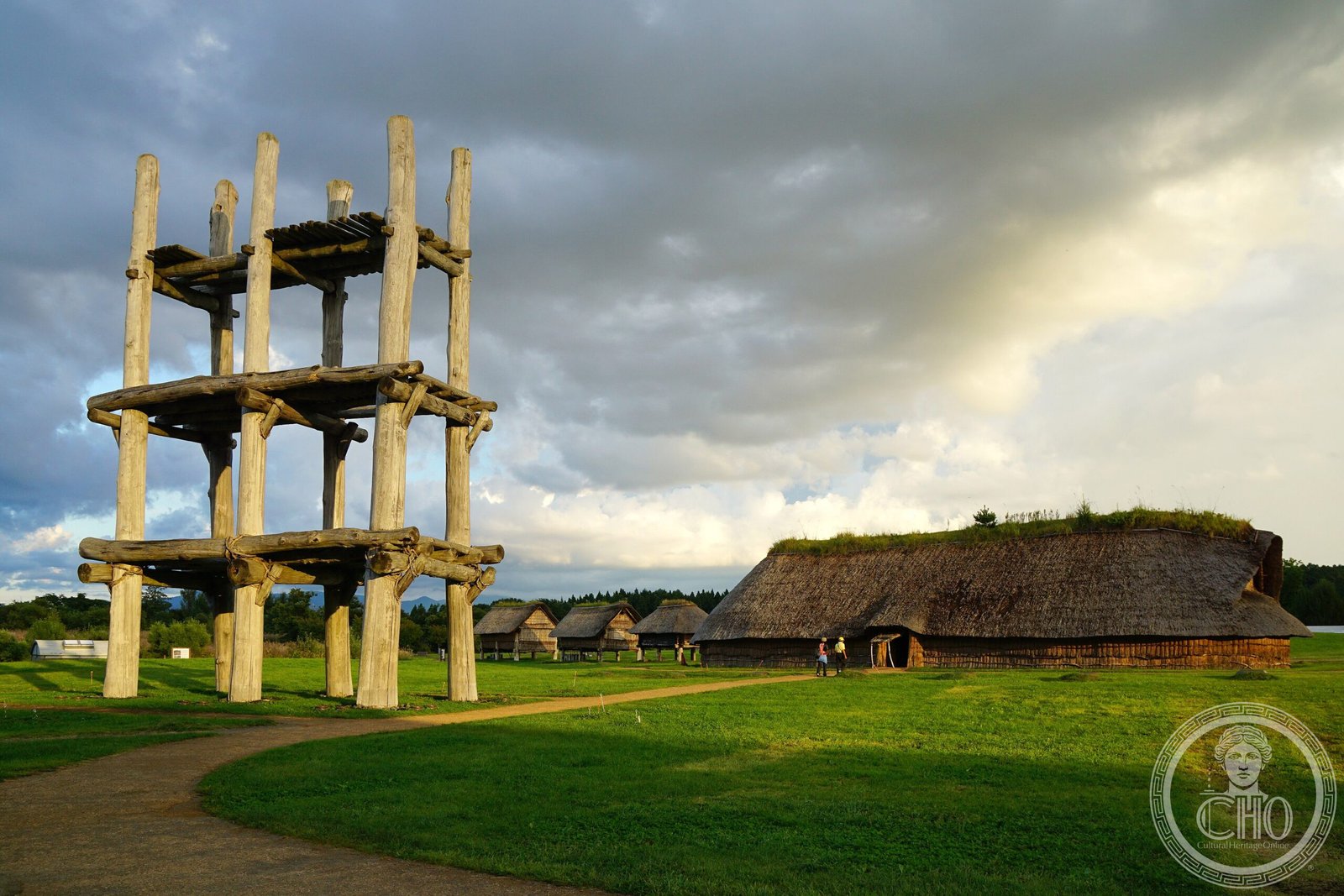
One of Japan’s largest Jōmon settlements reveals how prehistoric communities transitioned to permanent life on the land, with reconstructed dwellings and a museum showcasing thousands of years of material culture.
At a glance
This 40-hectare archaeological site in Aomori Prefecture preserves the remains of an expansive Jōmon-period settlement. Excavations have uncovered storage facilities, long houses, and domestic debris that illuminate the daily life and social organization of hunter-gatherers who chose to settle in one place. Today, visitors encounter both original ruins and full-scale reconstructions of ancient structures, alongside a museum displaying artifacts spanning millennia.
History
The site was discovered in 1992 during a prefectural survey undertaken in preparation for a baseball stadium. Archaeologists recognized its exceptional scale and preservation, making it a crucial source for understanding the Jōmon transition to sedentism—a shift toward permanent habitation that challenges earlier assumptions about prehistoric Japan. Systematic excavation has yielded insights into community structure, architectural evolution, and behavioral change among these ancient peoples. In 2000, the Japanese government designated it a Special National Historical Site. UNESCO recognized it as part of the Jōmon Prehistoric Sites in Northern Japan collection in 2021.
What you see
The site features storage pits and above-ground storage structures alongside the remains of long houses—dwellings that suggest organized communal life. Reconstructed buildings allow visitors to envision the spatial arrangement and domestic practice of Jōmon inhabitants. The on-site museum displays thousands of artifacts including pottery, stone tools, and organic remains that document subsistence, craft, and ritual across centuries of occupation.
Cultural significance
Sannai-Maruyama stands as one of Japan’s most important windows into the Jōmon period, a 14,000-year span of pre-agrarian culture. The site demonstrates that sedentary life and social complexity emerged long before rice agriculture arrived in Japan. Its designation as both a Special National Historical Site and UNESCO World Heritage Site reflects international recognition of its value to understanding human prehistory and adaptation in temperate environments.
Key facts
- Country: Japan
- Location: Aomori City, Aomori Prefecture
- Coordinates: 40.8103, 140.6975
- Site size: 40 hectares (99 acres)
- UNESCO World Heritage Site: Yes (2021, Jōmon Prehistoric Sites in Northern Japan)
- Japanese designation: Special National Historical Site (2000); Important Cultural Property
Practical information & getting there
The site is accessible to the public year-round. You can visit the archaeological remains, reconstructed Jōmon structures, and the museum, which houses the artifact collection. For current hours, admission fees, and detailed directions from Aomori City center, consult the official site or contact Aomori Prefecture’s tourism office.
Sources & resources
Find it on the map
See this place and what’s around it →📷 Become a Cultural Heritage Online photographer
Share your photos of places: they stay published under your name as the author. The more they're seen, the more you get noticed — and soon a contest will reward the most appreciated photos.
Log in or sign up free to add a photoIs this page about you?
This page is read by travellers and heritage enthusiasts who find it on Google. Tell us how you are connected to this place and we will take it from there.