
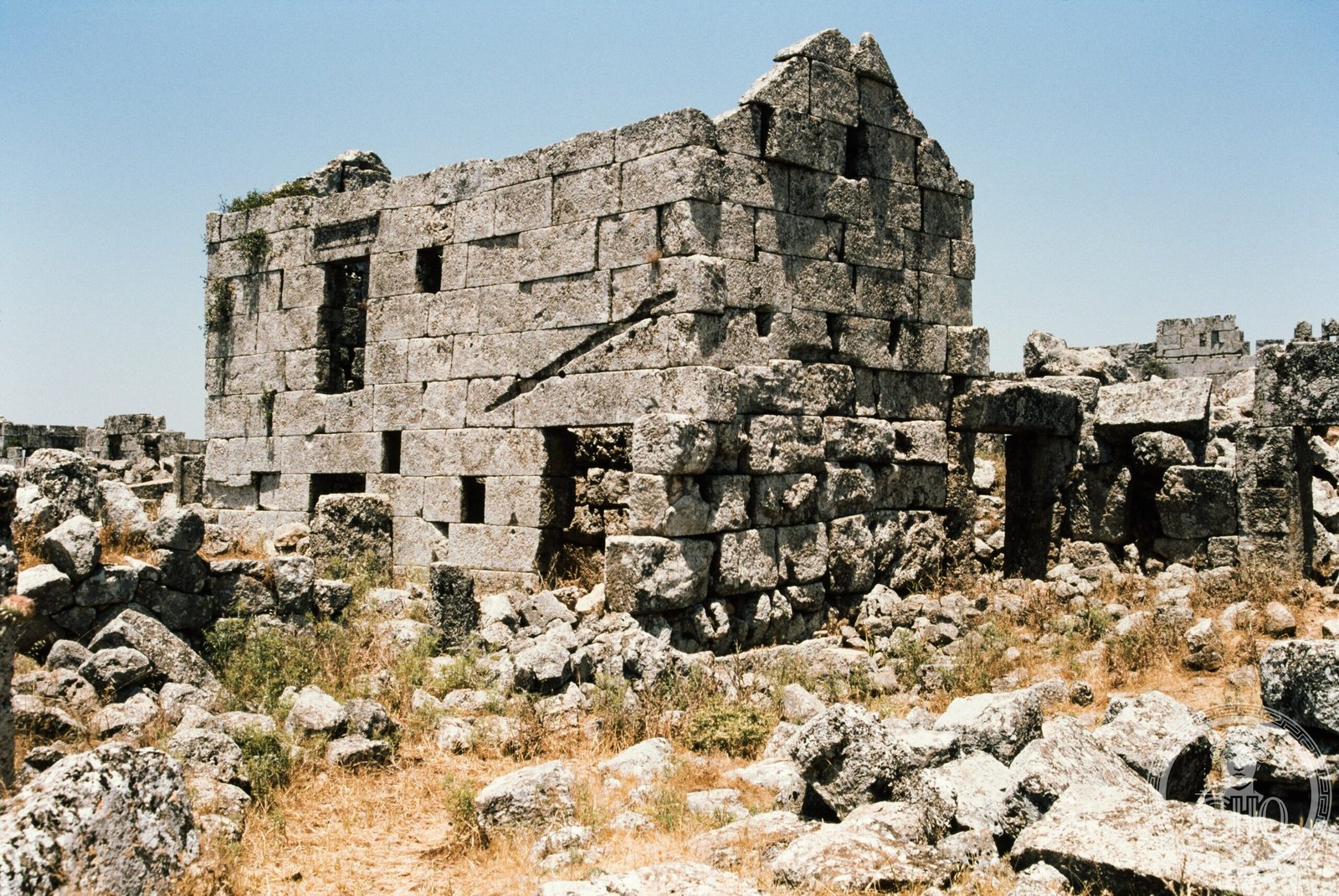
A modest Byzantine settlement in Syria containing the earliest known house church after Dura-Europos, offering rare insight into early Christian worship spaces.
At a glance
Qirqbize stands as a crucial archaeological site for understanding Christian material culture in the early Byzantine period. The preserved house church dates to the beginning of the 4th century, when Christian worship often occurred in adapted domestic spaces rather than purpose-built structures. Its survival and excavation reveal practices and spatial organization of faith in a formative era.
History
The settlement was inhabited continuously from the Roman period through at least the 7th century, spanning a significant transition in the Mediterranean world. Howard Crosby Butler first investigated the site in 1899, beginning systematic study of its remains. George Tchalenko led excavations from 1939 until 1971, substantially expanding knowledge of the site and its structures during this extended campaign.
What you see
The most significant remains are those of the house church from the early 4th century. This structure represents an adaptation of domestic architecture for communal Christian gathering—a transitional form between purely private worship and the later purpose-built basilica churches that would define Byzantine Christianity. The building demonstrates how early Christian communities repurposed existing structures.
Cultural significance
Qirqbize provides essential evidence for understanding early Christian practice in the Levantine region. The house church is among the earliest archaeologically preserved examples of its kind, standing second only to the famous church at Dura-Europos. These remains illuminate the evolution from clandestine domestic worship to organized religious architecture, a transformation central to Christian history.
Key facts
- Country: Syria
- Coordinates: 36.17°N, 36.59°E
- House church dating: Early 4th century
- Period of habitation: Roman through 7th century
- Notable excavations: George Tchalenko, 1939–1971
Practical information & getting there
Qirqbize lies in northwest Syria. Access and visiting conditions should be verified before travel, given the region’s complex contemporary circumstances. For archaeological research and detailed site information, consult primary excavation reports and recent scholarly publications on Byzantine Syria.
Sources & resources
Find it on the map
See this place and what’s around it →📷 Become a Cultural Heritage Online photographer
Share your photos of places: they stay published under your name as the author. The more they're seen, the more you get noticed — and soon a contest will reward the most appreciated photos.
Log in or sign up free to add a photoIs this page about you?
This page is read by travellers and heritage enthusiasts who find it on Google. Tell us how you are connected to this place and we will take it from there.