
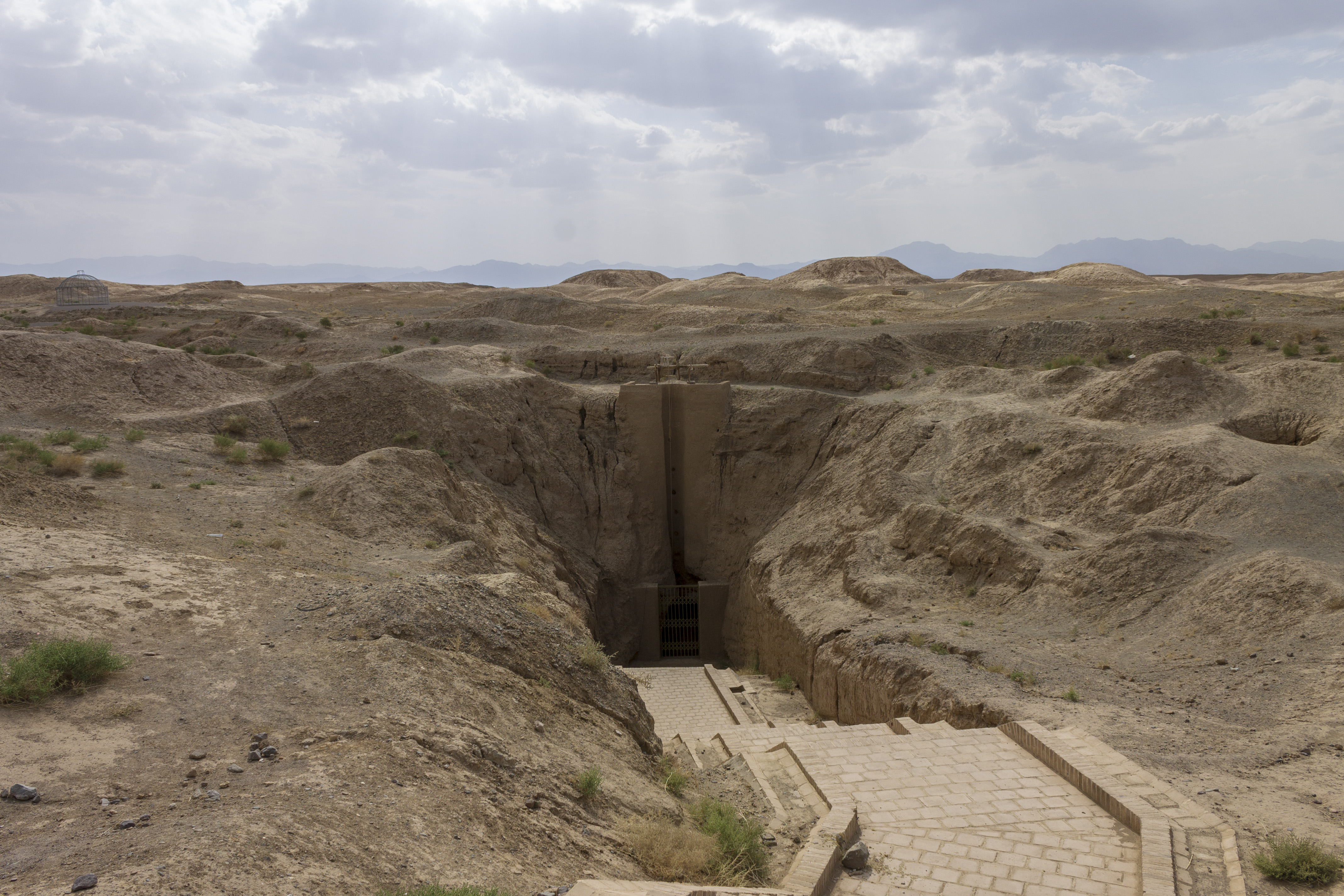
An extraordinary network of underground aqueducts engineered by the Achaemenid Empire, the Qanats of Ghasabeh represent one of antiquity’s most ambitious hydraulic systems—a feat of precision engineering that sustained communities for millennia.
At a glance
The Qanats of Ghasabeh form one of the world’s oldest and largest qanat networks, comprising 427 water wells connected by underground tunnels spanning over 33 kilometres. This subterranean infrastructure system was constructed during the Achaemenid period to transport water across the arid plateau of what is now northeastern Iran.
History
Built between 700 and 500 BCE, the qanat system was engineered by the Achaemenid Empire—the ancient Persian civilization that dominated the Near East. Also known as Kariz e Kay Khosrow, the network was designed to harness groundwater from mountain aquifers and deliver it across vast distances without surface evaporation, a critical innovation for desert settlement and agriculture.
What you see
The system consists of 427 individual wells with a combined underground length of 33,113 metres. Water moves through subterranean channels engineered with precise gradients to maintain steady flow. Access shafts at regular intervals allowed maintenance and provided exits for water distribution across the landscape.
Cultural significance
The Qanats of Ghasabeh exemplify the technological sophistication and environmental adaptation of ancient Persian civilization. This irrigation method—later adopted across the Islamic world, North Africa, and Spain—fundamentally shaped settlement patterns and agricultural development in arid regions. The system’s durability demonstrates mastery of hydraulic engineering that functioned for centuries.
Key facts
- Country: Iran
- Location: Gonabad, Razavi Khorasan Province
- Coordinates: 34.33°N, 58.68°E
- Period: 700–500 BCE (Achaemenid)
- Structure: 427 wells; 33,113 metres of underground channels
- UNESCO status: Tentatively inscribed 2007; officially inscribed 2016 as part of “The Persian Qanat”
Practical information & getting there
Gonabad lies in Razavi Khorasan Province in northeastern Iran. Access to the qanat network requires travel to Gonabad and local guidance; some sections remain active and operational. Consult current travel advisories and local authorities before visiting.
Sources & resources
Find it on the map
See this place and what’s around it →📷 Become a Cultural Heritage Online photographer
Share your photos of places: they stay published under your name as the author. The more they're seen, the more you get noticed — and soon a contest will reward the most appreciated photos.
Log in or sign up free to add a photoIs this page about you?
This page is read by travellers and heritage enthusiasts who find it on Google. Tell us how you are connected to this place and we will take it from there.