
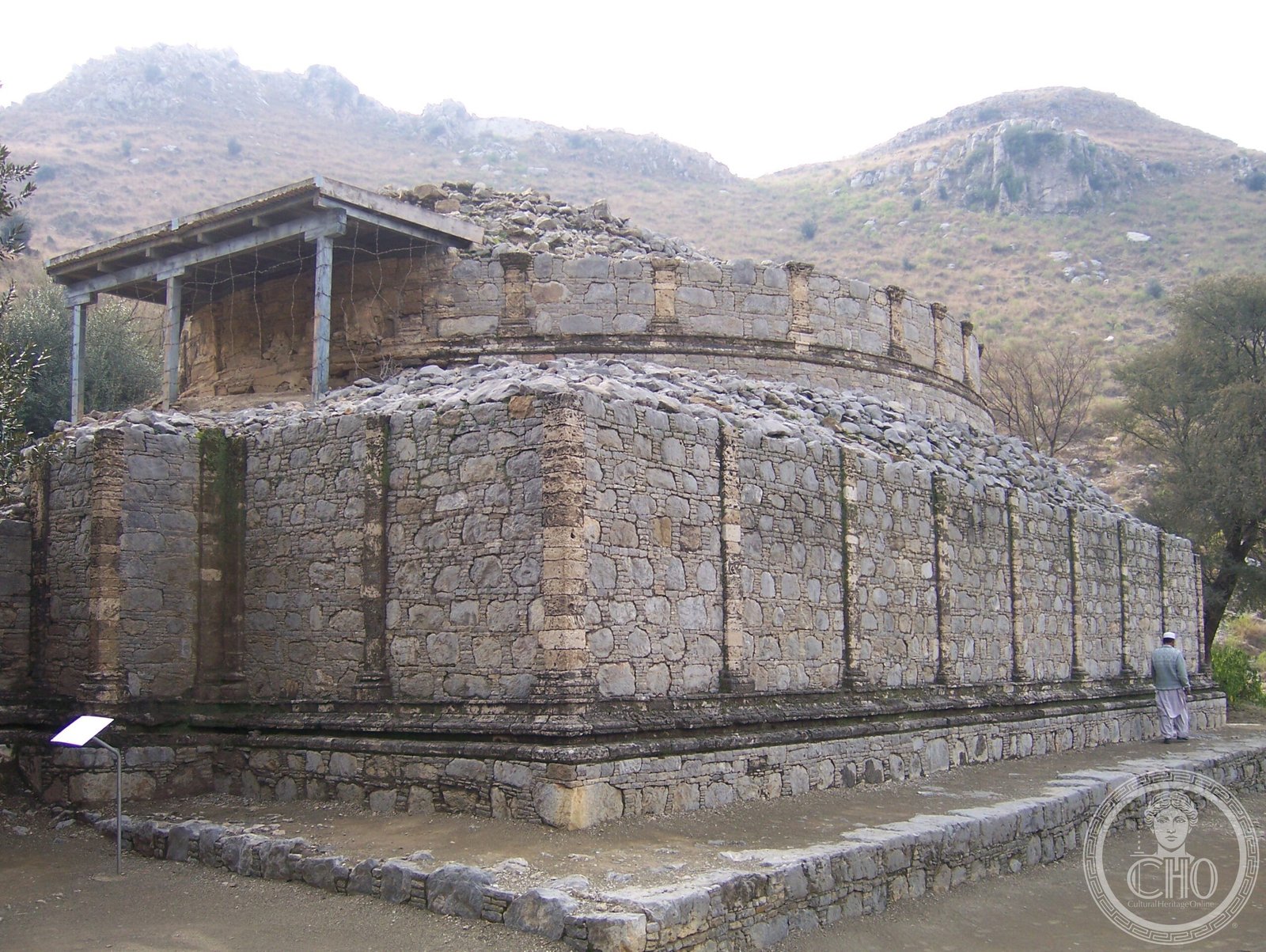
An ancient Buddhist monastery and stupa complex near Taxila, positioned in a valley where monks could meditate in solitude while remaining close enough to the city for daily alms rounds.
At a glance
Mohra Muradu comprises three architectural elements: a main stupa, a votive stupa, and a monastery. The site overlooks surrounding mountains from its sheltered valley location, approximately 1.5 km from the ancient city of Sirsukh. It forms part of the broader Taxila archaeological complex.
History
The city and monastery are said to have been built in the 2nd century CE. Substantial renovations followed in the 5th century, reflecting the enduring importance of the Buddhist community in the region. The site remained a significant religious center through these centuries of development.
What you see
The ruins are organized into three distinct parts. The main stupa anchors the complex, accompanied by a smaller votive stupa—structures characteristic of Buddhist devotional sites. The monastery buildings would have provided residential and communal spaces for the monastic community, with the valley’s natural topography offering protection and contemplative stillness.
Cultural significance
Mohra Muradu exemplifies Buddhist monastic planning during the Kushan and later periods. Its strategic placement—isolated enough for spiritual practice yet accessible for interaction with the lay community—reveals the delicate balance monks sought between withdrawal and engagement. The site contributes to understanding Buddhist life along the Silk Road.
Key facts
- Country: Pakistan
- Region: Punjab, near Taxila
- Coordinates: 33.7608, 72.8606
- Period: 2nd–5th century CE
- UNESCO World Heritage: Included since 1980 as part of Taxila
Practical information & getting there
Mohra Muradu is accessible as part of visits to the Taxila archaeological site. The ruins lie in a valley near Sirsukh, approximately 1.5 km from the city center. Consult current local authorities for access conditions and visitor facilities at Taxila.
Sources & resources
Find it on the map
See this place and what’s around it →📷 Become a Cultural Heritage Online photographer
Share your photos of places: they stay published under your name as the author. The more they're seen, the more you get noticed — and soon a contest will reward the most appreciated photos.
Log in or sign up free to add a photoIs this page about you?
This page is read by travellers and heritage enthusiasts who find it on Google. Tell us how you are connected to this place and we will take it from there.