
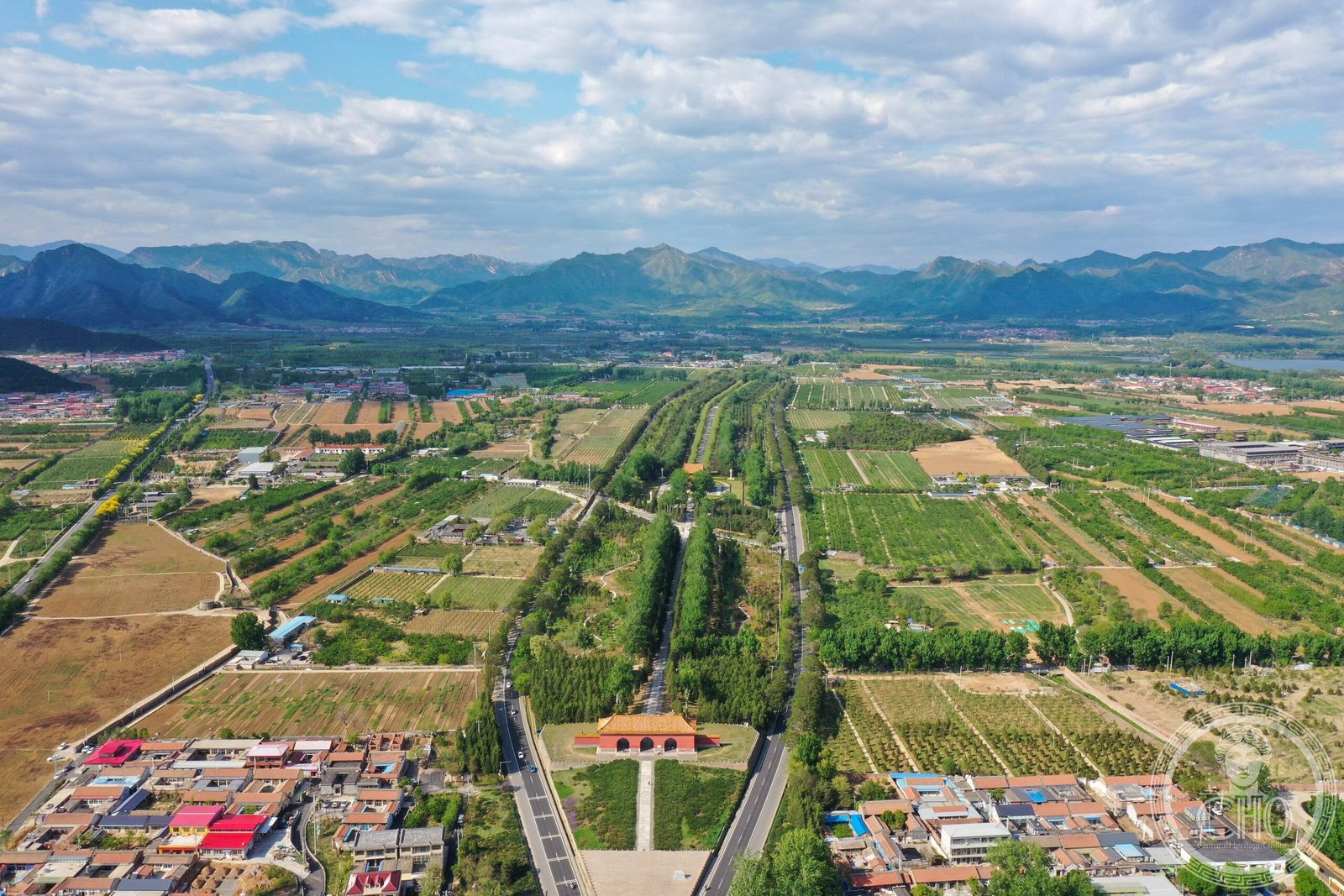
Thirteen imperial mausoleums built by Ming emperors on the southern slope of Tianshou Mountain, chosen by the Yongle Emperor according to feng shui principles and housing the burials of successive dynasties from 1424 onwards.
At a glance
The Ming tombs form a sacred necropolis 42 kilometers north-northwest of Beijing’s center, in Changping District. Thirteen emperors rest here, their mausoleums arranged in a valley where imperial burial tradition flourished for over two centuries. The site was established after the Forbidden City’s completion in 1420.
History
The Yongle Emperor selected this burial ground and commissioned his own mausoleum, establishing a precedent that subsequent emperors followed. From his reign onward, thirteen Ming rulers chose the same valley for their final resting places. The Hongwu Emperor, the dynasty’s founder, was buried near Nanjing; the second emperor disappeared without a known tomb; and the Jingtai Emperor was denied imperial honors and buried elsewhere.
In 1644, Li Zicheng’s army ransacked and burned many tombs before taking Beijing. The last Ming emperor, Chongzhen, hanged himself that April and was buried in his concubine’s tomb, which Li Zicheng’s Shun dynasty later recognized as an imperial mausoleum—though on a reduced scale.
During the Qing dynasty, a Ming descendant received hereditary marquis status and a government salary to perform rituals at the tombs. The title passed through twelve generations until the Qing’s fall.
What you see
The tombs occupy the southern slope of Tianshou Mountain, their placement determined by feng shui principles. Thirteen individual mausoleums represent varying scales of imperial architecture, with the Chongzhen emperor’s burial notably smaller than its predecessors.
Cultural significance
The Ming tombs embody the continuity of imperial burial tradition and the geomantic wisdom that guided Chinese dynastic architecture. They testify to the authority and longevity of the Ming dynasty while reflecting later upheaval and the Qing dynasty’s respect for these sacred monuments. As a unified component of the Imperial Tombs World Heritage Site, they represent the full span of imperial power in late imperial China.
Key facts
- Location: Changping District, Beijing, China; 40.253°N, 116.218°E
- Site contains thirteen imperial mausoleums of the Ming dynasty (15th–17th centuries)
- Designated component of the Imperial Tombs of the Ming and Qing Dynasties UNESCO World Heritage Site
- Established by the Yongle Emperor (r. 1402–1424) following feng shui principles
- Last burial: Chongzhen, the final Ming emperor (1644)
Practical information & getting there
The Ming tombs are accessible from Beijing city center, located 42 kilometers to the north-northwest in Changping District. Specific opening hours, admission fees, and visitor facilities should be verified with current sources before planning your visit.
Sources & resources
Find it on the map
See this place and what’s around it →📷 Become a Cultural Heritage Online photographer
Share your photos of places: they stay published under your name as the author. The more they're seen, the more you get noticed — and soon a contest will reward the most appreciated photos.
Log in or sign up free to add a photo