
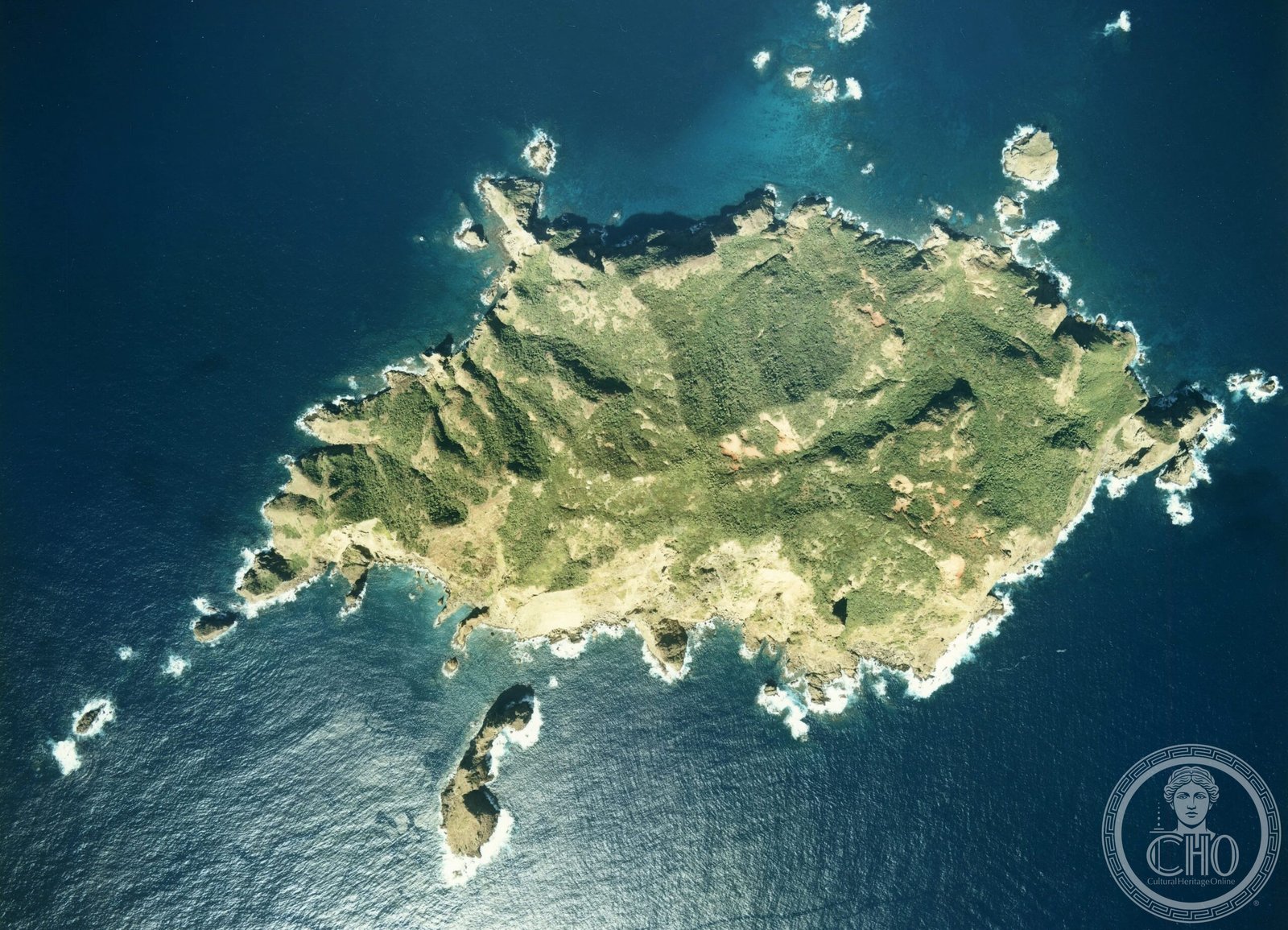
Imōtojima
An uninhabited island in Japan’s remote Ogasawara archipelago, now a sanctuary for endemic bird species and a window onto the region’s settlement history.
At a glance
Imōtojima—meaning ‘Younger Sister Island’ or ‘Small Island’—lies within the Hahajima group of the Ogasawara Islands, a chain of volcanic outcrops in the Pacific Ocean southeast of Tokyo. The island is now uninhabited, though it once supported a small community drawn to its remoteness during Japan’s period of territorial expansion.
History
The island was first named Imōtojima in 1675 by Shimaya Ichizaemon, who led a Tokugawa Shogunate expedition to map the then-uninhabited Ogasawara Islands. Settlement came much later, during the Meiji period. By 1963, the island had a population of 33 residents. Gradually, however, inhabitants relocated to the larger neighboring island of Hahajima, and Imōtojima became deserted.
What you see
As an uninhabited natural island, Imōtojima retains its volcanic terrain and native vegetation largely undisturbed by permanent human settlement.
Cultural significance
Imōtojima holds ecological importance as one of only three islands where the endemic Bonin white-eye can be found. The island represents both the Ogasawara Islands’ complex human history—from Shogunate exploration to Meiji-era settlement and eventual abandonment—and their status as a critical habitat for species found nowhere else on Earth.
Key facts
- Country: Japan
- Region: Ogasawara Islands (Bonin Islands), Hahajima archipelago
- Coordinates: 26.558°N, 142.208°E
- Status: Uninhabited; named by Tokugawa Shogunate in 1675
- Peak population: 33 residents (1963)
- Significance: Home to endemic Bonin white-eye
Practical information & getting there
Imōtojima is remote and uninhabited. Access is restricted and typically requires special permission or guided expeditions organized through local Ogasawara authorities. The Ogasawara Islands themselves are reached by ferry from Tokyo; consult local tourism offices for current regulations governing visits to individual islands.
Sources & resources
Find it on the map
See this place and what’s around it →📷 Diventa un fotografo di Cultural Heritage Online
Condividi le tue foto dei luoghi: restano pubblicate con la tua firma come autore. Più vengono viste, più ti fai conoscere — e presto un concorso premierà le foto più apprezzate.
Accedi o registrati gratis per aggiungere una fotoDo you manage this place?
This page is read by travellers and heritage enthusiasts who find it on Google. Keep it accurate — and make it work for you. Free for non-profit heritage institutions.