

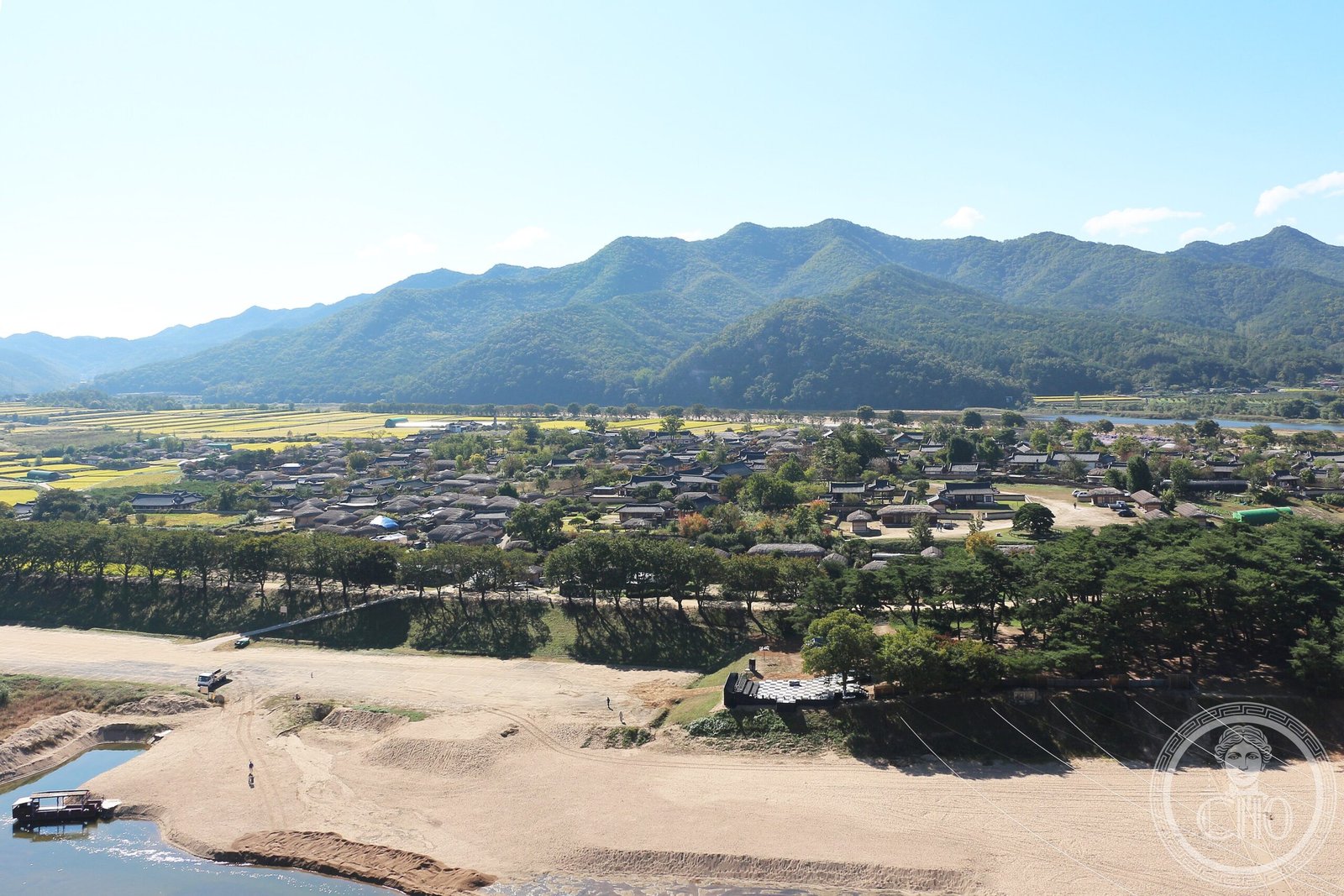
A meticulously preserved Joseon Dynasty village that anchors Korean cultural memory through its architecture, family structures, and historical continuity.
At a glance
Hahoe Folk Village represents an exceptionally intact example of a clan-based settlement from Korea’s Joseon period. The village’s name derives from its geography: ‘ha’ refers to the river, while ‘hoe’ means to turn around or return. Located in Andong, North Gyeongsang Province, it draws approximately one million visitors annually.
History
The village emerged and developed during the Joseon Dynasty as a clan-based community. Its longevity as an inhabited settlement has allowed it to preserve not only physical structures but also intergenerational knowledge, folk practices, and literary traditions that document Korean life across centuries.
What you see
Hahoe displays characteristic Joseon period architecture throughout its layout and building stock. Traditional residences, communal spaces, and domestic arrangements reflect the social hierarchies and family systems that organized village life. The architectural ensemble remains largely unaltered from earlier centuries.
Cultural significance
The village functions as an archive of Korean folk culture. It preserves Joseon-era building styles, domestic customs, valuable manuscripts and books, and the organizational principle of clan-based villages—a social structure fundamental to Korean history. This combination makes Hahoe exceptional among surviving settlements in East Asia.
Key facts
- Country: South Korea
- Location: Andong, North Gyeongsang Province
- Coordinates: 36.539°N, 128.517°E
- UNESCO World Heritage Site (inscribed 2010, jointly with Yangdong Folk Village)
- Annual visitors: approximately 1 million
Practical information & getting there
Hahoe Folk Village is accessible from Andong city. The site operates as an open-air museum where visitors experience the village layout, architecture, and cultural demonstrations. Current hours, admission fees, and seasonal closures should be confirmed before visiting.
Sources & resources
Find it on the map
See this place and what’s around it →📷 Become a Cultural Heritage Online photographer
Share your photos of places: they stay published under your name as the author. The more they're seen, the more you get noticed — and soon a contest will reward the most appreciated photos.
Log in or sign up free to add a photoIs this page about you?
This page is read by travellers and heritage enthusiasts who find it on Google. Tell us how you are connected to this place and we will take it from there.