
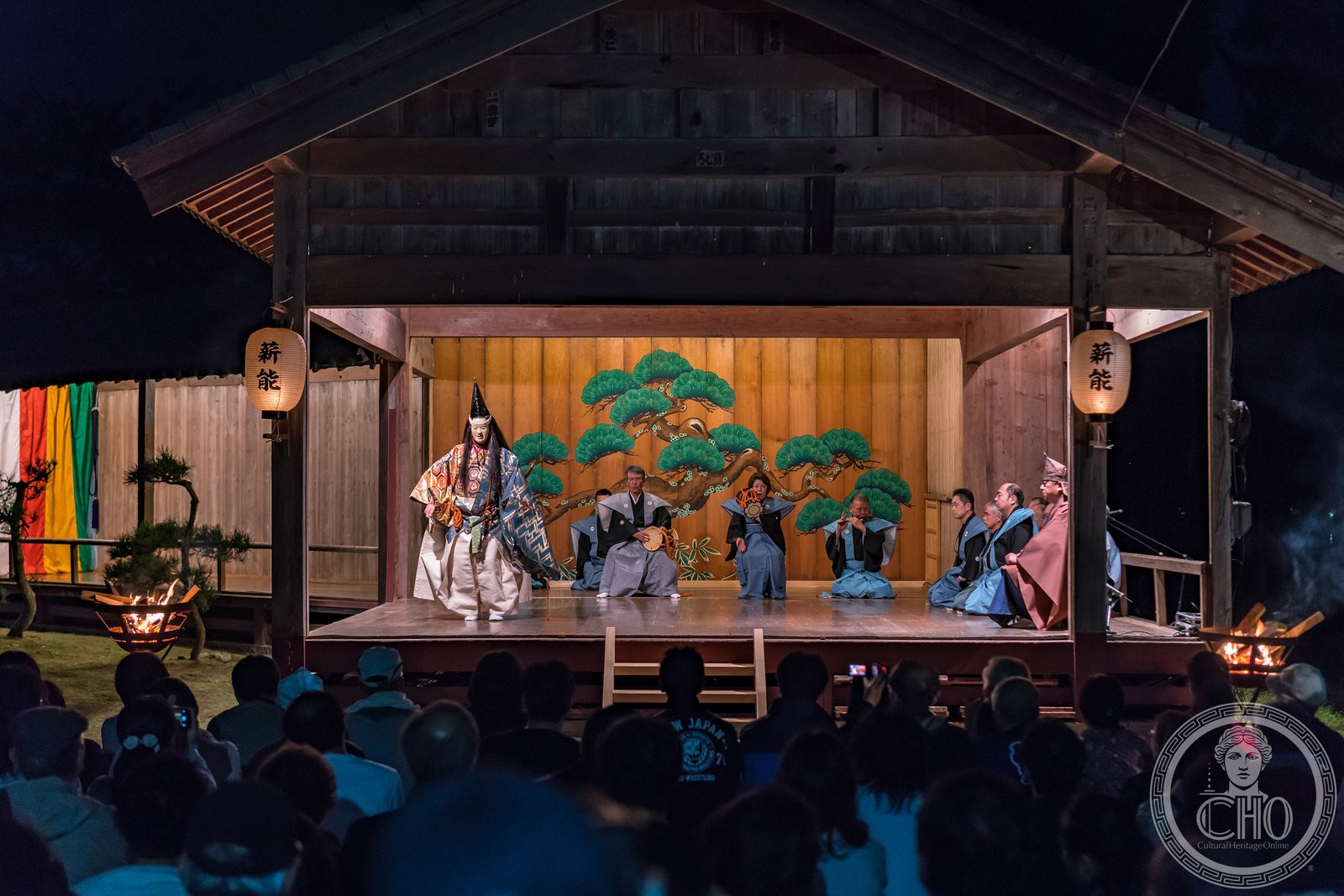
Japan’s oldest continuously performed theater art, Noh weaves together masked dance-drama, stylized gesture, and supernatural storytelling into a highly codified classical form that has enchanted audiences since the 14th century.
At a glance
Noh is a major form of classical Japanese dance-drama performed by highly trained actors and musicians. Performances integrate masks, costumes, and props to tell stories of supernatural beings transformed into human heroes. Emotions emerge through stylized conventional gestures rather than naturalistic expression, while iconic masks denote specific character types: ghosts, women, deities, and demons. Each element—movement, voice, costume, mask—follows centuries-old conventions.
Origins and history
Noh emerged as a major theatrical form in 14th-century Japan, making it the country’s oldest major theater art still regularly performed. The tradition drew from tales of traditional Japanese literature, blending narrative storytelling with dance and music into a unified aesthetic experience. The form has endured through continuous performance and transmission across generations, guided by the iemoto system—a hereditary master-apprentice structure that preserves technique and knowledge.
The tradition today
Noh remains deeply bound to tradition rather than innovation, its practices highly codified and regulated. While Noh and the related form kyōgen are sometimes used interchangeably under the umbrella term nōgaku, they serve distinct roles: traditionally, full nōgaku programs alternated several Noh plays with comedic kyōgen interludes. Modern performances often present an abbreviated format of two Noh plays with one kyōgen piece, making the art accessible while maintaining its essential character.
Cultural significance
Noh represents a pinnacle of Japanese aesthetic refinement, embodying principles of restraint, symbolism, and spiritual depth. The form’s emphasis on suggestion over statement, on the power of the mask and gesture to evoke complex inner worlds, has influenced Japanese arts far beyond theater. For nearly seven centuries, Noh has served as a repository of classical literature, philosophical thought, and performance mastery.
Key facts
- Country: Japan
- Anchor community: Tokyo
- UNESCO Intangible Cultural Heritage: Nôgaku theatre (Representative List)
- Earliest performance: 14th century
- Characteristic elements: Masks, stylized gestures, dance, music, supernatural narratives
- Transmission system: Iemoto (hereditary master-apprentice structure)
Where to experience it
Tokyo hosts several venues dedicated to Noh performance. You can attend productions at established theaters that maintain the tradition and welcome audiences. Check schedules in advance, as performances follow a structured calendar. Many venues offer programs in both Japanese and English to help international visitors follow the narratives.
Sources & resources
Find it on the map
See this place and what’s around it →📷 Become a Cultural Heritage Online photographer
Share your photos of places: they stay published under your name as the author. The more they're seen, the more you get noticed — and soon a contest will reward the most appreciated photos.
Log in or sign up free to add a photo