
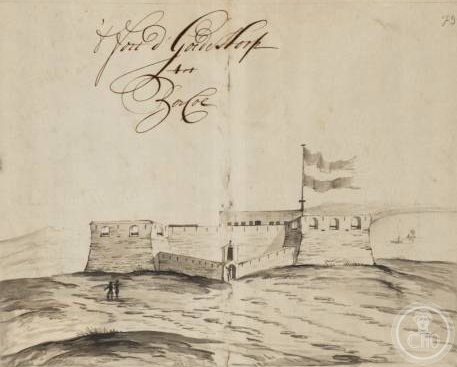
The last Dutch fortress constructed on the Gold Coast, this 17th-century stronghold stands as a testament to the colonial rivalries and mercantile systems that shaped West African history.
At a glance
Fort Goede Hoop (Good Hope) is a Dutch colonial fort built in 1667 at Senya Beraku in Ghana’s Central Region. Designated a UNESCO World Heritage site as part of the Forts and Castles of Ghana, it represents the final phase of Dutch expansion on the Gold Coast.
History
Established in 1667, Fort Goede Hoop marked the conclusion of Dutch fort-building efforts along the Gold Coast. The fort functioned as a trading post and fortified settlement, participating in both the gold trade and the Atlantic slave trade that dominated the region’s economy during the 17th and 18th centuries.
The fort became part of the UNESCO-inscribed Forts and Castles of Ghana in 1979, recognized for its role in documenting European colonial commerce and the transatlantic slave trade.
What you see
Few details about the fort’s original architecture are readily available in standard sources. Information about its current condition, layout, and structural features would benefit from on-site documentation.
Cultural significance
Fort Goede Hoop embodies the complex legacy of European colonialism in West Africa. As part of the Forts and Castles of Ghana World Heritage site, it serves as a physical reminder of the trade networks, power structures, and human suffering that characterized the colonial era and Atlantic slave trade.
The fort contributes to understanding how European nations competed for commercial dominance in Africa and the mechanisms through which colonial systems were established and maintained.
Key facts
- Country: Ghana
- Location: Senya Beraku, Central Region
- Founded: 1667
- Coordinates: 5.3874°N, 0.4898°W
- UNESCO World Heritage status: Part of Forts and Castles of Ghana (inscribed 1979)
Practical information & getting there
Fort Goede Hoop is located in Senya Beraku in Ghana’s Central Region. As part of the protected Forts and Castles of Ghana UNESCO site, visitor access and facilities may vary. Check with local tourism authorities in the Central Region for current opening hours and guided tour availability.
Sources & resources
Find it on the map
See this place and what’s around it →📷 Become a Cultural Heritage Online photographer
Share your photos of places: they stay published under your name as the author. The more they're seen, the more you get noticed — and soon a contest will reward the most appreciated photos.
Log in or sign up free to add a photoIs this page about you?
This page is read by travellers and heritage enthusiasts who find it on Google. Tell us how you are connected to this place and we will take it from there.