
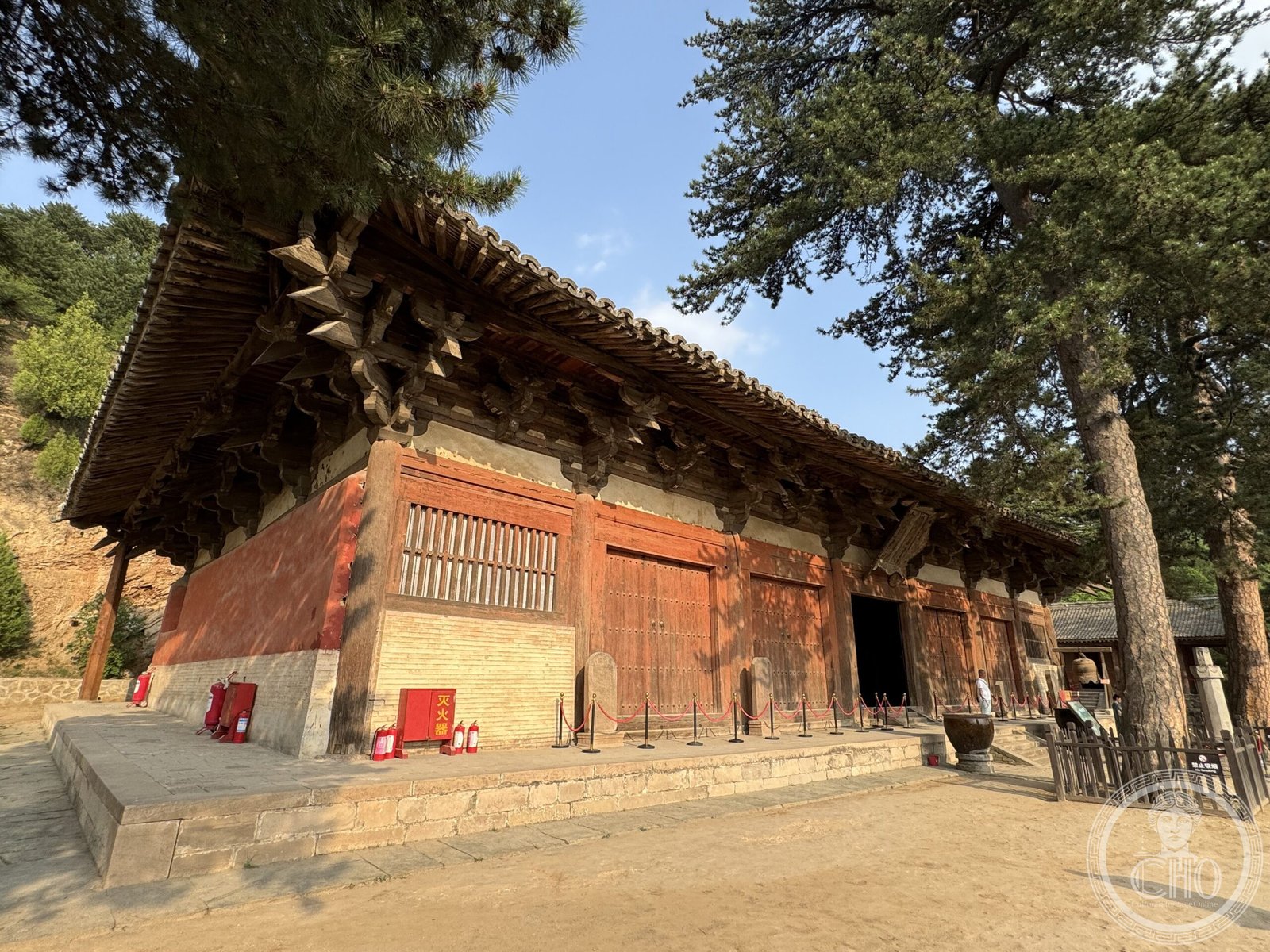
A masterpiece of Buddhist architecture in Shanxi Province, Foguang Temple preserves China’s third-oldest wooden hall and the only structure to unite Tang-dynasty architecture, sculpture, murals, and calligraphy in a single space.
At a glance
Located five kilometres from Doucun Town in Wutai County, this sprawling temple complex covers 8.4 acres and comprises over 120 structures spanning from the Northern Wei to Qing dynasties. The site is part of the Mount Wutai UNESCO World Heritage designation, recognising its exceptional cultural value.
History
Foguang Temple was constructed across many centuries, beginning in the Northern Wei period. Its centrepiece, the Dongda Hall, was built in 857 AD during the Tang dynasty—a period of profound Buddhist flourishing in China. The temple remained largely unknown to modern scholars until 1937, when architectural historians Liang Sicheng and Lin Huiyin rediscovered it. A second significant hall, the Wenshu Hall, dates to 1137 and represents the Song dynasty’s architectural heritage.
What you see
The Dongda Hall dominates the complex as the third earliest preserved timber structure in all of China. This Tang-dynasty masterwork stands out for its unique integration of architecture, sculpture, mural painting, and calligraphic inscriptions—qualities known as the “Four Supremacies.” The temple grounds also contain one of only two surviving Northern Wei pagodas in China, a rare testament to early Buddhist stonework.
Cultural significance
Foguang Temple ranks among China’s foremost national treasures of ancient architecture. The Dongda Hall’s preservation is extraordinary: it demonstrates Tang-dynasty construction techniques, sculptural sophistication, and artistic vision without later restoration. As the sole extant building uniting all four elements of Tang artistic achievement, it holds unparalleled scholarly and aesthetic importance for understanding Buddhist material culture and architectural evolution in medieval China.
Key facts
- Location: Wutai County, Shanxi Province, China (38.8692°N, 113.3878°E)
- Dongda Hall constructed: 857 AD (Tang dynasty)
- Wenshu Hall constructed: 1137 (Song dynasty)
- Total area: approximately 8.4 acres
- Structures: over 120 buildings
- UNESCO designation: Part of Mount Wutai World Heritage Site
- Rediscovered: 1937 by Liang Sicheng and Lin Huiyin
Practical information & getting there
The temple is situated within the Mount Wutai UNESCO World Heritage Site in Shanxi Province. Visitors should plan for the journey to Wutai County and arrange local transport to reach Doucun Town, from which the temple lies five kilometres distant. For current access details, hours, and visitor facilities, consult local tourism resources.
Sources & resources
Find it on the map
See this place and what’s around it →📷 Become a Cultural Heritage Online photographer
Share your photos of places: they stay published under your name as the author. The more they're seen, the more you get noticed — and soon a contest will reward the most appreciated photos.
Log in or sign up free to add a photoIs this page about you?
This page is read by travellers and heritage enthusiasts who find it on Google. Tell us how you are connected to this place and we will take it from there.