
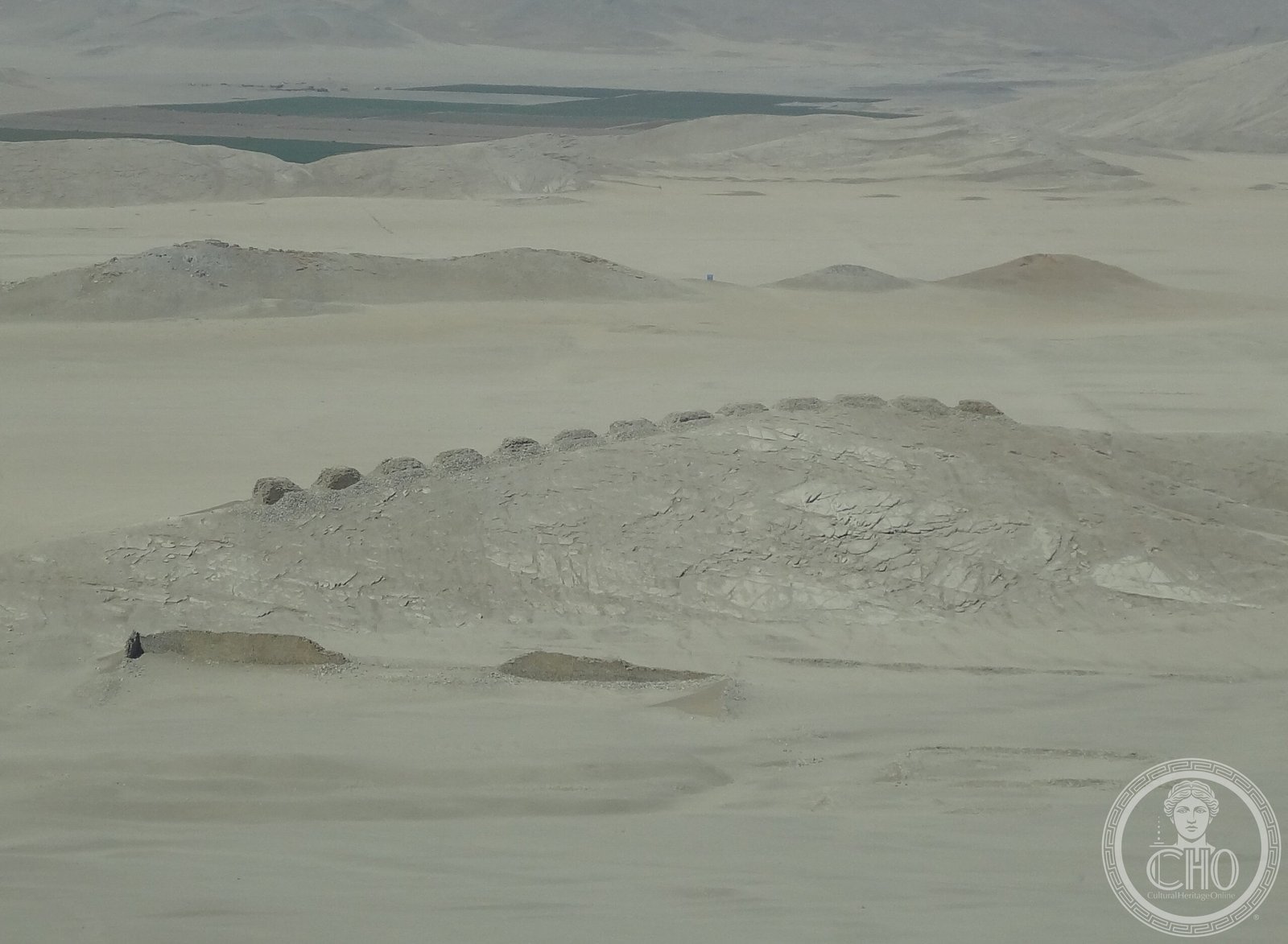
An ancient monumental complex sprawling across four square kilometres of Peru’s coastal desert, Chanquillo combines defensive fortification, sacred architecture, and sophisticated astronomical observation into a unified ceremonial landscape.
At a glance
Chanquillo is a UNESCO World Heritage site (2021) comprising a hilltop fort, the Thirteen Towers solar observatory, and adjacent residential and gathering spaces. Built by the Casma/Sechin culture, it represents one of the ancient Americas’ most compelling examples of integrated religious and administrative design.
History
The Casma/Sechin culture constructed Chanquillo in the third century BC, a period of increasing social complexity along Peru’s north-central coast. The site functioned as both a fortified temple and a centre of communal activity, suggesting a culture sophisticated enough to coordinate large-scale construction projects and astronomical knowledge.
What you see
The hilltop Chankillo fort dominates the landscape, its defensive walls marking the site’s ceremonial heart. The nearby Thirteen Towers—carefully positioned to frame the sun’s movement across the horizon—constitute an astronomical calendar of remarkable precision. Residential and gathering areas radiate outward, revealing the complex’s multi-functional purpose.
Cultural significance
Chanquillo demonstrates that pre-Hispanic Andean societies possessed advanced understanding of celestial mechanics and architectural planning. The integration of military, religious, and domestic spaces reflects a society where these spheres overlapped fundamentally. The site remains central to understanding early Peruvian civilisation and the development of astronomy in the Americas.
Key facts
- Country: Peru
- Location: Casma-Sechin Basin, Áncash Department
- Coordinates: -9.56°, -78.24°
- Period: 3rd century BC
- Culture: Casma/Sechin Complex
- Area: approximately 4 square kilometres
- UNESCO World Heritage: designated July 2021
Practical information & getting there
Chanquillo lies in the Casma-Sechin basin of Áncash Department. Detailed current information about visiting hours, access conditions, and facilities should be confirmed with local tourism authorities or the site directly, as conditions in remote desert locations may vary seasonally.
Sources & resources
Find it on the map
See this place and what’s around it →📷 Become a Cultural Heritage Online photographer
Share your photos of places: they stay published under your name as the author. The more they're seen, the more you get noticed — and soon a contest will reward the most appreciated photos.
Log in or sign up free to add a photoIs this page about you?
This page is read by travellers and heritage enthusiasts who find it on Google. Tell us how you are connected to this place and we will take it from there.