
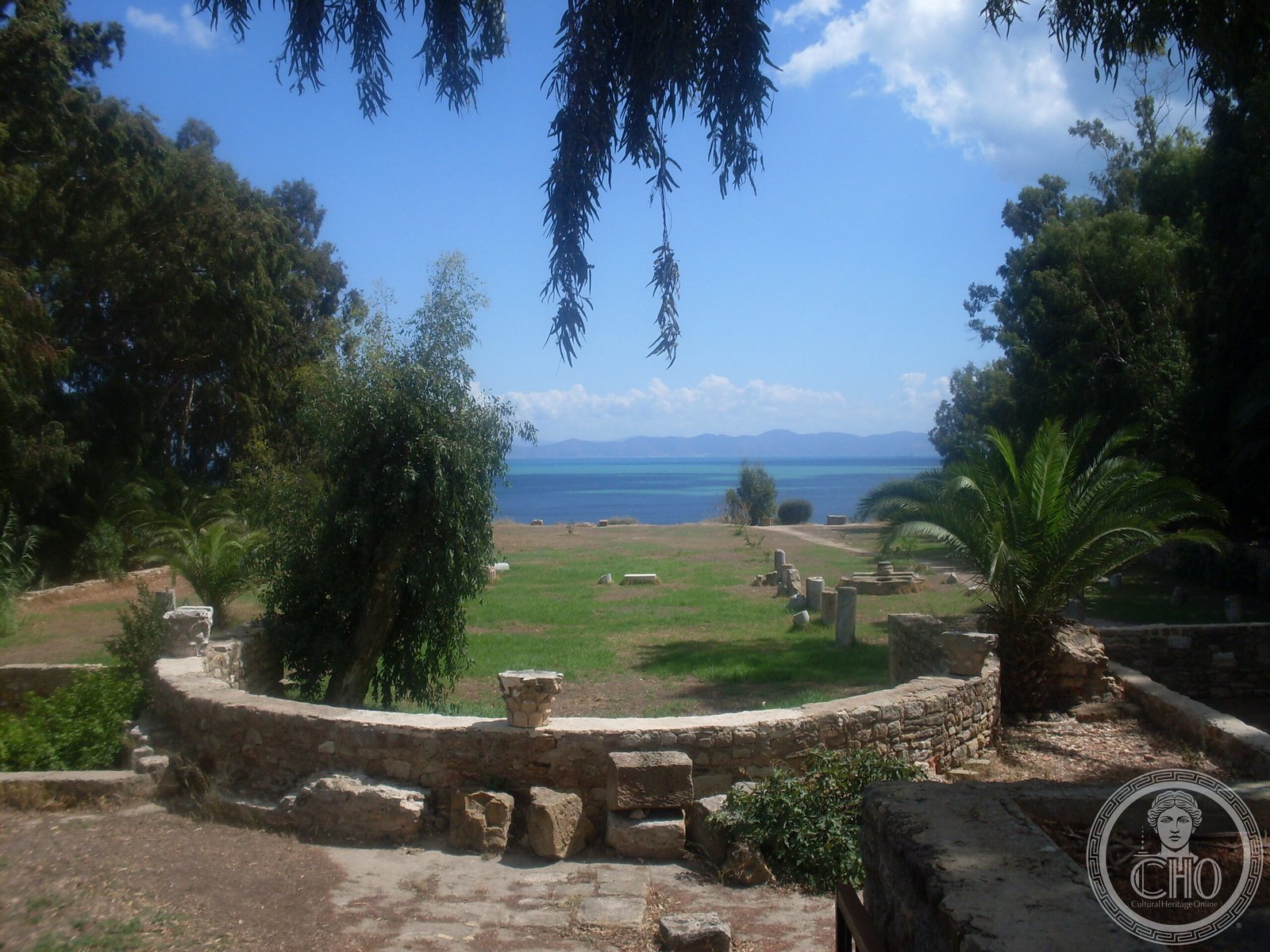
A ruined early Christian temple overlooking the Gulf of Tunis, excavated from the archaeological remains of ancient Carthage and traditionally identified with the martyr Saint Cyprian.
At a glance
The Basilica of Saint-Cyprien stands on the Bordj Djedid plateau at the edge of Carthage’s archaeological zone, commanding a panoramic view toward the Gulf of Tunis and Djebel Boukornine. The visible remains are fragmentary, the result of both archaeological excavation methods and interventions during the 1930 Carthage Eucharistic Congress.
History
The White Fathers began systematic excavations of Carthage’s Christian basilicas in the 1880s, uncovering a remarkable layer of Late Antique religious architecture. Father Alfred Louis Delattre discovered the larger Basilica of Damous El Karita in 1878 and, in his final campaign in 1915, located the Basilica of Saint-Cyprien.
Literary sources and archaeological context led researchers, including Charles Saumagne, to identify the building with Saint Cyprian, the third-century bishop martyred on September 14, 258 during Valerian’s persecution. Though no inscriptions formally confirm this attribution, textual evidence supports the identification.
The excavated structure was built atop earlier foundations dating to the late fourth century. The basilica and its adjacent cemetery remained in use through Late Antiquity, surviving the Vandal period and continuing into the sixth century, likely until the Arab-Muslim conquest of 698.
What you see
The ruins are modest and difficult to interpret coherently, having suffered from both early twentieth-century excavation practices and later interventions. The site preserves fragments of walls and foundations that once formed a substantial Christian temple, positioned to take advantage of the coastal landscape and commanding views across the gulf.
Cultural significance
The basilica is one of several Early Christian monuments at Carthage that testify to the city’s transformation after Roman decline. Its traditional association with Saint Cyprian, an influential early Christian theologian and bishop, makes it significant in the history of North African Christianity and the broader early Church.
Key facts
- Country: Tunisia
- City: Carthage
- Coordinates: 36.86384, 10.33765
- Period: Late 4th–7th century
- Excavated: 1915 by Father Alfred Louis Delattre
Practical information & getting there
The basilica is located within the Carthage archaeological zone on the Bordj Djedid plateau. Visit as part of an exploration of Carthage’s Early Christian sites. Opening hours and access conditions should be confirmed locally before your visit.
Sources & resources
Find it on the map
See this place and what’s around it →📷 Become a Cultural Heritage Online photographer
Share your photos of places: they stay published under your name as the author. The more they're seen, the more you get noticed — and soon a contest will reward the most appreciated photos.
Log in or sign up free to add a photoIs this page about you?
This page is read by travellers and heritage enthusiasts who find it on Google. Tell us how you are connected to this place and we will take it from there.