
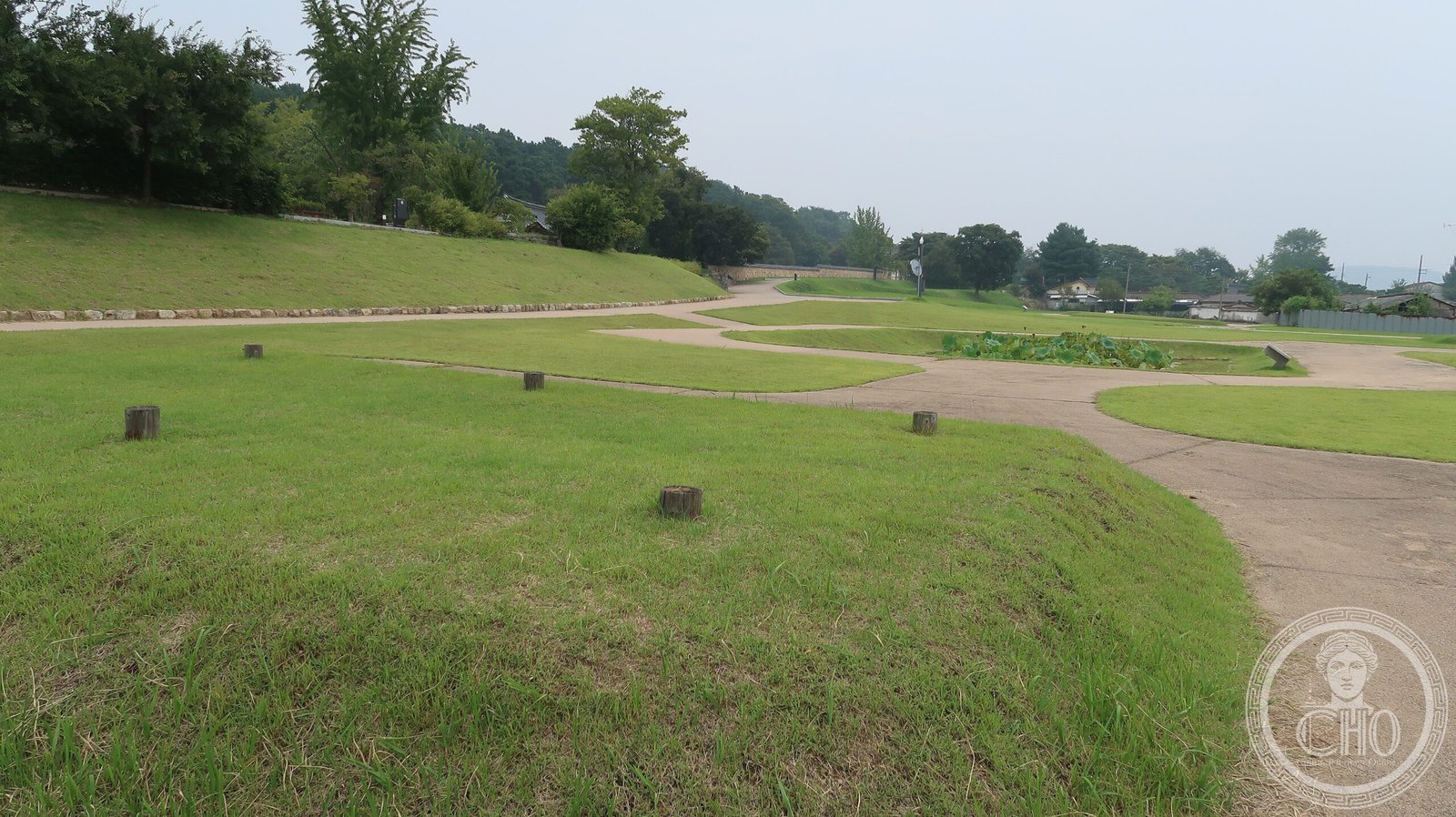
The remains of Baekje’s final royal palace lie beneath Busosan mountain, revealing the urban infrastructure of one of Korea’s Three Kingdoms.
At a glance
This archaeological site preserves the physical record of a Baekje royal palace at Sabi, the kingdom’s last capital. Systematic excavation over three decades has exposed a complex of palace buildings, ceremonial ponds, wells, workshops, and roads—evidence of sophisticated urban planning in seventh-century Korea.
History
The site is presumed to be the royal palace of Sabi, the final seat of Baekje power. Archaeological work began in 1982, conducted by Chungnam National University through 1992, then continued by the Buyeo National Research Institute of Cultural Heritage from 2001 to 2008. In September 1983 it was designated a Monument of South Chungcheong Province; this was upgraded to national Historic Site status in February 2001. In 2015, the site became part of Baekje Historic Areas, inscribed on the UNESCO World Heritage List.
What you see
Excavation has revealed lotus ponds—likely ornamental and ceremonial features common to East Asian palace grounds. Wells and workshops indicate daily life and craft production. The remains of palace buildings and roads define the spatial organization of the royal compound at the southwestern foot of Busosan.
Cultural significance
Before this discovery, archaeologists knew the location of only one other palace from Korea’s Three Kingdoms period: Anhakkung, a Goguryeo palace. Gwanbuk-ri thus transformed understanding of Baekje’s material culture and urban infrastructure during its final centuries. The site illuminates the administrative and domestic practices of a kingdom that shaped medieval East Asia.
Key facts
- Country: South Korea
- Location: Gwanbuk-ri, Buyeo County, South Chungcheong Province
- Coordinates: 36.28°N, 126.91°E
- Designation: UNESCO World Heritage Site (2015, as part of Baekje Historic Areas)
- National Historic Site since February 5, 2001
Practical information & getting there
The site is located at the southwestern foot of Busosan mountain in Buyeo County. Detailed visitor facilities and access information are available through local tourism offices in Buyeo.
Sources & resources
Find it on the map
See this place and what’s around it →📷 Become a Cultural Heritage Online photographer
Share your photos of places: they stay published under your name as the author. The more they're seen, the more you get noticed — and soon a contest will reward the most appreciated photos.
Log in or sign up free to add a photo