
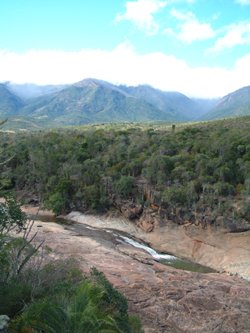
A protected wilderness in Madagascar’s far south, where humid rainforest meets mountain terrain in stark ecological contrast.
At a glance
Andohahela National Park preserves 760 square kilometres of the Anosy mountain range, Madagascar’s southernmost extension of the Malagasy Highlands. The park is distinguished by dramatic contrasts in habitat, from humid rainforest to drier ecosystems. It shelters the last remaining humid rainforests in southern Madagascar.
History
The park was inscribed as a UNESCO World Heritage Site in 2007, designated as part of the larger Rainforests of the Atsinanana collective site. This recognition acknowledged the ecological significance of the forests within and the urgent need for their protection in a rapidly changing landscape.
What you see
Andohahela is defined by its biodiversity rather than built structures. Visitors encounter montane terrain interspersed with dense humid rainforest. The park’s extreme habitat variation creates distinct ecological zones, each supporting unique flora and fauna adapted to their specific conditions.
Cultural significance
The park represents a critical refuge for Madagascar’s natural heritage. As the southernmost humid rainforest of the island, Andohahela serves as a vital ecosystem and scientific resource. Its designation as a World Heritage Site underscores both its biological rarity and the conservation imperative for Madagascar’s remaining tropical forests.
Key facts
- Country: Madagascar
- Region: Anosy, south-east Madagascar
- Area: 760 km² (293 sq mi)
- Coordinates: -24.60°, 46.70°
- UNESCO World Heritage Site: 2007 (Rainforests of the Atsinanana)
Practical information & getting there
The park is located in the remote Anosy district in Madagascar’s deep south. Access is challenging due to the region’s isolation and limited infrastructure. For current visitor information, park regulations, and travel arrangements, consult Madagascar’s national parks authority or specialist tour operators familiar with the region.
Sources & resources
Find it on the map
See this place and what’s around it →📷 Become a Cultural Heritage Online photographer
Share your photos of places: they stay published under your name as the author. The more they're seen, the more you get noticed — and soon a contest will reward the most appreciated photos.
Log in or sign up free to add a photo