
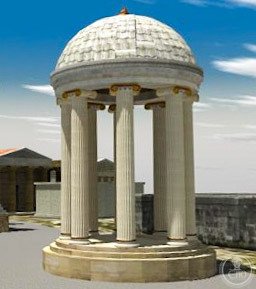
A marble monument to Roman power, this circular Ionic temple once proclaimed the divinity of Rome and its emperor at the heart of classical Athens.
At a glance
Built around 19 BCE, the Temple of Roma and Augustus stands on the Acropolis as a rare assertion of Imperial cult within Athens’ most sacred precinct. Its monopteral design—a circular structure ringed with columns—marked a deliberate architectural statement amid political tension between Rome and the city.
History
The temple was erected around the time of Augustus’ second visit to Athens, a period of complex relations between Rome and the ancient city-state. Positioned to align axially with the Parthenon’s eastern entrance, it functioned as propaganda—a physical assertion of Roman authority and the Imperial cult in a space already centuries devoted to Greek gods. Its construction during this moment of tension reveals the political weight carried by religious architecture.
What you see
The surviving ruins reveal a monopteral circular Ionic temple, placed 23 metres east of the Parthenon’s threshold. Its proportions and columned design echo Greek tradition while the dedication to Rome marked a symbolic shift in the Acropolis’ religious meaning. Fragments and foundations remain visible on the site today.
Cultural significance
This temple represents a pivotal moment when Rome’s political power began to reshape the sacred landscape of classical antiquity. Its presence on the Acropolis—alongside the Parthenon, Erechtheion, and Propylaea—embodied the transformation of Athens from independent city-state to Roman dominion. The monument reminds visitors that religious spaces are never merely devotional; they are declarations of authority.
Key facts
- Country: Greece
- City: Athens
- Built: c. 19 BCE
- Architectural type: Monopteral circular Ionic temple
- Coordinates: 37.971625, 23.727293
Practical information & getting there
The temple ruins are accessible to visitors who ascend to the Acropolis of Athens. The site is located east of the Parthenon. Consult current opening hours and admission details for the Acropolis archaeological site before your visit.
Sources & resources
Find it on the map
See this place and what’s around it →📷 Become a Cultural Heritage Online photographer
Share your photos of places: they stay published under your name as the author. The more they're seen, the more you get noticed — and soon a contest will reward the most appreciated photos.
Log in or sign up free to add a photoIs this page about you?
This page is read by travellers and heritage enthusiasts who find it on Google. Tell us how you are connected to this place and we will take it from there.