
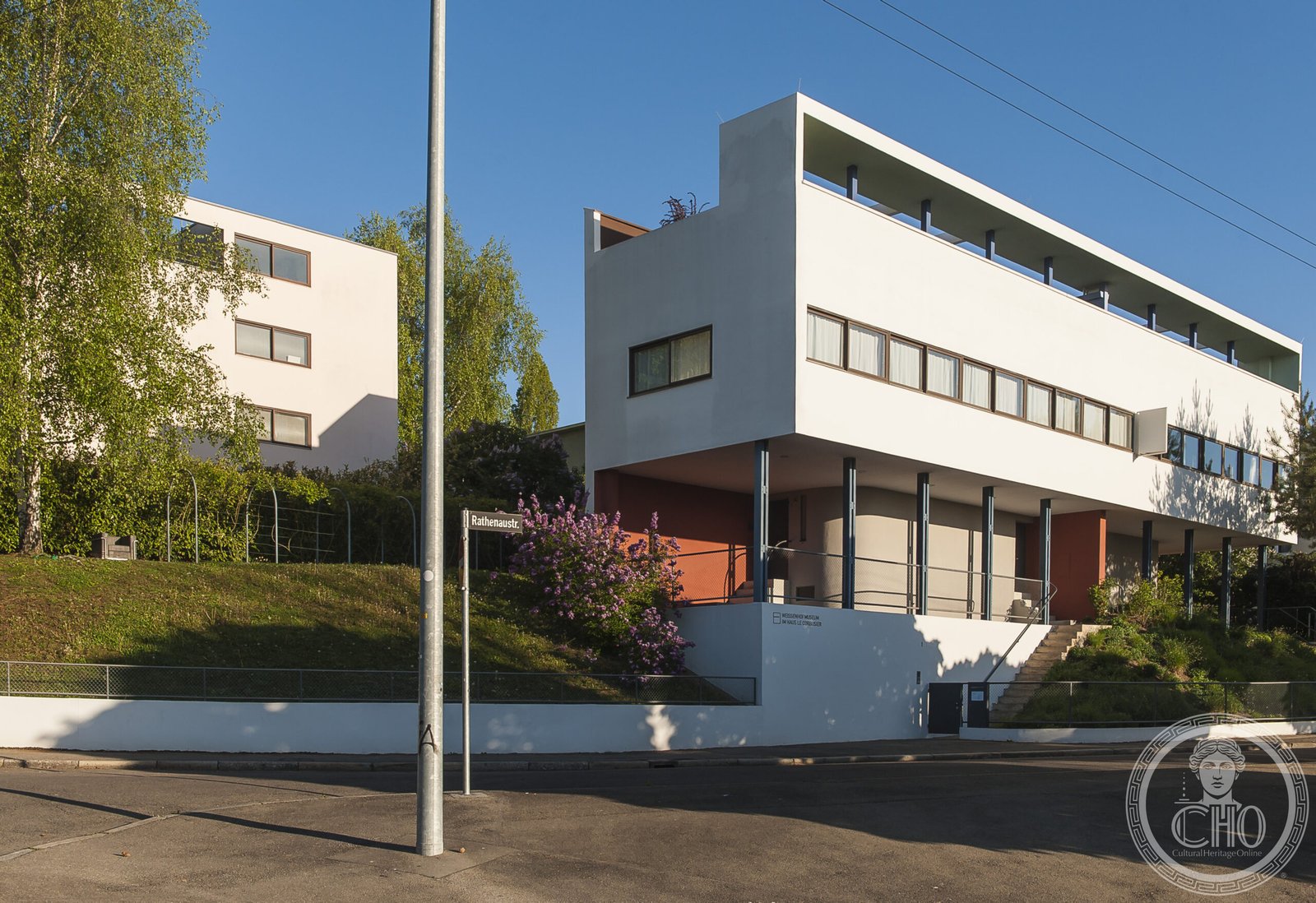
A landmark housing settlement that demonstrated modern architecture’s promise to deliver affordable, well-designed homes for ordinary people.
At a glance
The Weissenhof Estate is an experimental housing development built for Stuttgart’s 1927 Deutscher Werkbund exhibition. It represented a turning point in twentieth-century design: the conviction that good architecture need not be expensive or exclusive.
History
Created for the 1927 Deutscher Werkbund exhibition, the estate assembled leading modernist architects from across Europe to test new ideas about residential design and urban planning. The project embodied the movement’s core belief that industrial methods and rational design could serve mass housing needs without sacrificing quality or beauty.
What you see
The estate comprises multiple residential structures showcasing the modernist vocabulary of the era: clean lines, geometric forms, and functional efficiency. Two buildings designed by Le Corbusier stand as the most celebrated examples, their spare elegance and innovative spatial planning demonstrating the architect’s influential approach to domestic living.
Cultural significance
The Weissenhof Estate marks a decisive moment when modernism moved beyond theory into built reality. Two of Le Corbusier’s structures were designated a UNESCO World Heritage Site in 2016 as part of “The Architectural Work of Le Corbusier, an Outstanding Contribution to the Modern Movement.” The broader estate and surrounding streets remain within the site’s protective buffer zone, preserving the original urban context.
Key facts
- Location: Stuttgart, Germany (48.8005°N, 9.1777°E)
- Built: 1927
- Purpose: International exhibition of modern housing design
- UNESCO status: Two Le Corbusier buildings designated World Heritage Site, 2016
Practical information & getting there
The Weissenhof Estate is located in Stuttgart’s Gaisburg neighbourhood. Many buildings remain residential or in private use; visibility varies. Contact local tourism for current visiting information and guided-tour availability.
Sources & resources
Find it on the map
See this place and what’s around it →📷 Become a Cultural Heritage Online photographer
Share your photos of places: they stay published under your name as the author. The more they're seen, the more you get noticed — and soon a contest will reward the most appreciated photos.
Log in or sign up free to add a photoIs this page about you?
This page is read by travellers and heritage enthusiasts who find it on Google. Tell us how you are connected to this place and we will take it from there.