
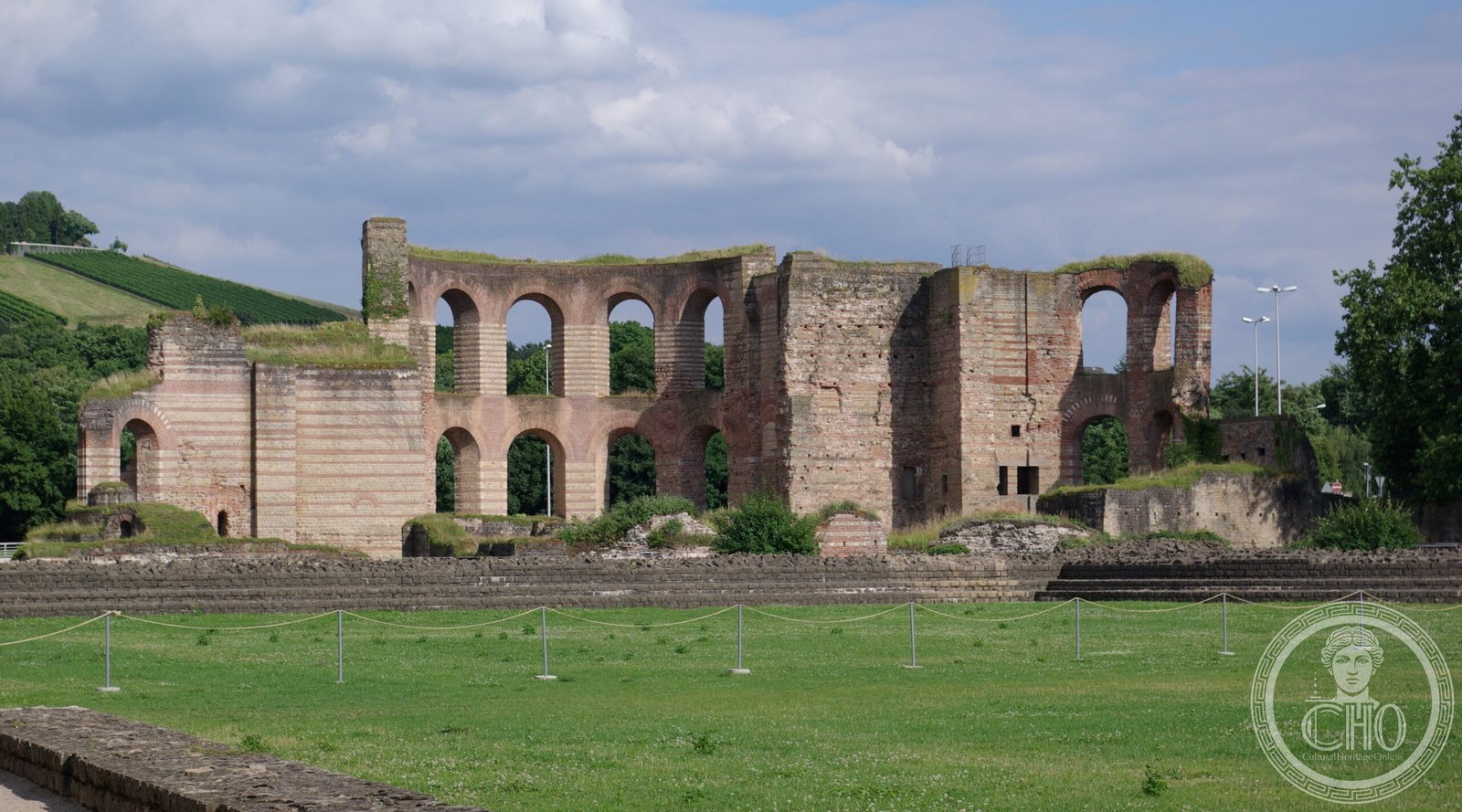
An ambitious Roman bathhouse begun under Constantine I reveals the engineering ambitions and urban sophistication of Trier at the height of its imperial importance.
At a glance
The Kaiserthermen stand as a testament to Roman hydraulic engineering and the splendor of a city that served as a primary imperial seat. Built in the early 4th century AD, this vast complex was designed around hot water pools heated to 40°C—a feat of Roman climate control and comfort.
History
Construction began during the reign of Constantine I, when Trier held exceptional political weight as one of the empire’s major administrative hubs. The emperor’s son Crispus made the city his primary residence, attracting the resources and prestige needed to commission such an ambitious project.
The baths were never fully completed, however. After the decline of Roman power in the region, the complex was transformed into a medieval castle, a repurposing that shaped its survival through centuries of change.
What you see
Visitors can observe the remains of the heating system and the vast chambers designed to accommodate the imperial baths. Beneath the structure lies an intricate network of underground passageways where workers once moved unseen, maintaining the pools and furnaces. The remains of the sewer system—evidence of sophisticated waste management—are also visible to modern visitors.
Cultural significance
The Kaiserthermen exemplify Trier’s role as a cosmopolitan Roman center and showcase the technological prowess of 4th-century imperial building. Even incomplete, the complex demonstrates the scale and ambition of Constantine-era urban development and remains an important artifact of Roman provincial grandeur.
Key facts
- Country: Germany
- City: Trier
- Coordinates: 49.7497, 6.6423
- Constructed: Early 4th century AD under Constantine I
- Notable feature: Underground staff passageways and sewer system remain visible
Practical information & getting there
The site is located in Trier, accessible to visitors as part of the city’s Roman heritage attractions. The remains are substantial enough to permit exploration of the engineering systems that powered this ambitious bathhouse.
Sources & resources
- Trier Imperial Baths – Wikipedia
- Cultural Heritage Online
Find it on the map
See this place and what’s around it →📷 Become a Cultural Heritage Online photographer
Share your photos of places: they stay published under your name as the author. The more they're seen, the more you get noticed — and soon a contest will reward the most appreciated photos.
Log in or sign up free to add a photoIs this page about you?
This page is read by travellers and heritage enthusiasts who find it on Google. Tell us how you are connected to this place and we will take it from there.