
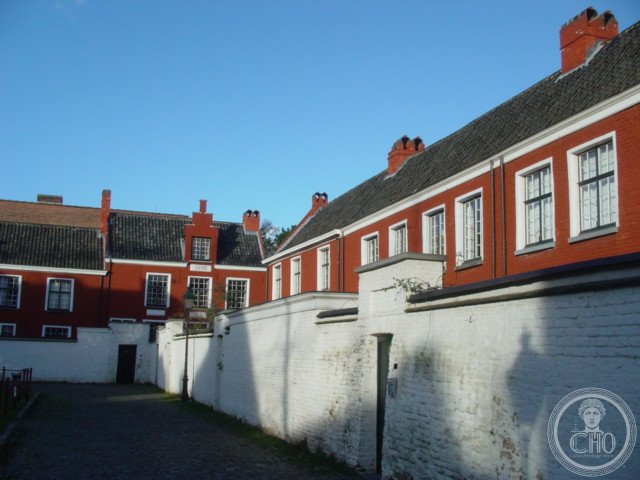
A small beguinage in southern Ghent, named for the meadowland on which it was built between two medieval gates.
At a glance
Our-Lady Ter Hooyen is an intimate beguinage occupying a modest site in Ghent’s southern quarters. The community took its name from the ‘Groene Hooie’—the green meadow—where it developed between the Hooipoort and Vijfwindgatenpoort gates.
History
This beguinage was established on land known colloquially as the Green Hay, a designation that would define its character and nomenclature for centuries. The location between two significant city gates made it both accessible and distinct from Ghent’s denser urban core.
What you see
As a small beguinage, the compound reflects the modest scale typical of such communities. The setting preserves something of its origins as a meadowland site, distinguishing it from larger, more densely built beguinages elsewhere in the Low Countries.
Cultural significance
Beguinages represent a distinctive form of medieval and early modern religious community, housing women who took vows but maintained greater autonomy than convents. Our-Lady Ter Hooyen survives as a tangible record of this alternative spiritual life in Flanders, its modest proportions revealing the diversity of such settlements.
Key facts
- Country: Belgium
- City: Ghent
- Coordinates: 51.05, 3.7333
Practical information & getting there
Our-Lady Ter Hooyen is located in the southern area of Ghent. Detailed opening hours and visitor access information are best confirmed locally before planning your visit.
Sources & resources
- Our-Lady Ter Hooyen (Wikipedia)
- Cultural Heritage Online
Find it on the map
See this place and what’s around it →📷 Become a Cultural Heritage Online photographer
Share your photos of places: they stay published under your name as the author. The more they're seen, the more you get noticed — and soon a contest will reward the most appreciated photos.
Log in or sign up free to add a photoIs this page about you?
This page is read by travellers and heritage enthusiasts who find it on Google. Tell us how you are connected to this place and we will take it from there.