
Pont Valentré
A fortified medieval bridge spanning the Lot river, the Pont Valentré stands as Cahors’ most recognizable monument and a masterwork of Gothic military engineering.
At a glance
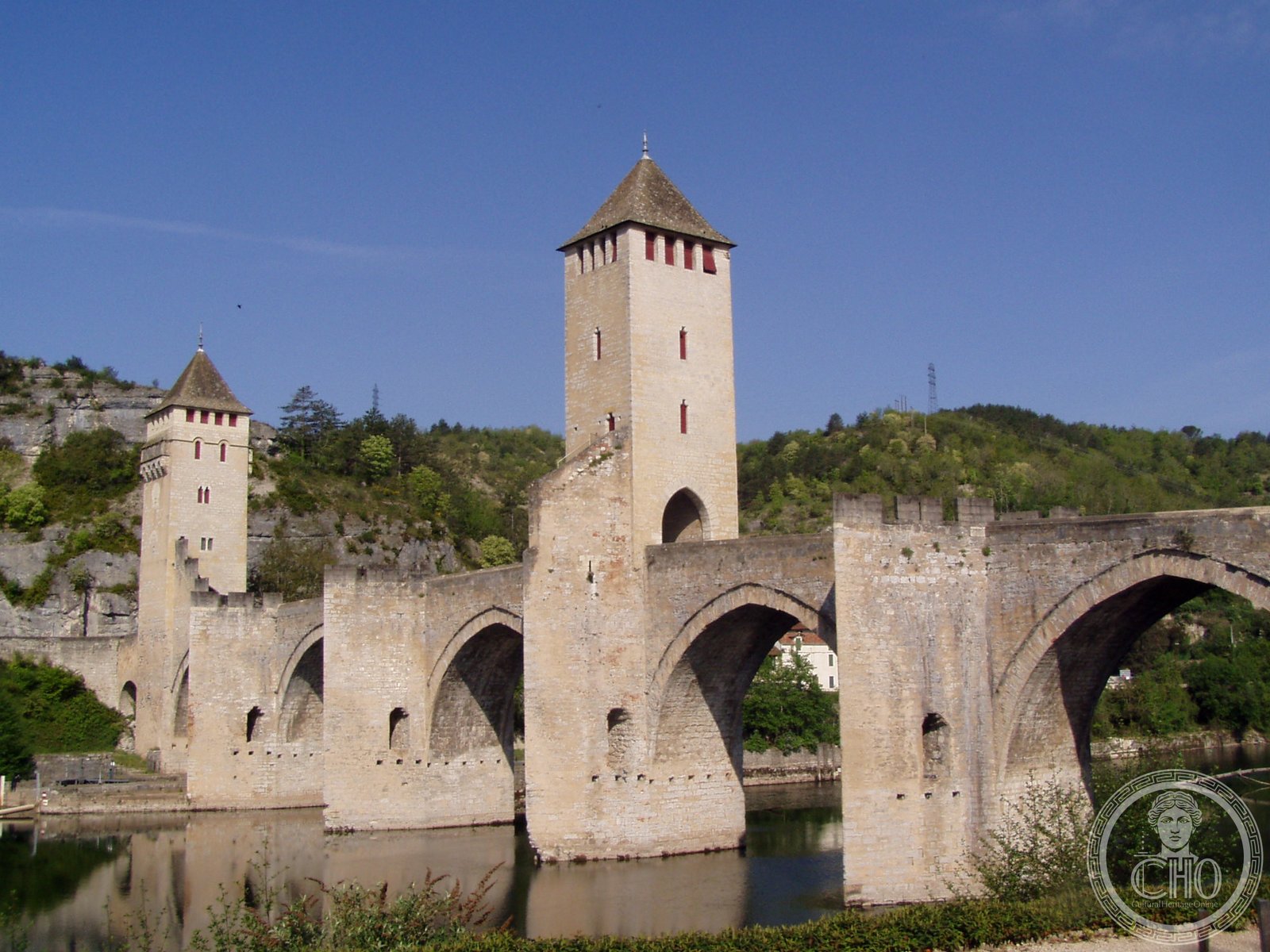
This six-span stone arch bridge, built between 1308 and 1378, combines defence with passage. Three square towers punctuate its length; only two survive today. The bridge opened to traffic in 1350, decades before its completion, and remains pedestrian-only.
History
The decision to build the Pont Valentré was made on 30 April 1306, with construction commencing on 17 June 1308. Rising tensions between France and England—which would ignite the Hundred Years’ War around three decades later—drove the need for this fortified crossing of the Lot.
The western tower, part of the original dual fortification at both ends, has been lost to time. A comprehensive restoration by Paul Gout between 1867 and 1879 stabilized the structure for posterity.
What you see
Six Gothic arches form the bridge’s span, their ribbed undersides a study in medieval stone-craft. Three square towers rise from the structure—formidable defensive positions that once commanded the crossing. The westernmost tower vanished centuries ago, leaving an asymmetrical silhouette that tells its own story of survival and loss.
Cultural significance
The Pont Valentré embodies Cahors itself. It represents a pivotal moment when the city fortified itself against external threats, blending utilitarian engineering with architectural ambition. UNESCO recognised this achievement by designating it a World Heritage Site in 1998.
Key facts
- Location: Cahors, France (44.445°N, 1.432°E)
- Construction period: 1308–1378
- Design: Six Gothic arches; originally three square towers (two extant)
- UNESCO status: World Heritage Site (1998)
- Access: Pedestrian only
Practical information & getting there
The Pont Valentré is located west of Cahors town centre and crosses the Lot river. You may walk across freely; the bridge accommodates foot traffic only. For visiting hours, current conditions and nearby amenities, consult local Cahors tourism information before your trip.
Sources & resources
Find it on the map
See this place and what’s around it →📷 Diventa un fotografo di Cultural Heritage Online
Condividi le tue foto dei luoghi: restano pubblicate con la tua firma come autore. Più vengono viste, più ti fai conoscere — e presto un concorso premierà le foto più apprezzate.
Accedi o registrati gratis per aggiungere una fotoDo you manage this place?
This page is read by travellers and heritage enthusiasts who find it on Google. Keep it accurate — and make it work for you. Free for non-profit heritage institutions.