
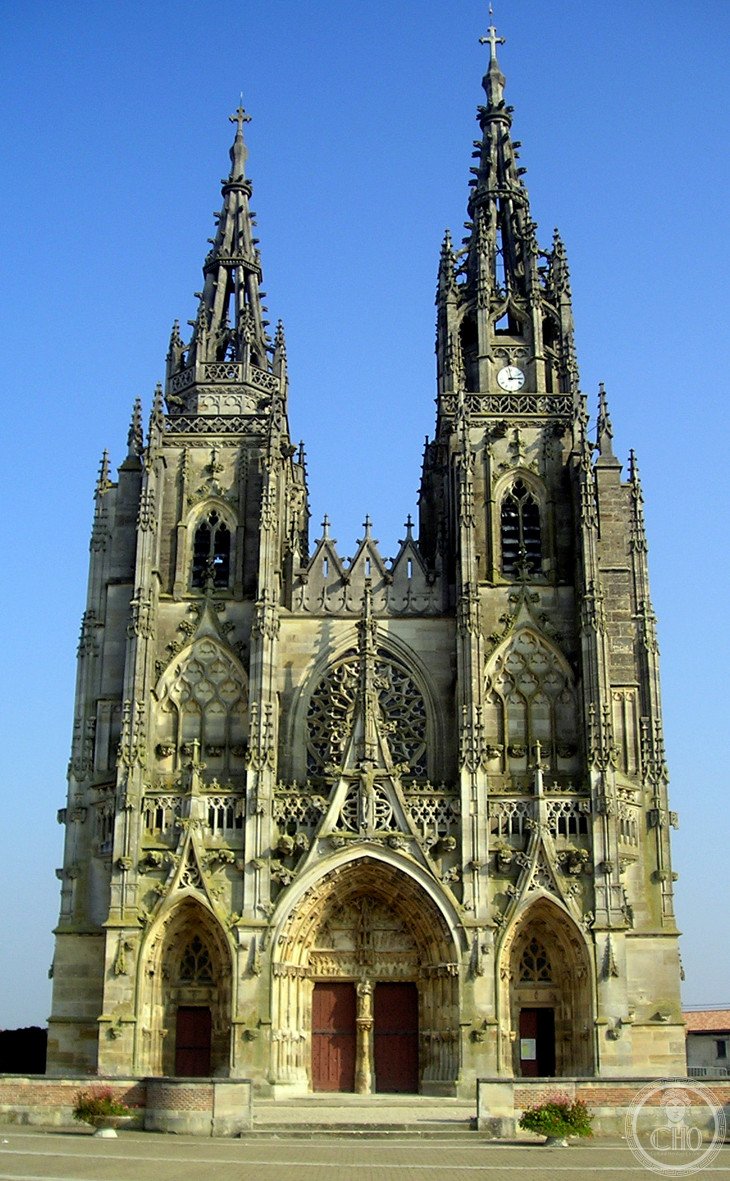
A masterpiece of Flamboyant Gothic architecture, this basilica stands as one of France’s last major medieval cathedrals and a crucial waystation for pilgrims on the Road to Santiago de Compostela.
At a glance
Notre-Dame de l’Épine rises from the small village of L’Épine in the Marne region of northeastern France, roughly equidistant between Châlons-en-Champagne and Verdun. Its soaring stone facade and intricate tracery exemplify the final flourishing of French Gothic design before the Renaissance transformed European architecture.
History
The basilica served as a pilgrimage destination on the Camino de Santiago, drawing devotees throughout the medieval period and beyond. As one of the last major cathedral projects undertaken in the French Gothic idiom, it captures a pivotal moment in architectural history when the style reached its most elaborate expression.
What you see
The church embodies the Flamboyant Gothic aesthetic at its zenith. Visitors encounter elaborate stone tracery, pointed arches, and decorative elements characteristic of the style’s final phase. The basilica’s scale and ornamentation reflect both technical mastery and the devotional ambitions of its builders.
Cultural significance
The basilica holds particular importance as a monument to late medieval French spirituality and craftsmanship. Its designation as a UNESCO World Heritage Site in 1998 acknowledges its role both as an architectural landmark and as a meaningful station along one of Christendom’s most celebrated pilgrimage routes.
Key facts
- Country: France
- Location: L’Épine, Marne
- Coordinates: 48.97709, 4.4704
- UNESCO World Heritage Site since 1998
- Architectural style: Flamboyant Gothic
Practical information & getting there
The basilica is located in the village of L’Épine, accessible from the nearby towns of Châlons-en-Champagne and Verdun. As an active Roman Catholic basilica, it welcomes visitors respectful of its sacred purpose. For current opening hours and pilgrimage information, contact the local parish or tourism office.
Sources & resources
Find it on the map
See this place and what’s around it →📷 Become a Cultural Heritage Online photographer
Share your photos of places: they stay published under your name as the author. The more they're seen, the more you get noticed — and soon a contest will reward the most appreciated photos.
Log in or sign up free to add a photoIs this page about you?
This page is read by travellers and heritage enthusiasts who find it on Google. Tell us how you are connected to this place and we will take it from there.