

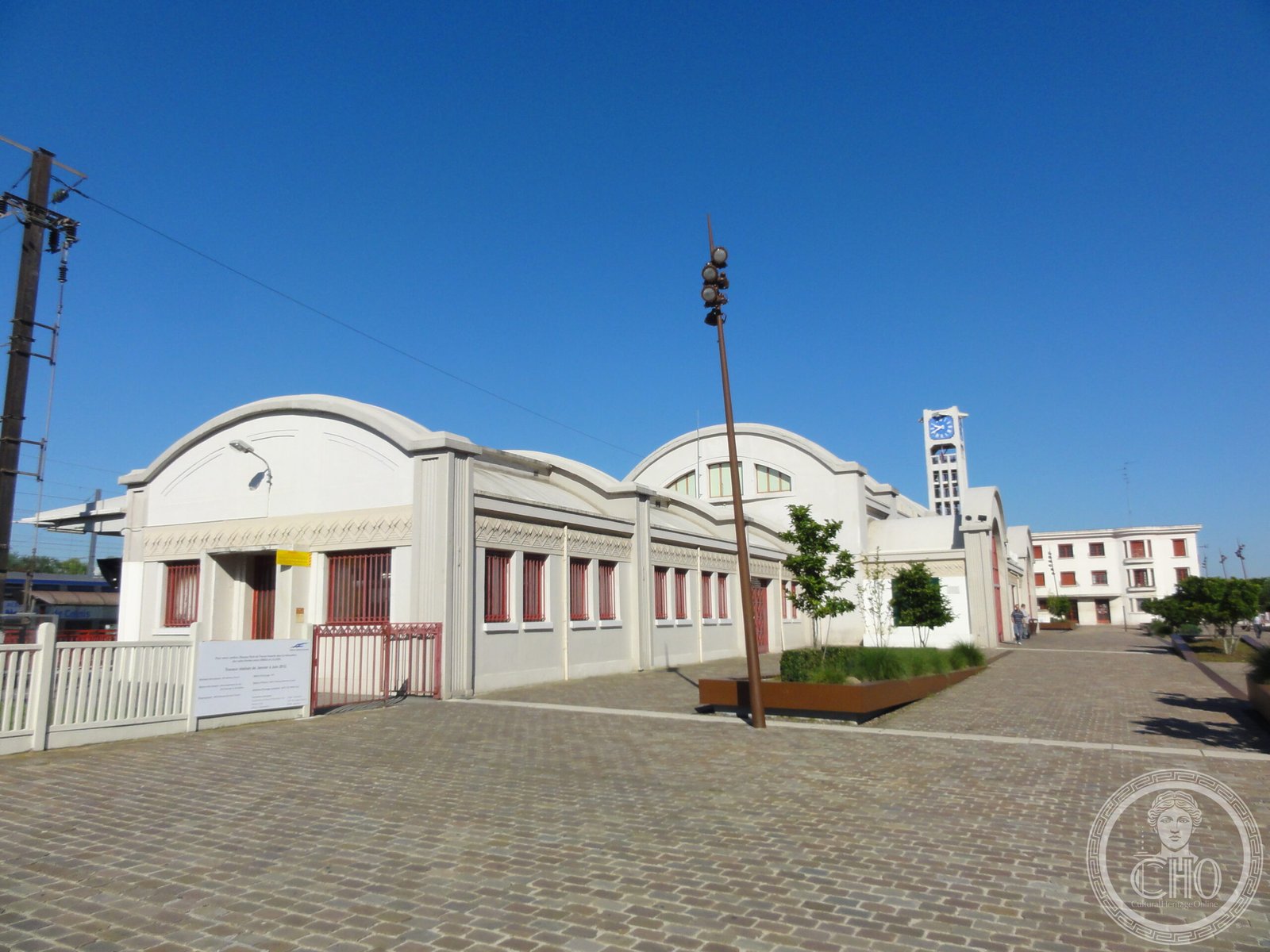
A railway station designed as a monumental tribute to the steam locomotive, with a soaring tower mimicking a locomotive’s chimney.
At a glance
Lens station is a striking example of early 20th-century functional architecture, built to serve the city’s rail network while celebrating the machine age. Its distinctive silhouette, modeled on a steam locomotive, makes it instantly recognizable across northern France.
History
The station was constructed between 1926 and 1927 by architect Urbain Cassan. It emerged during a period of railway expansion and modernization in France, when transport infrastructure was increasingly celebrated as a symbol of progress. The building gained formal protection in December 1984 when it was designated a French National Heritage Site (Monument historique).
What you see
The station’s most striking feature is its 23-metre-high (75 ft) tower, designed to resemble a locomotive’s chimney. The entire building’s form echoes a steam locomotive’s profile, a bold architectural choice that merges functional railway infrastructure with sculptural ambition. This imaginative approach transforms an ordinary station into a visual monument to industrial progress.
Cultural significance
Lens station represents a distinctive moment in European railway architecture, when designers sought to express admiration for mechanized transport through bold formal gestures. Its preservation as a protected monument reflects France’s recognition of 20th-century modernist buildings as worthy heritage.
Key facts
- Location: Lens, Pas-de-Calais, France (50.4267, 2.8279)
- Built: 1926–1927
- Architect: Urbain Cassan
- Tower height: 23 metres (75 ft)
- Protected status: French National Heritage Site (Monument historique), designated December 1984
Practical information & getting there
Lens station remains in active use as a railway hub. For current access details, opening hours, and visitor facilities, consult local tourism information or the SNCF (French national railway) website.
Sources & resources
Find it on the map
See this place and what’s around it →📷 Become a Cultural Heritage Online photographer
Share your photos of places: they stay published under your name as the author. The more they're seen, the more you get noticed — and soon a contest will reward the most appreciated photos.
Log in or sign up free to add a photoIs this page about you?
This page is read by travellers and heritage enthusiasts who find it on Google. Tell us how you are connected to this place and we will take it from there.