

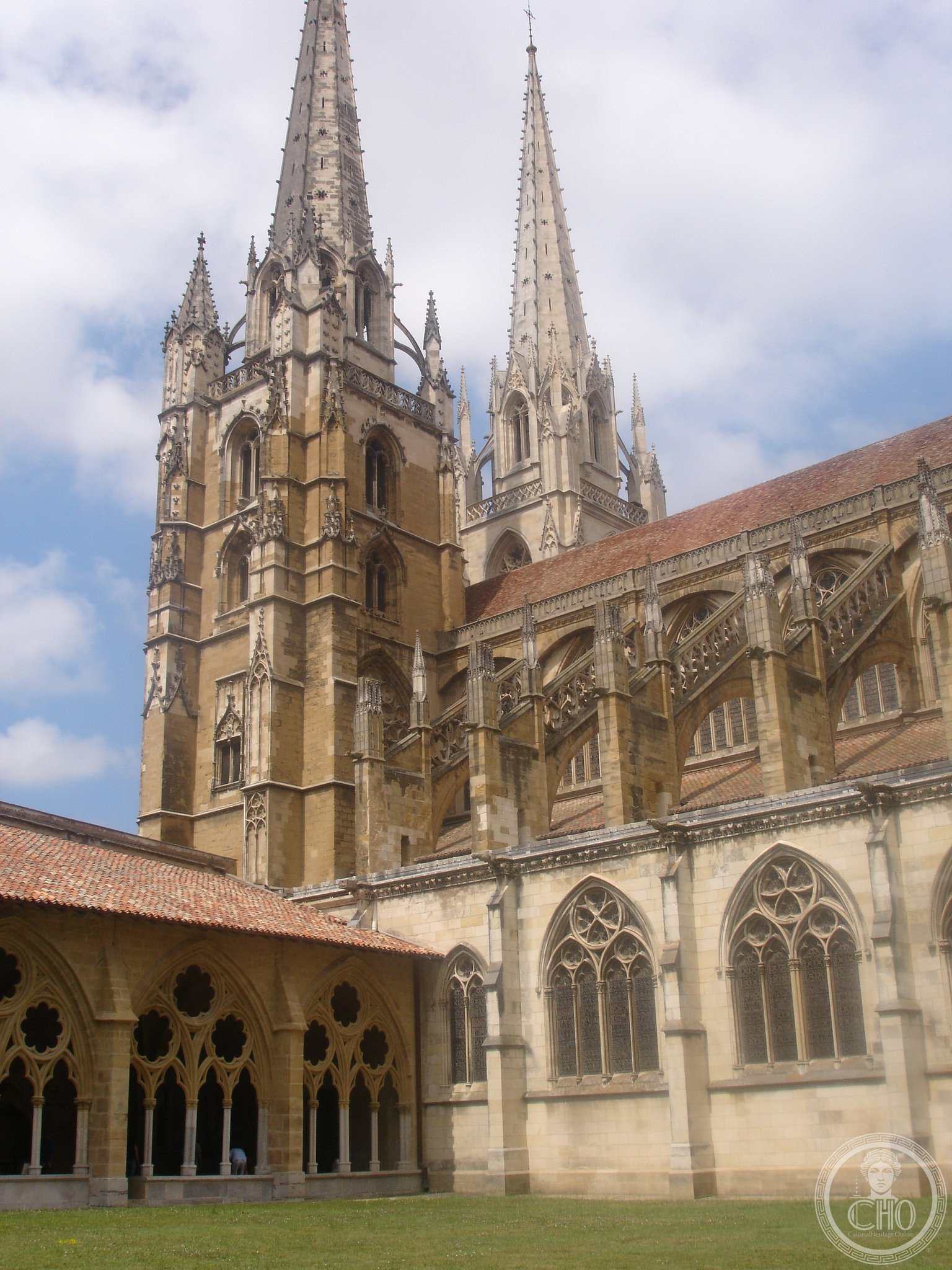
A Gothic masterpiece rising from the ashes of medieval fire, Bayonne Cathedral anchors one of Europe’s most important pilgrimage routes and preserves the relics of a Basque saint.
At a glance
Bayonne Cathedral is a Roman Catholic church and the seat of the Bishops of Bayonne, Lescar, and Oloron. Built in the Gothic style, it dominates the landscape of this Basque town in southwestern France. The cathedral’s two spires—completed only in the 19th century—crown a structure that took over 300 years to finish.
History
The site’s first cathedral, built in the Romanesque style, was destroyed by fires in 1258 and 1310. Construction of the present cathedral began in the 13th century and continued into the early 17th. The final spires were not completed until the 1800s. In the 19th century, architect Émile Boeswildwald—a pupil of Eugène Viollet-le-Duc and architect to the French government—led major restoration and refurbishment work that preserved the structure for future generations.
What you see
The cathedral embodies the Gothic tradition with characteristic pointed arches, intricate stonework, and vertical emphasis. The twin spires, added centuries after the nave and choir, create a distinctive silhouette above Bayonne’s medieval streets. The interior holds the relics of Saint Leo of Bayonne, a 9th-century bishop and evangelizer of the Basque Country.
Cultural significance
Bayonne Cathedral stands directly on the Pilgrimage Way of Santiago de Compostela, one of Christendom’s great spiritual routes. As part of the Routes of Santiago de Compostela in France, the cathedral was inscribed on the UNESCO World Heritage List in 1998, recognizing its role in centuries of pilgrimage and its architectural importance to European Gothic heritage.
Key facts
- Country: France
- City: Bayonne
- Coordinates: 43.49°N, 1.48°W
- UNESCO World Heritage Site (Routes of Santiago de Compostela in France, 1998)
- Construction: 13th century–early 17th century; spires completed 19th century
Practical information & getting there
Bayonne Cathedral is located in central Bayonne and is accessible to visitors year-round. As an active place of worship and a major stop on the Way of Saint James, it welcomes pilgrims and tourists alike. Check locally for current opening hours and any access restrictions.
Sources & resources
- Routes of Santiago de Compostela in France — whc.unesco.org — Routes of Santiago de Compostela in France — the property of which this site is part
- World Heritage List — reference 868 — UNESCO open data, dataset whc001
- UNESCO — official film on this property — on YouTube
- Western front of Cathedral Our Lady – Le Puy-en-Velay. Routes of Santiago de Compostela in — UNESCO official photograph — Patrice Thébault — UNESCO
- Bayonne Cathedral — Wikipedia — consulted as a secondary reference, not as confirmation
- culturalheritageonline.com — our archive and city guides
Find it on the map
See this place and what’s around it →📷 Become a Cultural Heritage Online photographer
Share your photos of places: they stay published under your name as the author. The more they're seen, the more you get noticed — and soon a contest will reward the most appreciated photos.
Log in or sign up free to add a photoIs this page about you?
This page is read by travellers and heritage enthusiasts who find it on Google. Tell us how you are connected to this place and we will take it from there.