
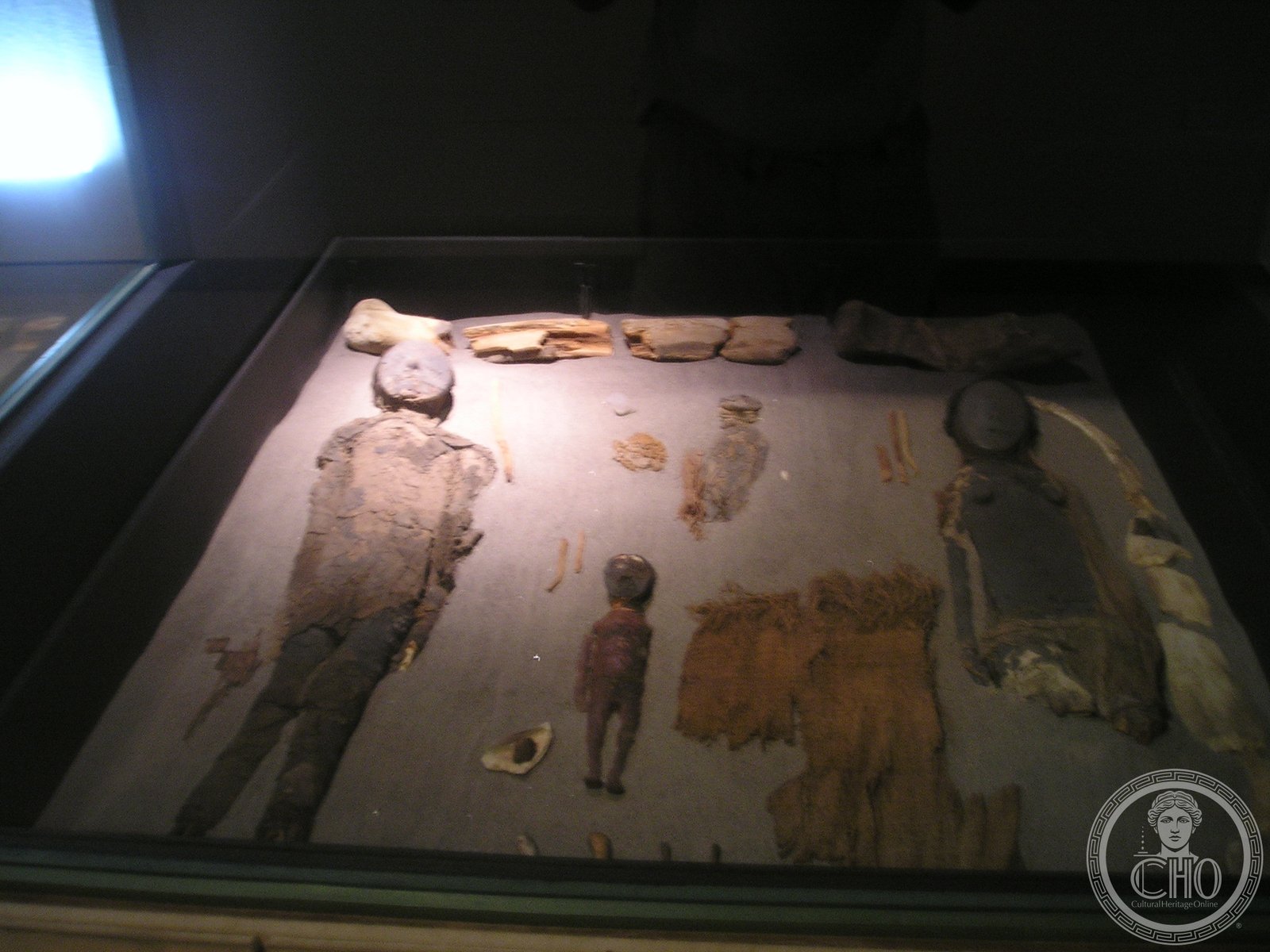
Chinchorro Mummies
The world’s oldest artificially mummified human remains, predating Egyptian mummies by two millennia, reveal a sophisticated coastal culture dedicated to preserving their dead.
At a glance
The Chinchorro mummies stand as humanity’s earliest known examples of intentional mummification. Dating from around 5050 BC, they precede Egyptian mummies by approximately two thousand years. The oldest naturally mummified remains associated with the Chinchorro civilization date from around 7020 BC, recovered from the Atacama Desert.
History
The Chinchorro culture flourished in the arid river valleys of the Andes, establishing itself as a unique maritime civilization. While many ancient fishing societies inhabited these regions, the Chinchorro distinguished themselves through their elaborate and sustained mortuary practices. Evidence from shell middens and bone chemistry indicates that seafood comprised approximately 90 percent of their diet, anchoring their society to coastal resources.
What you see
The mummies themselves represent the primary archaeological record. Systematic artificial preservation techniques applied to human remains demonstrate sophisticated understanding of decomposition and preservation methods, though the specific processes continue to be studied by researchers examining the recovered remains.
Cultural significance
The Chinchorro mummies reveal a culture whose values prioritized honoring and preserving the dead to an extraordinary degree. This commitment to mortuary ritual establishes the Chinchorro as pioneers of mummification technology, predating and likely influencing later practices across the Americas and beyond. Their practices suggest complex spiritual beliefs and social organization.
Key facts
- Country: Chile
- Region: Arica and Parinacota
- Oldest artificial mummies: circa 5050 BC
- Oldest naturally mummified remains: circa 7020 BC
- Coordinates: 18°28′50″S 70°19′16″W
- UNESCO World Heritage Site: 2021
Practical information & getting there
The Chinchorro sites are located in the extreme north of Chile, in the regions of Arica and Parinacota. Arica, the regional capital, is accessible by air and road from Santiago. Museums in Arica, including the Museo Arqueológico San Miguel de Azapa, house significant Chinchorro collections and provide context for understanding the culture and its practices.
Sources & resources
Find it on the map
See this place and what’s around it →📷 Diventa un fotografo di Cultural Heritage Online
Condividi le tue foto dei luoghi: restano pubblicate con la tua firma come autore. Più vengono viste, più ti fai conoscere — e presto un concorso premierà le foto più apprezzate.
Accedi o registrati gratis per aggiungere una foto