
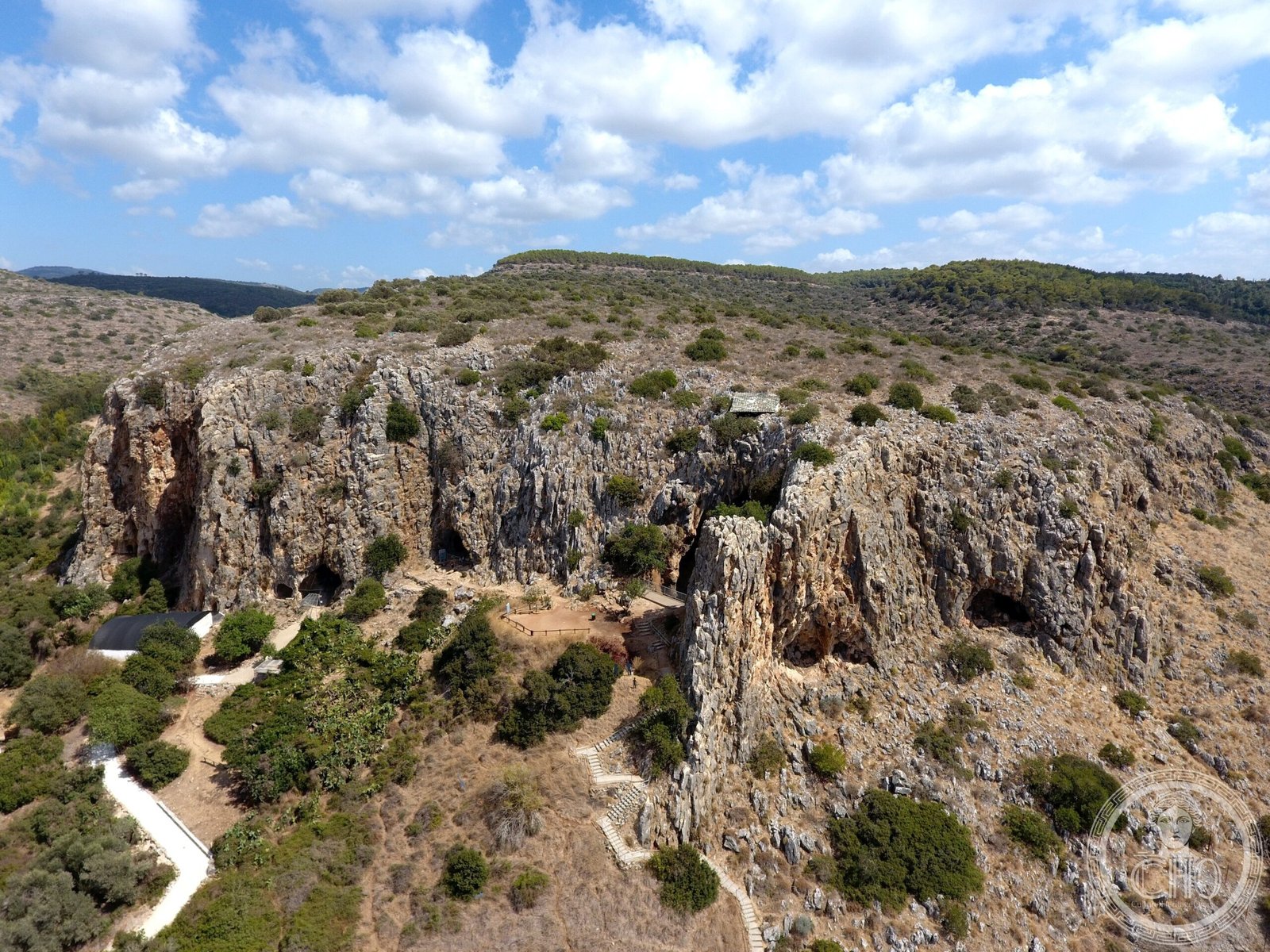
Four caves in the Carmel mountains that preserve evidence of hominin and early human habitation, including some of the world’s earliest known burials.
At a glance
The Caves of Nahal Me’arot—named for the valley in Hebrew and Arabic—comprise four interconnected archaeological sites in a nature reserve near Haifa. UNESCO recognised them in 2012 as a site of outstanding universal value for human evolution, containing layers of occupation spanning hundreds of thousands of years.
History
The four caves—Tabun (“Oven”), Gamal (“Camel”), El Wad (“Stream”), and Skhul (“Kid”)—were used repeatedly for habitation by early hominins and prehistoric humans. The archaeological record documents successive periods of settlement across vast stretches of time. El Wad cave holds particularly significant evidence of very early human burials, making it a crucial site for understanding funerary practices among our ancestors.
What you see
Visitors encounter natural limestone cave systems integrated into the Carmel landscape. The caves reveal exposed stratigraphic layers—archaeological deposits that chart human presence across millennia. Interpretive features within the nature reserve provide context for the prehistoric remains and occupation patterns documented in each cave.
Cultural significance
These caves form a continuous record of early human behaviour and evolution. The burials discovered here rank among the earliest known evidence of intentional burial practices, offering insight into the spiritual and social lives of prehistoric peoples. The site’s designation as a UNESCO site of human evolution underscores its role in understanding our species’ deep past.
Key facts
- Location: Carmel mountain range near Haifa, Israel
- Coordinates: 32.67°N, 34.97°E
- UNESCO World Heritage Site: Yes (2012)
- Four named caves: Tabun, Gamal, El Wad, Skhul
- Status: Protected within a nature reserve
Practical information & getting there
The reserve is situated on the slopes of Mount Carmel near Haifa in northern Israel. Access and visiting hours are managed by the nature reserve authority. Contact local tourism information for current opening times and any access requirements before planning your visit.
Sources & resources
Find it on the map
See this place and what’s around it →📷 Become a Cultural Heritage Online photographer
Share your photos of places: they stay published under your name as the author. The more they're seen, the more you get noticed — and soon a contest will reward the most appreciated photos.
Log in or sign up free to add a photo