
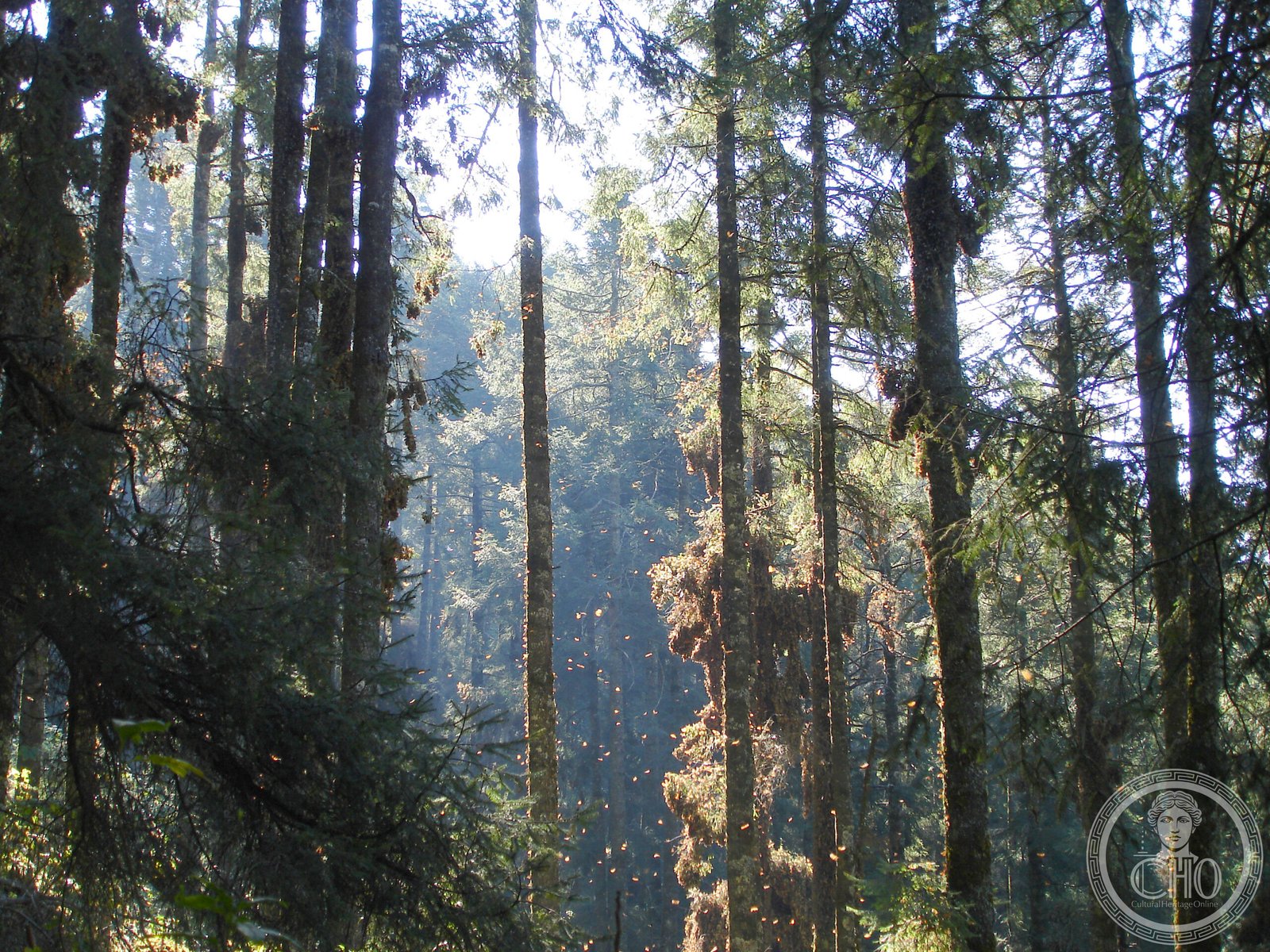
A vast forest sanctuary on Mexico’s high volcanic plateau where millions of monarch butterflies overwinter each year, arriving from eastern North America in one of nature’s most remarkable migrations.
At a glance
Spanning 56,000 hectares of pine-oak forest straddling Michoacán and the State of Mexico, this reserve protects the critical overwintering habitat for the eastern population of the monarch butterfly. From October through March, vast numbers of monarchs cluster in the reserve’s forests, creating an ecological spectacle found nowhere else on Earth.
History
The monarch’s Mexican wintering grounds were discovered by researchers in 1975, revealing a biological treasure hidden in plain sight. Federal protection followed through presidential decrees in the 1980s and 2000, designating the still-privately held areas as a reserve. UNESCO recognized the site’s global importance by naming it a Biosphere Reserve in 1980 and a World Heritage Site in 2008.
What you see
The landscape is dominated by high-altitude pine and oak forest within the Trans-Mexican Volcanic Belt. Butterflies concentrate in only a fraction of the reserve’s territory during the winter months, creating dense clusters that weigh down tree branches. The reserve remains predominantly rural, with scattered settlements and agricultural lands interspersed throughout.
Cultural significance
The reserve represents a critical juncture in one of the animal kingdom’s longest insect migrations—a journey spanning multiple generations across North America. This sanctuary holds profound cultural meaning for indigenous communities and has become central to Mexico’s conservation identity. Yet protection efforts often create tension with local farmers, landowners, and indigenous peoples whose livelihoods depend on the land.
Key facts
- Location: Michoacán and State of Mexico, Mexico, 100 km northwest of Mexico City
- Area: 56,000 hectares
- Coordinates: 19.61°N, 100.24°W
- Designated as Biosphere Reserve: 1980
- UNESCO World Heritage Site: 2008
- Peak butterfly presence: October–March
Practical information & getting there
The reserve lies in the Trans-Mexican Volcanic Belt approximately 100 km northwest of Mexico City. Administrators work to balance conservation with the needs of rural communities and private landowners. Illegal logging and unmanaged tourism remain ongoing conservation challenges in this largely rural region.
Sources & resources
Find it on the map
See this place and what’s around it →📷 Become a Cultural Heritage Online photographer
Share your photos of places: they stay published under your name as the author. The more they're seen, the more you get noticed — and soon a contest will reward the most appreciated photos.
Log in or sign up free to add a photo