
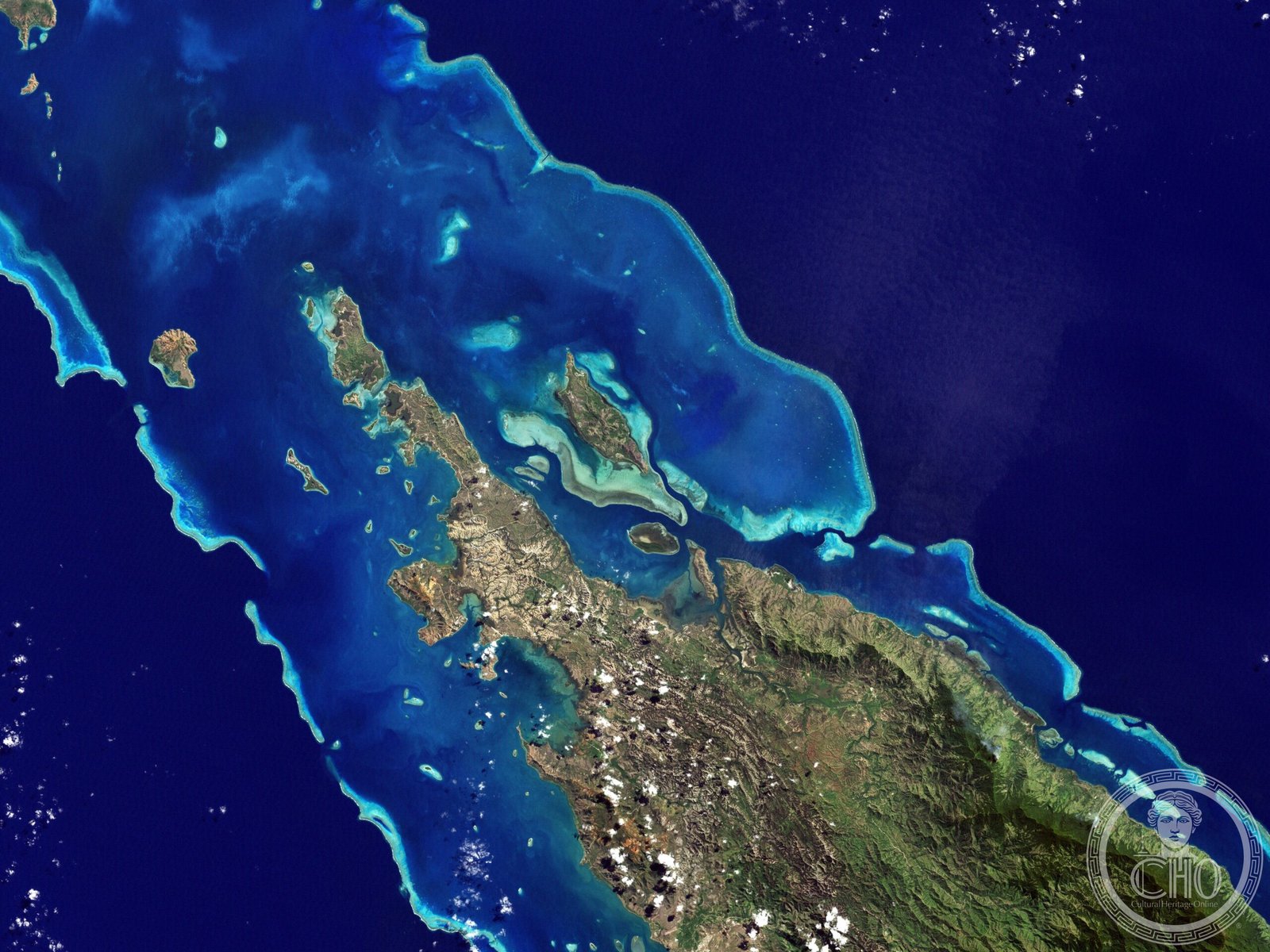
The world’s longest continuous barrier reef encircles Grande Terre in the South Pacific, protecting a vast lagoon of extraordinary coral diversity and marine life.
At a glance
A 1,500-kilometre barrier reef system encloses a 24,000-square-kilometre lagoon with average depths of 25 metres. The reef extends from the main island’s coast to outlying atolls, creating one of Earth’s most significant marine ecosystems.
History
The reef’s geological formation spans millennia, shaped by the region’s tropical Pacific climate and ocean currents. UNESCO recognised its global importance in 2008, inscribing it for outstanding natural beauty and ecological significance.
What you see
The reef surrounds Grande Terre, Île des Pins, and smaller islands, reaching up to 30 kilometres from shore yet extending nearly 200 kilometres northwest to the Entrecasteaux reefs. Natural passages pierce the barrier; the Boulari passage, marked by the Amédée lighthouse, provides access to Nouméa, New Caledonia’s capital port.
Cultural significance
The reef ranks third globally by size, surpassed only by Australia’s Great Barrier Reef and the Mesoamerican Barrier Reef, yet remains the world’s longest continuous barrier reef. Its exceptional coral diversity and unique geography—a reef entirely encircling a major landmass—make it a critical site for marine conservation and scientific study.
Key facts
- Location: New Caledonia, France
- Length: 1,500 kilometres (930 miles)
- Lagoon area: 24,000 square kilometres (9,300 square miles)
- Average lagoon depth: 25 metres (82 feet)
- Reef distance from shore: up to 30 kilometres; extends ~200 kilometres northwest
- UNESCO World Heritage inscription: 2008
- Coordinates: -20.41°S, 164.57°E
Practical information & getting there
Access is via Nouméa, reached through the Boulari passage. The lagoon and reef are accessible by boat. Local operators offer diving, snorkelling and marine tours. The Amédée lighthouse marks the main shipping channel.
Sources & resources
Find it on the map
See this place and what’s around it →📷 Become a Cultural Heritage Online photographer
Share your photos of places: they stay published under your name as the author. The more they're seen, the more you get noticed — and soon a contest will reward the most appreciated photos.
Log in or sign up free to add a photo