
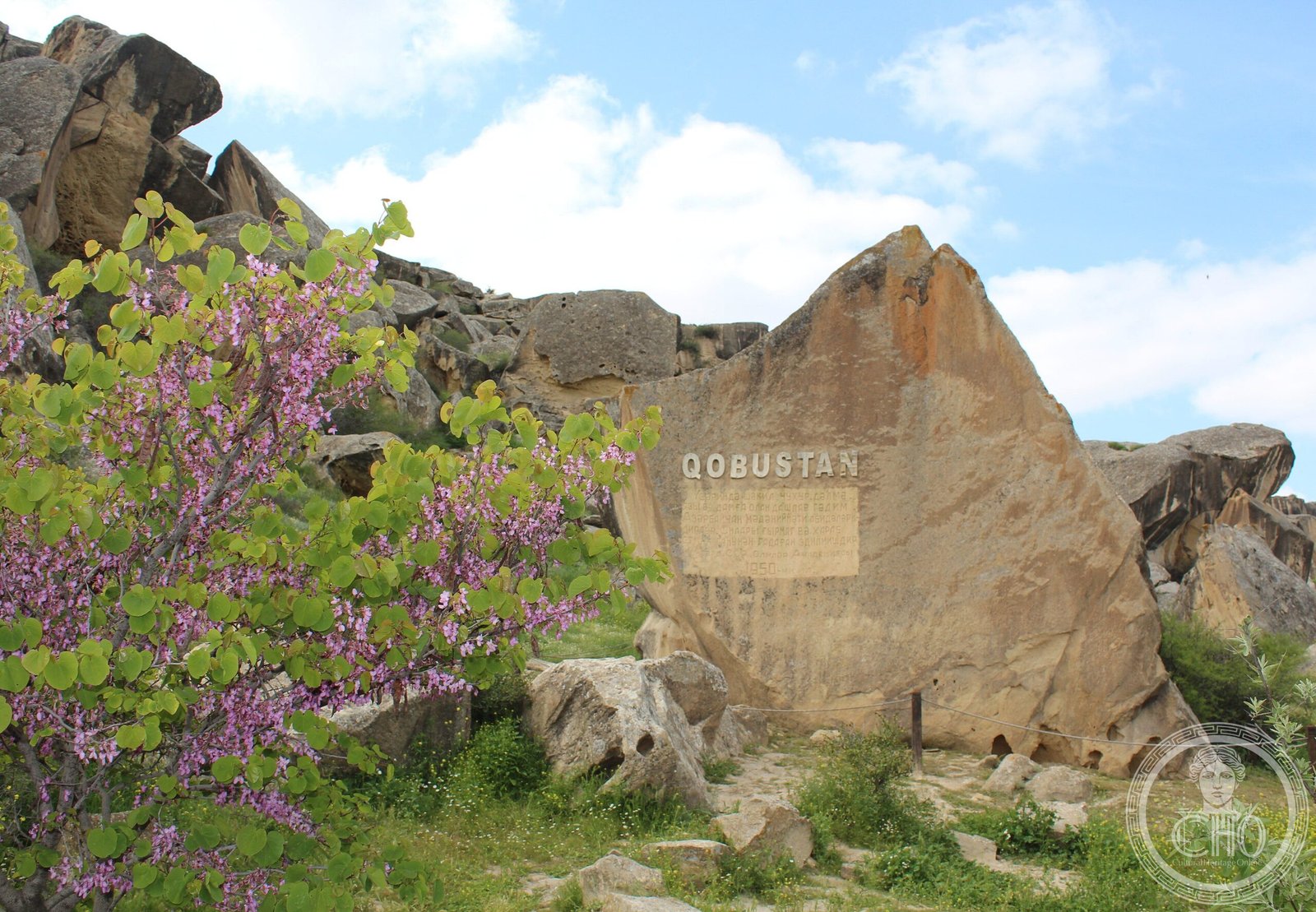
A vast landscape of prehistoric rock carvings, mud volcanoes, and resonant stones preserved across 537 hectares near Baku, revealing 15,000 years of human artistic expression.
In UNESCO’s words
Gobustan Rock Art Cultural Landscape covers three areas of a plateau of rocky boulders rising out of the semi-desert of central Azerbaijan, with an outstanding collection of more than 6,000 rock engravings bearing testimony to 40,000 years of rock art. The site also features the remains of inhabited caves, settlements and burials, all reflecting an intensive human use by the inhabitants of the area during the wet period that followed the last Ice Age, from the Upper Paleolithic to the Middle Ages. The site, which covers an area of 537 ha, is part of the larger protected Gobustan Reservation.
At a glance
Gobustan comprises over 6,000 rock carvings spanning millennia, a working Petroglyph Museum opened in 2011, and the Mud Volcanoes Tourism Complex (2024). Located 70 kilometres southwest of Baku, the reserve protects both cultural heritage and distinctive natural formations—including musical stones that produce sound when struck.
History
The site was first protected in 1966 when Azerbaijan’s Council of Ministers established it as the Gobustan State Historical Artistic Preserve. In 2007, UNESCO inscribed the Gobustan Rock Art Cultural Landscape on its World Heritage List. That year, a presidential decree formally redesignated the area as a National Reserve and renamed it the Gobustan State Historical and Cultural Reserve.
What you see
The carvings chronicle human activity across millennia: hunters pursuing game, warriors wielding lances, ritual dancers, bullfighting scenes, armed boats, camel caravans, and celestial imagery including suns and stars. Dating from 5,000 to 20,000 years before present, the petroglyphs document the region’s prehistoric inhabitants with remarkable specificity and artistic skill.
Cultural significance
Gobustan represents one of the world’s richest concentrations of prehistoric rock art. The carvings provide rare visual testimony to ancient hunting practices, social structures, warfare, and spiritual beliefs. The site’s recognition as UNESCO World Heritage acknowledges its international importance for understanding human cultural development across 15 millennia.
Key facts
- Country: Azerbaijan
- Coordinates: 40.125°N, 49.375°E
- Area: 537 hectares
- Rock carvings: over 6,000
- Dating: 5,000–20,000 years ago
- UNESCO World Heritage: inscribed 2007
- Distance from Baku: 70 kilometres southwest
Practical information & getting there
The reserve is located near the settlement of Gobustan, approximately 70 kilometres southwest of Baku. The on-site Petroglyph Museum, operating since 2011, provides context for the carvings and visitor facilities. The Mud Volcanoes Tourism Complex, which opened in 2024, offers additional amenities. For current visiting hours, entry fees, and directions, consult the reserve’s official information.
Sources & resources
- Gobustan Rock Art Cultural Landscape — whc.unesco.org — Gobustan Rock Art Cultural Landscape
- World Heritage List — reference 1076 — UNESCO open data, dataset whc001
- Gobustan Rock Art Cultural Landscape — UNESCO official photograph — Amos Chapple — OUR PLACE The World Heritage Collection
- Gobustan State Historical and Cultural Reserve — Wikipedia — consulted as a secondary reference, not as confirmation
- culturalheritageonline.com — our archive and city guides
Find it on the map
See this place and what’s around it →📷 Become a Cultural Heritage Online photographer
Share your photos of places: they stay published under your name as the author. The more they're seen, the more you get noticed — and soon a contest will reward the most appreciated photos.
Log in or sign up free to add a photo