
Rhine Gorge
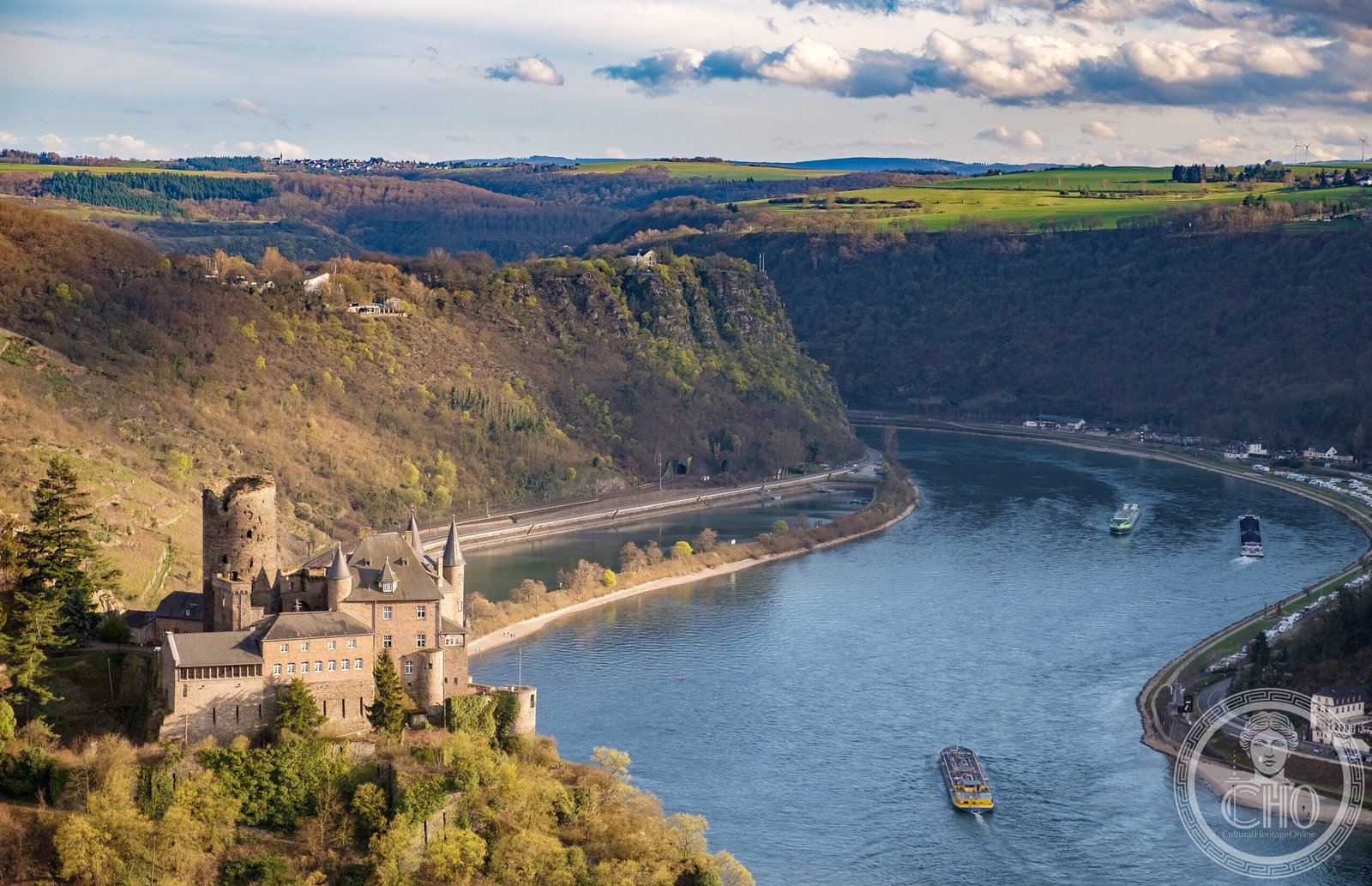
A 65-kilometre stretch of the Middle Rhine carved through ancient slate, crowned with castles and terraced vineyards. UNESCO recognised this cultural landscape for its beauty, its role as a European trade corridor, and the ingenious architecture adapted to its 200-metre cliffs.
At a glance
The Rhine Gorge runs between Koblenz and Rüdesheim, passing through two German states. Its steep walls rise 200 metres above the river, creating a landscape shaped by geology, human settlement, and viticulture. The gorge generates its own microclimate, supporting species uncommon elsewhere in the region and nurturing south-facing vineyards.
History
The rocks underlying the gorge were deposited during the Devonian period and consist primarily of Rhenish Facies slate. Carboniferous folding deformed these ancient layers. The gorge itself is much younger, carved by river erosion during geological uplift.
Human settlement flourished here for millennia. The Rhine served as a vital trade route into central Europe from prehistoric times, attracting merchants and traders to its banks. By the medieval period, roughly 40 hilltop castles dominated the valley—a strategic core of the Holy Roman Empire. The Thirty Years’ War devastated the region, leaving many fortifications in ruins that now attract river cruises.
In the 19th century, after centuries as a French border region, the valley became part of Prussia. Its dramatic landscape—castles, vineyards, and romantic cliffs—came to embody the German imagination.
What you see
The gorge’s defining feature is the Loreley, a celebrated formation within its steep walls. Terraced vineyards cascade down both slopes, adapted ingeniously to extreme gradients. Historic towns crowd the riverbanks, their medieval streetplans and half-timbered houses preserved by geographical constraints that prevented expansive modern development.
Castle ruins punctuate the skyline—some intact, others fragmentary—testament to medieval power and centuries of conflict. South-facing slopes support viticulture belonging mainly to the Mittelrhein wine region, with smaller sections in Rheingau and Nahe.
Cultural significance
The Rhine Gorge occupies an outsized place in European culture. German Romantic literature and opera drew inspiration from its dramatic scenery; Richard Wagner set his opera Götterdämmerung at a legendary castle on the Rhine. Folklore traditions remain strong here, woven into the region’s identity.
The annual Rhine in Flames festivals celebrate this heritage with pyrotechnic displays at Sankt Goar and Koblenz, best viewed from the river itself. Today, river cruises make the gorge one of Europe’s most-visited heritage landscapes.
Key facts
- Country: Germany (Rhineland-Palatinate and Hesse)
- UNESCO World Heritage Site: Inscribed June 2002
- Length: 65 kilometres (40 miles)
- Gorge height: 200 metres (660 feet)
- Coordinates: 50.1736, 7.69417
- Castles: Approximately 40 hilltop fortifications
- Wine regions: Mainly Mittelrhein; southern sections in Rheingau and Nahe
Practical information & getting there
The Rhine Gorge is accessible by road, rail, and river. Major towns like Koblenz and Rüdesheim offer rail connections. River cruises operate seasonally along the entire gorge. Historic towns along both banks provide accommodation and restaurants, many in period buildings.
Sources & resources
Find it on the map
See this place and what’s around it →📷 Diventa un fotografo di Cultural Heritage Online
Condividi le tue foto dei luoghi: restano pubblicate con la tua firma come autore. Più vengono viste, più ti fai conoscere — e presto un concorso premierà le foto più apprezzate.
Accedi o registrati gratis per aggiungere una foto