
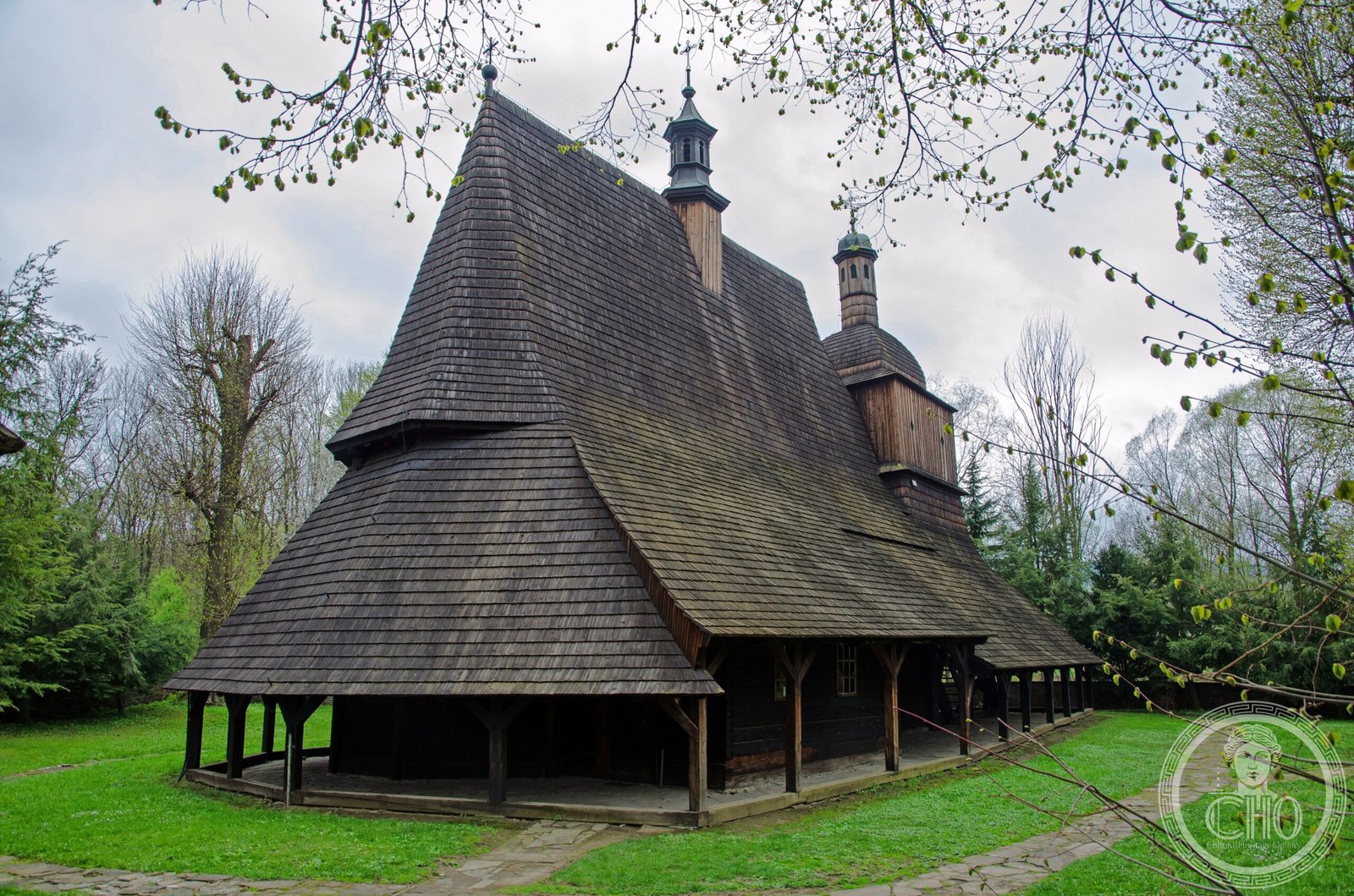
Wooden Churches of Southern Lesser Poland
Six UNESCO-inscribed timber churches showcase a unique fusion of Roman Catholic, Orthodox, and Greco-Catholic traditions, built using the horizontal log technique from the late Medieval period onward.
At a glance
Six wooden churches—located in Binarowa, Blizne, Dębno, Haczów, Lipnica Murowana, and Sękowa—represent outstanding examples of medieval church-building traditions in Roman Catholic culture. Each was constructed using the horizontal log technique, common across eastern and northern Europe since the Middle Ages. The collection stands as testament to a regional building practice that flourished across several centuries.
History
The wooden church style originated in the late sixteenth century, emerging from late Medieval traditions. Early examples incorporated Gothic ornament and polychrome detail, their timber construction creating an entirely different structure and feeling from stone or brick Gothic architecture.
Successive waves of building introduced Rococo and Baroque ornamental influences. The churches’ forms bear deep imprints from the region’s Greco-Catholic and Orthodox populations, resulting in hybrid designs unique to southern Lesser Poland.
What you see
These churches combine multiple traditions in wood. Some display Greek cross plans and onion domes characteristic of Orthodox design. The most distinctive examples marry these Eastern elements with Roman Catholic forms—elongated naves and steeples rise above timber walls, creating compositions found nowhere else in Europe.
The horizontal log construction technique, weathered by centuries, remains plainly visible. Polychrome interior details and carved ornaments reflect the Gothic, Rococo, and Baroque periods in which they were built or modified.
Cultural significance
These churches embody the religious and cultural pluralism of medieval and early modern Lesser Poland. Built in wood rather than stone, they preserve building methods and aesthetic sensibilities that vanished elsewhere. They demonstrate how Catholic, Orthodox, and Greco-Catholic communities shaped a shared architectural language.
Key facts
- UNESCO World Heritage Site (inscribed as a serial property)
- Six churches: Binarowa, Blizne, Dębno, Haczów, Lipnica Murowana, Sękowa
- Location: Lesser Poland Voivodeship
- Construction period: late 16th–18th centuries
- Building technique: horizontal log construction
- Coordinates: 49.75°N, 21.233°E
Practical information & getting there
The six inscribed churches are distributed across southern Lesser Poland, a region in southeastern Poland. Additional wooden churches of similar design and period are preserved in open-air museums at Sanok and Nowy Sącz, which offer concentrated viewing of the tradition. Individual churches are typically accessible to visitors; contact local tourism offices for current hours and any entry requirements.
Sources & resources
Find it on the map
See this place and what’s around it →📷 Diventa un fotografo di Cultural Heritage Online
Condividi le tue foto dei luoghi: restano pubblicate con la tua firma come autore. Più vengono viste, più ti fai conoscere — e presto un concorso premierà le foto più apprezzate.
Accedi o registrati gratis per aggiungere una fotoDo you manage this place?
This page is read by travellers and heritage enthusiasts who find it on Google. Keep it accurate — and make it work for you. Free for non-profit heritage institutions.