
A vast protected landscape spanning two Cuban provinces, named for the explorer-naturalist who documented the island’s extraordinary biodiversity two centuries ago.
At a glance
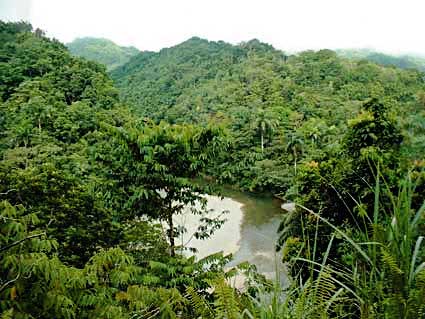
Cuba’s largest national park preserves an ecological treasure across the provinces of Holguín and Guantánamo. The park encompasses extraordinary natural diversity: steep mountains, coastal habitats, and forest ecosystems that together harbor thousands of endemic species found nowhere else on Earth.
History
The park bears the name of Alexander von Humboldt, the German naturalist and explorer whose scientific expeditions to Cuba in 1800 and 1801 revolutionized European understanding of tropical ecosystems. His detailed observations of the island’s plants, animals, and geological formations established him as a founder of modern biogeography. The national park was formally inscribed as a UNESCO World Heritage Site in 2001, recognizing its global importance for conservation.
What you see
The park’s landscape defies easy categorization. Dramatic elevation changes create distinct ecological zones, from sea-level mangrove wetlands to mountain summits. Complex geology—diverse rock formations and varied landforms—supports a mosaic of habitats: tropical forests, limestone karst terrain, and pristine coastal waters. This topographic complexity generates the environmental conditions that allow such exceptional species richness.
Cultural significance
Alejandro de Humboldt National Park represents a living laboratory for understanding tropical biodiversity. Its designation reflects Cuba’s commitment to preserving one of the Caribbean’s most biodiverse regions, and it stands as a monument to Humboldt’s legacy of scientific inquiry and environmental awareness.
Key facts
- Location: Holguín and Guantánamo provinces, Cuba
- Coordinates: 20.45°N, 75°W
- UNESCO World Heritage Site: inscribed 2001
- Recognition criteria: size, altitude range, complex lithology, landform diversity, and endemic flora and fauna
Practical information & getting there
The park is accessible from the cities of Holguín and Guantánamo. Visitors should contact park authorities in advance to arrange visits and ensure access during designated hours. Local guides are recommended for exploring the diverse ecosystems safely and responsibly.
Sources & resources
Find it on the map
See this place and what’s around it →📷 Become a Cultural Heritage Online photographer
Share your photos of places: they stay published under your name as the author. The more they're seen, the more you get noticed — and soon a contest will reward the most appreciated photos.
Log in or sign up free to add a photo