

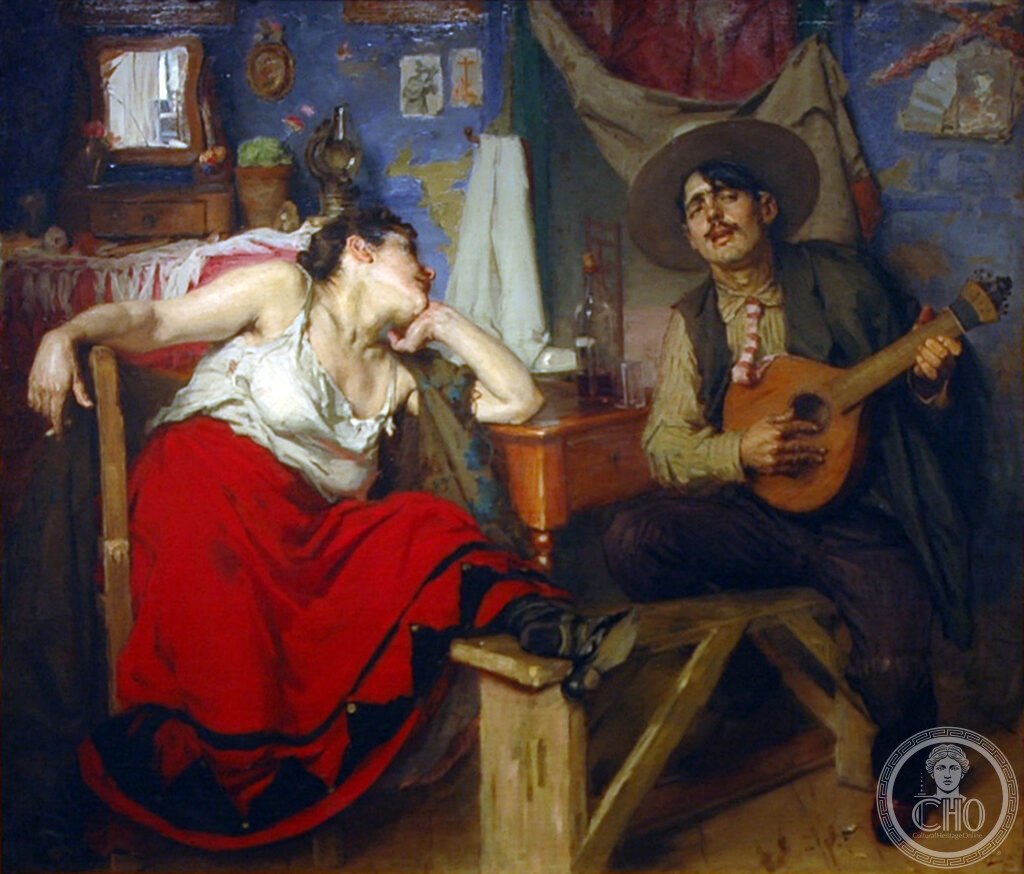
A genre of mournful urban song traced to 1820s Lisbon, fado channels the melancholy and longing of working-class life through a traditional structure that permits endless variation. Infused with saudade—a Portuguese sense of irreparable loss—it remains a living voice of the city’s maritime and bohemian past.
In UNESCO’s words
Fado is a performance genre incorporating music and poetry widely practised by various communities in Lisbon. It represents a Portuguese multicultural synthesis of Afro-Brazilian sung dances, local traditional genres of song and dance, musical traditions from rural areas of the country brought by successive waves of internal immigration, and the cosmopolitan urban song patterns of the early nineteenth century. Fado songs are usually performed by a solo singer, male or female, traditionally accompanied by a wire-strung acoustic guitar and the Portuguese ''guitarra'' – a pear-shaped cittern with twelve wire strings, unique to Portugal, which also has an extensive solo repertoire. The past few decades have witnessed this instrumental accompaniment expanded to two Portuguese guitars, a guitar and a bass guitar. Fado is performed professionally on the concert circuit and in small ‘Fado houses’, and by amateurs in numerous grass-root associations located throughout older neighbourhoods of Lisbon. Informal tuition by older, respected exponents takes place in traditional performance spaces and often over successive generations within the same families. The dissemination of Fado through emigration and the world music circuit has reinforced its image as a symbol of Portuguese identity, leading to a process of cross-cultural exchange involving other musical traditions.
Official description, UNESCO Intangible Cultural Heritage List — Fado, urban popular song of Portugal
At a glance
Fado is a performance genre that combines music and poetry, practised across Lisbon by both professional and amateur musicians. A solo singer, male or female, performs with traditional acoustic accompaniment—typically a wire-strung guitar and the Portuguese guitarra, a twelve-string pear-shaped cittern found nowhere else. In recent decades, performers have expanded the accompaniment to include two Portuguese guitars, or guitar with bass guitar. The genre draws from multiple sources: Afro-Brazilian sung dances, traditional Portuguese song and dance, rural musical traditions brought by waves of internal migration, and early nineteenth-century urban song patterns.
Origins & history
Fado emerged from a synthesis of diverse musical influences that met in Lisbon's urban communities. It combines Afro-Brazilian sung dances with local traditional genres, rural musical traditions carried by successive waves of internal migration, and cosmopolitan urban song patterns of the early nineteenth century. This multicultural blend created a distinctly Portuguese form. In recent decades, emigration and the world music circuit have spread fado beyond Portugal, reinforcing its role as a symbol of Portuguese identity and creating cross-cultural musical exchange.
The practice
Fado is typically performed by a solo singer accompanied by a wire-strung acoustic guitar and the Portuguese guitarra, though contemporary performances often feature two Portuguese guitars or guitar with bass guitar. Professional performers work the concert circuit and small fado houses, while amateurs participate through grass-root associations in older Lisbon neighbourhoods. The tradition passes informally from respected older exponents to newer generations, often within families and always in traditional performance spaces. Knowledge and skill transfer through this direct mentorship, maintaining the genre's living practice.
Cultural significance
Fado holds deep meaning for Lisbon's communities as an expression of their experiences and identity. The tradition represents a multicultural synthesis that belongs to the city's diverse populations. Its continuation depends on the transmission of knowledge from established practitioners to new generations through informal tuition and family teaching. The dissemination of fado through emigration and international music circuits has strengthened its association with Portuguese cultural identity worldwide, though this global reach also creates new forms of musical exchange that shape the tradition's future.
Key facts
- Country: Portugal
- Inscribed: 2011
- UNESCO list: Representative List of the Intangible Cultural Heritage of Humanity
- UNESCO reference: 00563
- UNESCO vocabulary: Musical performances; Poetry; Vocal music
- Map: Lisbon — the locality named in UNESCO’s official description of this element
Where to experience it
Fado is performed professionally in concert settings and in small fado houses throughout Lisbon, as well as by amateur musicians in grassroots associations located in the city's older neighbourhoods. Visitors can experience the tradition in intimate performance spaces where solo singers, accompanied by the distinctive Portuguese guitarra and acoustic guitar, share songs that blend Afro-Brazilian, rural Portuguese, and urban musical influences. Informal learning also takes place in traditional venues, often passed down through generations within families, allowing the practice to remain deeply rooted in Lisbon's cultural communities.
Sources & resources
- UNESCO — official element page: Fado, urban popular song of Portugal
- UNESCO — open data record: Intangible Heritage List, reference 00563
- UNESCO — official video: UNESCO film on this element — embedded on this page
- UNESCO — official photograph: Photograph of this element — Luis Carvalhal — Argentina Santos 2009 by Luis Carvalhal
- Reference — Wikipedia (secondary): Fado — consulted as a secondary reference, not as confirmation
- Cultural Heritage Online: Our archive and city guides

Find it on the map
See this place and what’s around it →📷 Become a Cultural Heritage Online photographer
Share your photos of places: they stay published under your name as the author. The more they're seen, the more you get noticed — and soon a contest will reward the most appreciated photos.
Log in or sign up free to add a photo