
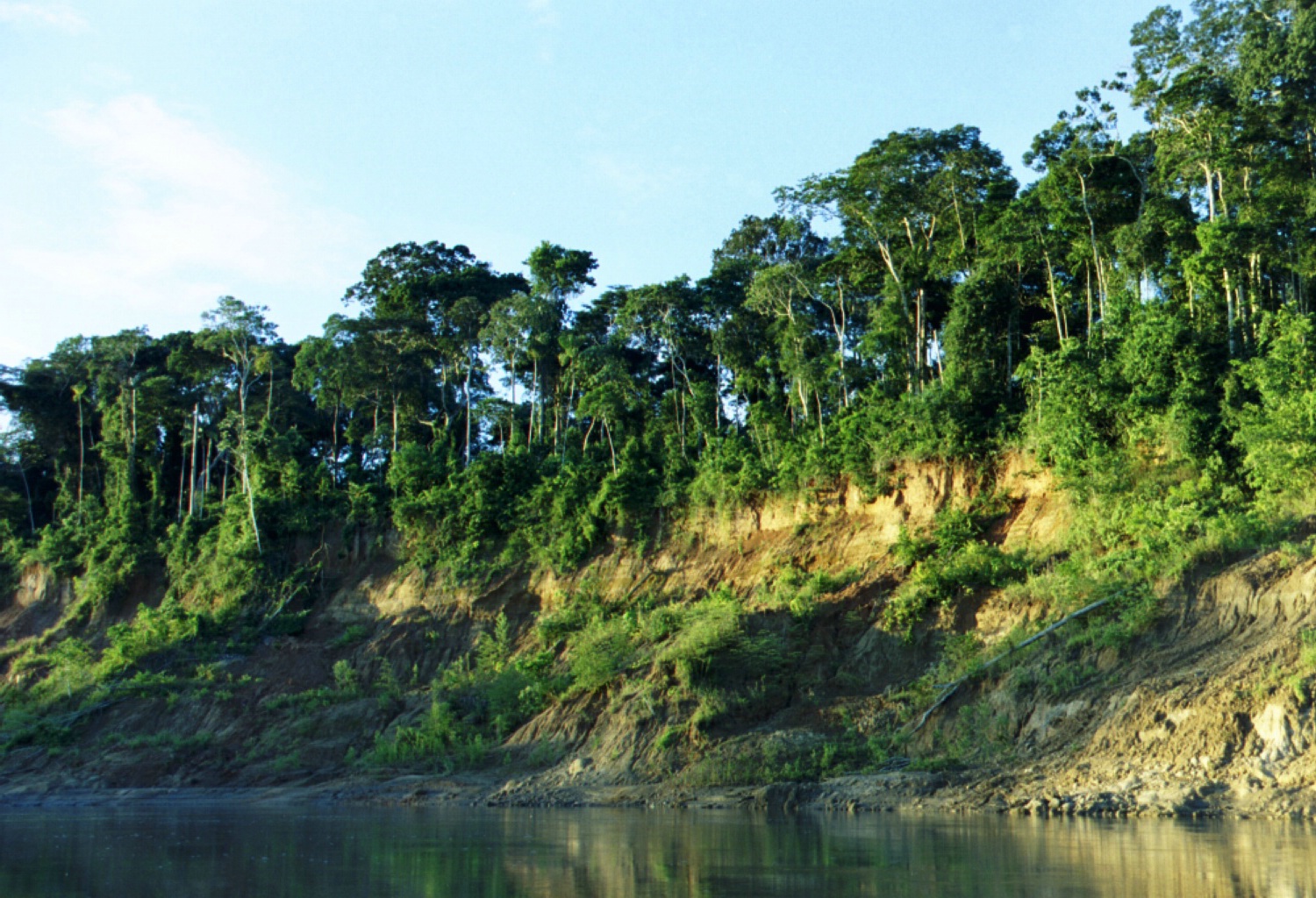
A vast biosphere reserve protecting three distinct ecological zones—from Amazon lowlands to cloud forests to high-altitude grasslands—Manu preserves one of South America’s most biodiverse regions.
At a glance
Manu National Park spans the Madre de Dios and Cusco regions, encompassing lowland rainforests, cloud forests, and Andean grasslands across a landscape of extraordinary ecological diversity. Its designation as a UNESCO World Heritage site reflects its global significance for biodiversity conservation.
History
The park was established as a national park and biosphere reserve to protect Peru’s most ecologically complex region. Its creation recognized the irreplaceable value of preserving interconnected ecosystems across elevational gradients.
What you see
Manu is distinguished not by built structures but by its mosaic of natural habitats. The lowland rainforest contains dense tropical vegetation and river systems. Cloud forests cloak the eastern slopes of the Andes in perpetual mist, supporting specialized plant and animal communities. High-altitude grasslands, or páramo, define the park’s upper reaches.
Cultural significance
The park’s ecological importance extends beyond Peru. Manu represents one of the world’s most intact tropical ecosystems, sheltering indigenous communities whose knowledge of the forest spans generations. It serves as a critical research site for understanding tropical biodiversity and ecosystem function.
Key facts
- Country: Peru
- Regions: Madre de Dios and Cusco
- Coordinates: -11.86°, -71.72°
- UNESCO World Heritage site: yes
Practical information & getting there
Access to Manu requires permits and is typically arranged through authorized tour operators. The park is remote and best visited during the dry season. Detailed information on access restrictions and required permits is available through Peru’s National Service of Protected Natural Areas (SERNANP).
Sources & resources
Find it on the map
See this place and what’s around it →📷 Become a Cultural Heritage Online photographer
Share your photos of places: they stay published under your name as the author. The more they're seen, the more you get noticed — and soon a contest will reward the most appreciated photos.
Log in or sign up free to add a photo